

The “DAF KEUR 00821-027 Scratch Resistance for Truck Interior Surfaces” standard, developed as part of the official approval or certification process for parts, materials, or processes used in trucks manufactured by DAF, a Dutch truck manufacturer, describes a procedure for evaluating how well interior surface materials withstand minor mechanical damage from daily use (such as fingernails, rings, keys, zippers, tools, cleaning utensils, or accidental contact with clothing/equipment). Scratch resistance focuses on superficial damage: visible scratches, abrasions, changes in gloss, or white spots that do not penetrate deeply but affect appearance and perceived quality.
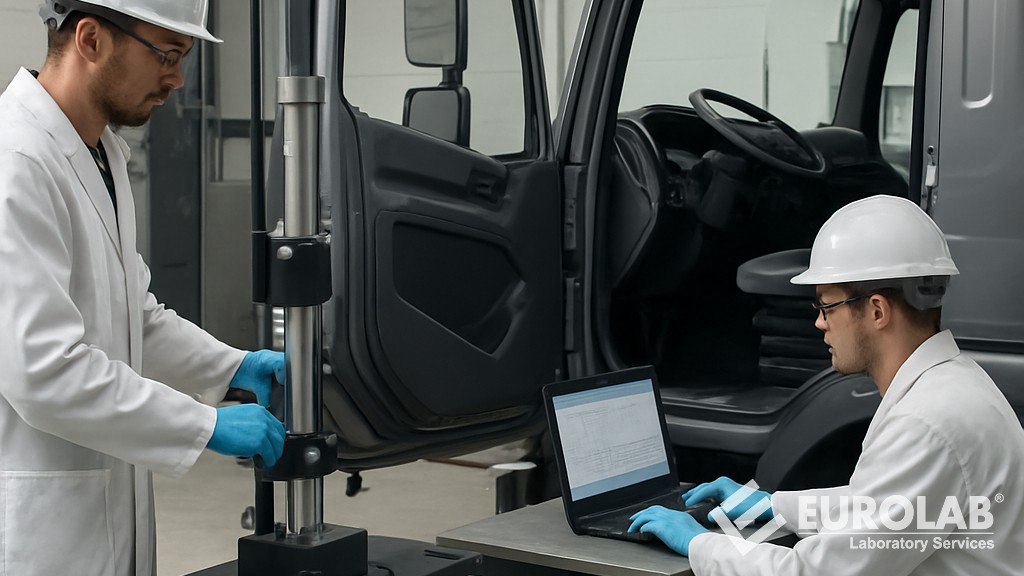
Typical applications of this standard include:
The test typically involves moving a controlled scratching or scratching device (e.g., a weighted pencil, a nail simulator, or a crockmeter-like instrument with specific loads and cycles) over the sample surface under defined conditions (dry or wet, specific force in Newtons or grams). Following the test, the following steps are taken:
The DAF KEUR 00821-027 standard shares similarities with the following international standards:
However, truck interiors, which are subjected to heavier use than passenger cars, have been adapted to DAF's specific acceptance criteria. Truck cabs are subjected to more intense wear and tear than passenger car cabs:
Low scratch resistance leads to the following:
Compliance with the DAF KEUR 00821-027 standard ensures that materials maintain a clean and professional appearance for the truck's 10-15 year service life, supporting DAF's reputation for robust, driver-focused interiors.
In short, the DAF KEUR 00821-027 standard evaluates the resistance of truck interior surfaces to minor mechanical damage such as scratches, abrasions, stains, or fingernail marks. These are generally superficial defects that do not penetrate deeply but become quite visible, especially on matte, low-gloss, or dark-colored materials commonly used in truck cabs (e.g., instrument panels, door panels, consoles, overhead storage areas, and sleeping area upholstery).
Truck interiors are subjected to much more intensive daily use than passenger cars, making scratch and stain resistance a critical performance requirement.
This standard is deemed necessary for the following reasons:
Without good resistance, materials like soft-touch coatings or grained artificial leather will quickly deteriorate in appearance.
In conclusion, scratch resistance isn't just about avoiding minor imperfections; it's crucial for maintaining long-term visual appeal, hygienic/professional feel, economic value, and driver well-being in demanding truck environments. Materials meeting the DAF KEUR 00821-027 standard significantly contribute to the reputation of trucks with robust, driver-focused, and real-world-proof cabs.
For many years, our organization, with its competent and experienced staff, has been understanding the needs of its customers, providing the advanced testing services they require, and assisting them in the establishment, implementation, and improvement of management systems. Within this framework, we also provide testing services to businesses in accordance with the DAF KEUR 00821-027 standard.
To get an appointment, to get more detailed information or to request an evaluation, you can ask us to fill in our form and reach you.

