SES N 3303 Coating Material Compatibility
Developed by Suzuki Motor Corporation under the supplementary SES N standards (examples), the “SES N 3303 Coating Material Compatibility” standard is an original equipment manufacturer automotive material standard that defines compatibility requirements between coating materials used in vehicles and substrates or adjacent materials.
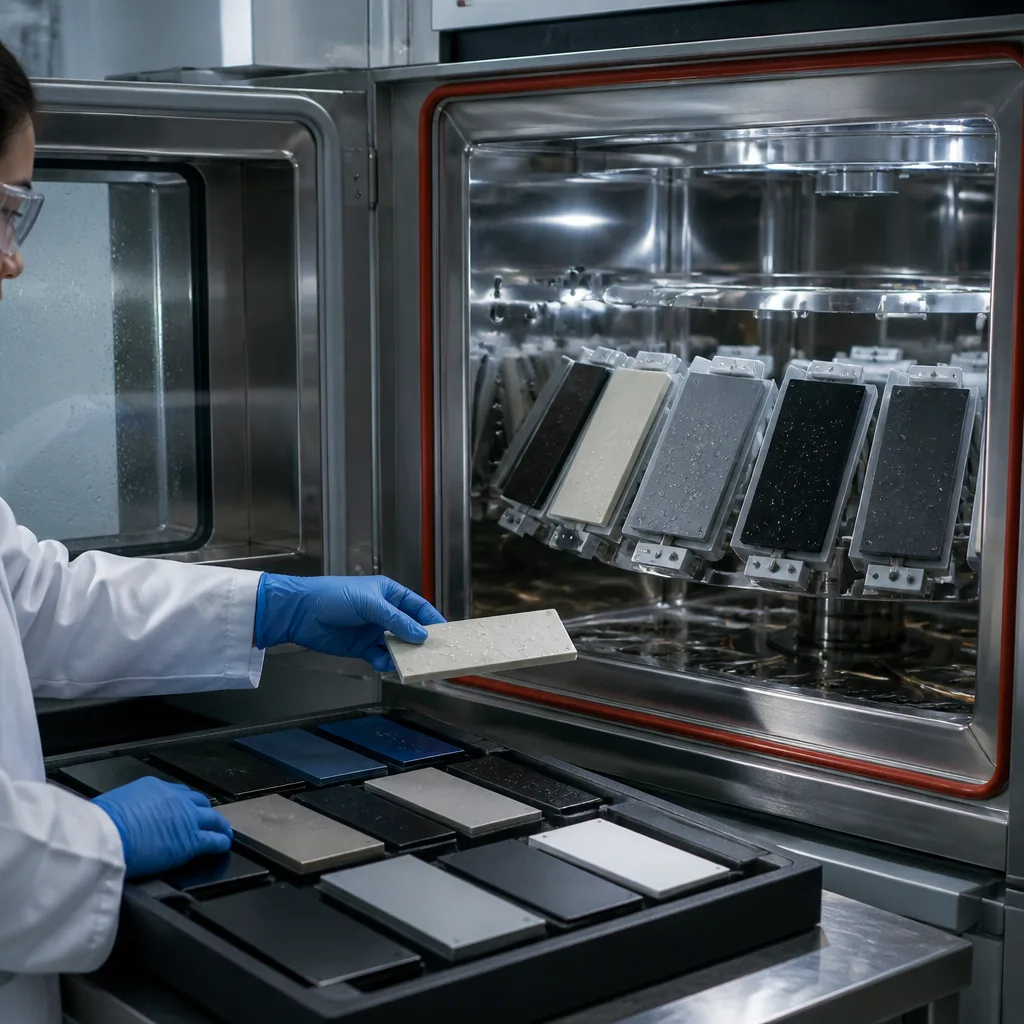
Coating material compatibility is not just a quality control measure, but a critical requirement in the automotive industry because coatings interact with many different materials and harsh environments throughout a vehicle's lifespan. Coating material compatibility is considered important for the following reasons:
- It prevents coating failure: If a coating is incompatible with a substrate (metal, plastic, rubber),
- Peeling or separation of layers occurs.
- Cracking or blistering occurs.
- Surface defects appear.
This directly affects both the function and appearance of the vehicle.
- It ensures strong adhesion between layers: Automotive coatings are often multi-layer systems: such as primer, base coat, and clear coat. If these layers are not compatible,
- They may separate over time.
- Adhesion strength decreases.
Compatibility ensures that the coating system behaves as a single solid structure.
- It prevents chemical reactions between materials: Vehicles are exposed to fuel, oil, road salt, and cleaning chemicals. An incompatible coating can cause:
- Softening
- Swelling
- color change
Compatibility ensures that coatings remain chemically stable with both the environment and adjacent materials (adhesives, sealants).
- It eliminates differences in thermal expansion: Different materials, such as metal, plastic, and composite, expand differently under heat. If the coating is not compatible,
- Voltage is generated.
- Cracks or separations occur.
Compatibility allows coatings to flex and conform without failure.
- Corrosion protection: The main roles of coatings are to prevent rusting and to block moisture and oxygen. If compatibility is poor,
- Microcracks form.
- Moisture gets inside.
This leads to corrosion and structural damage.
- It preserves aesthetic quality: Customers expect long-lasting visual quality:
- Color consistency
- Maintaining brightness
- No fading or staining.
Incompatibility can lead to the following:
- Discoloration
- Surface irregularity
- Loss of brightness
Ensures compatibility with other materials: Coatings must work with the following:
- Adhesives (for example, for joining parts)
- Sealing materials (e.g., waterproofing of joints)
- Interior trims and plastics
Poor compatibility can lead to the following:
- Material degradation
- Loss of sealing or bonding performance
It reduces warranty costs and failures: Failures due to incompatibility can lead to:
- Reprocessing in production
- Customer complaints
- Warranty claims
Ensuring compliance saves time, costs, and protects brand reputation.
In short, coating material compatibility is essential because it ensures that coatings adhere correctly, are resistant to chemicals and the environment, work seamlessly with different materials, and maintain their durability and appearance. Without compatibility, even the best coating can deteriorate prematurely, jeopardizing both vehicle performance and customer satisfaction.
The SES N 3303 standard ensures that coating systems (paints, primers, sealants) do not adversely interact with the following:
- Basic materials (plastics, metals, elastomers)
- Adjacent materials (adhesives, sealants, coatings)
- Environmental conditions (heat, humidity, chemicals)
The aim is to guarantee the following:
- Long-lasting durability
- Functional performance
- Visual quality (no color fading, blistering, or peeling)
In automotive engineering, coating material compatibility refers to how well a coating works with the substrate and the environment without degradation. Key considerations include:
- Adhesion compatibility: The coating must adhere properly to the substrate (plastic, metal, composite). Poor compatibility will lead to peeling and detachment. Adhesion is a critical performance metric in coating systems.
- Chemical compatibility: The coating must be resistant to fuels, oils, and cleaning agents. There should be no softening, swelling, or deterioration.
- Thermal compatibility: The coating must withstand temperature changes without cracking or loss of adhesion. This is important due to engine heat and climate variations.
- Material interaction compatibility: The coating should not react with the following:
- Adhesives (SES N 3301 standard)
- Sealing materials (SES N 3302 standard)
- Plastic or rubber parts
- Corrosion and protection compatibility:
- Coatings must effectively protect substrates (especially metals).
- Automotive coatings act as barriers against corrosion and environmental damage.
Typical test methods defined in the SES N 3303 standard include:
- Cross-cut adhesion test
- Chemical resistance test (fuel, oil, solvent exposure)
- Heat aging / thermal cycling
- Moisture and corrosion test
- Visual inspection (bubbling, discoloration, cracking)
These tests are consistent with original equipment manufacturers' (OEM) automotive coating verification methods across the board.
In short, the SES N 3303 standard focuses on ensuring that coating materials meet the following requirements:
- It should adhere correctly.
- Not to decompose chemically or physically
- Remaining stable in automotive conditions
- It works well with other materials.
In conclusion, the SES N 3303 standard guarantees not only the application of coatings but also their reliable performance throughout the vehicle's lifespan.
For many years, our organization, with its competent and experienced team, has been understanding the needs of its clients, providing the advanced testing services they require, and assisting them in the establishment, implementation, and improvement of management systems. Within this framework, we also provide testing services compliant with the SES N 3303 standard.



