

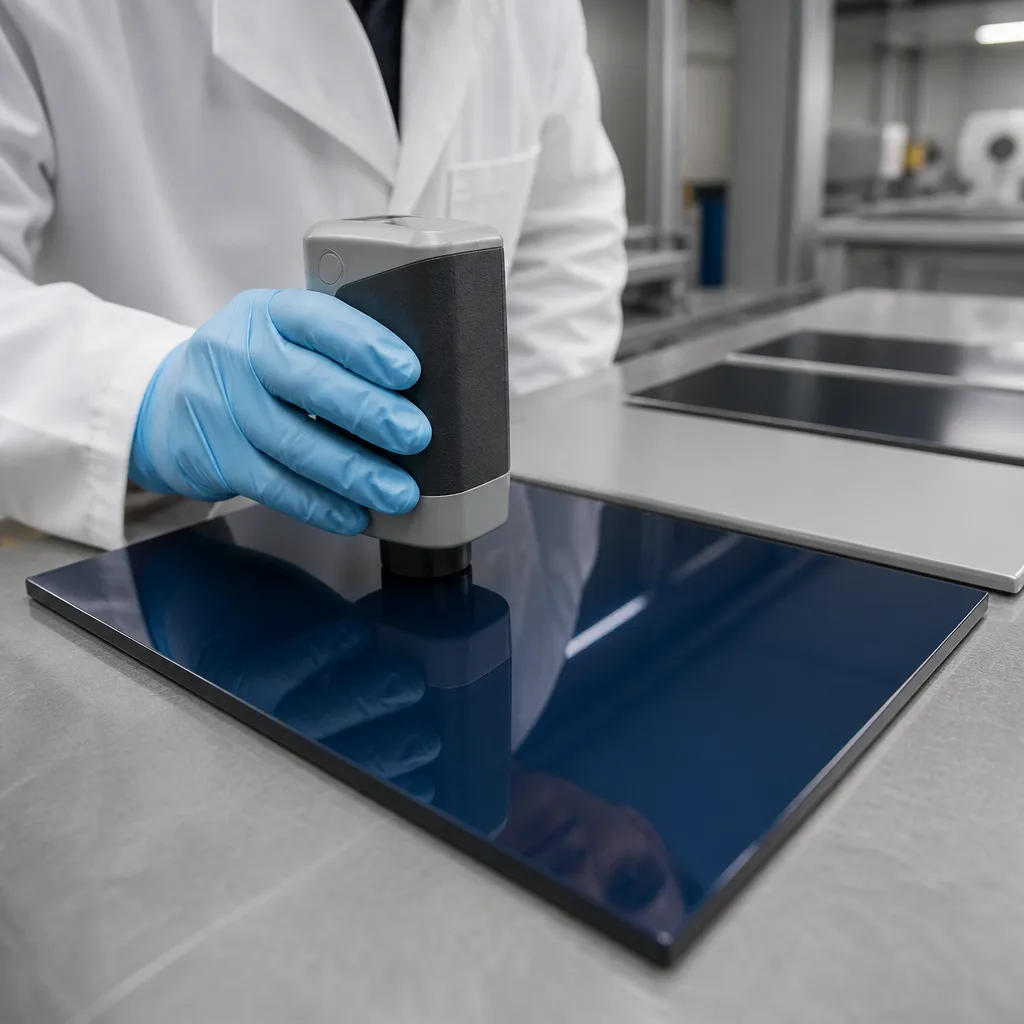
The “Ford FLTM BI 110-01 Measurement of Gloss of Paint Panels” standard, developed by Ford Motor Company (Ford), describes a test method used to determine the specular gloss of painted automotive surfaces. This standard establishes procedures for measuring how much light is reflected from a painted panel, providing an objective assessment of surface appearance and finish quality. This method is widely used in automotive paint development, production quality control, and supplier verification.
The primary objectives of the Ford FLTM BI 110-01 standard are as follows:
In principle, this testing method measures specular reflectance, which is the amount of light reflected from a surface at a given angle. A gloss meter projects a beam of light onto the painted surface and measures the intensity of the reflected light. This method follows principles similar to those used in the following standards:
The Ford FLTM BI 110-01 standard specifies brightness measurements using three geometries:
These geometries help to accurately characterize different surface appearances.
The testing process generally follows these steps:
This standard reports brightness in brightness units (GU). Typical evaluation criteria include:
The measured values are compared to the engineering specifications for the vehicle program.
A key feature of the Ford FLTM BI 110-01 standard is that instrumental gloss measurements support, but do not replace, visual assessment. Ford states that visual appearance assessments according to the Ford FLTM BI 109-01 standard are mandatory for appearance approval because human perception can detect differences not always reflected by numerical gloss values.
The Ford FLTM BI 110-01 standard is commonly used for:
This method helps ensure that painted surfaces maintain a consistent, superior appearance throughout the vehicle's production process.
The Ford FLTM BI 110-01 standard is essential because it provides a standardized method for measuring the gloss of painted automotive surfaces. Gloss is a critical visual characteristic that directly affects a customer's perception of vehicle quality, durability, and workmanship. The main reasons this standard is considered important are as follows:
This standard provides numerical gloss values, enabling Ford and its suppliers to make objective and repeatable assessments of paint quality.
This standard provides a common testing procedure that suppliers must follow, ensuring all components meet Ford's appearance requirements before delivery.
Regular brightness measurements help identify process deviations before they become visible defects in production equipment.
This standard is typically used before and after durability testing to determine whether the coating retains its original appearance.
This standard provides a quantitative method for comparing the appearance performance of new materials to existing standards.
These methods, taken together, provide a comprehensive assessment of paint quality.
In conclusion, the Ford FLTM BI 110-01 standard defines a reliable, objective, and repeatable method for measuring paint gloss. This standard helps ensure a consistent appearance across vehicles, supports supplier quality control, monitors manufacturing processes, evaluates coating durability, and maintains the high aesthetic standards expected in the automotive industry. Without such a standardized method, achieving a uniform paint appearance in global vehicle production is significantly more difficult.
For many years, our organization, with its competent and experienced staff, has been understanding the needs of its customers, providing the advanced testing services they require, and assisting them in the establishment, implementation, and improvement of management systems. Within this framework, we also provide testing services compliant with the Ford FLTM BI 110-01 standard.
To get an appointment, to get more detailed information or to request an evaluation, you can ask us to fill in our form and reach you.

