

Developed by General Motors Europe (GME), the “GME 60259 Cold Resistance of Elastomers” standard is a materials testing standard used to evaluate the performance of elastomeric materials after exposure to low temperatures. Elastomers are widely used in vehicles in gaskets, seals, hoses, air seal strips, bushings, vibration dampers, and flexible fasteners. Because these components often operate in extremely cold climates, maintaining their mechanical properties is crucial for vehicle safety and durability.
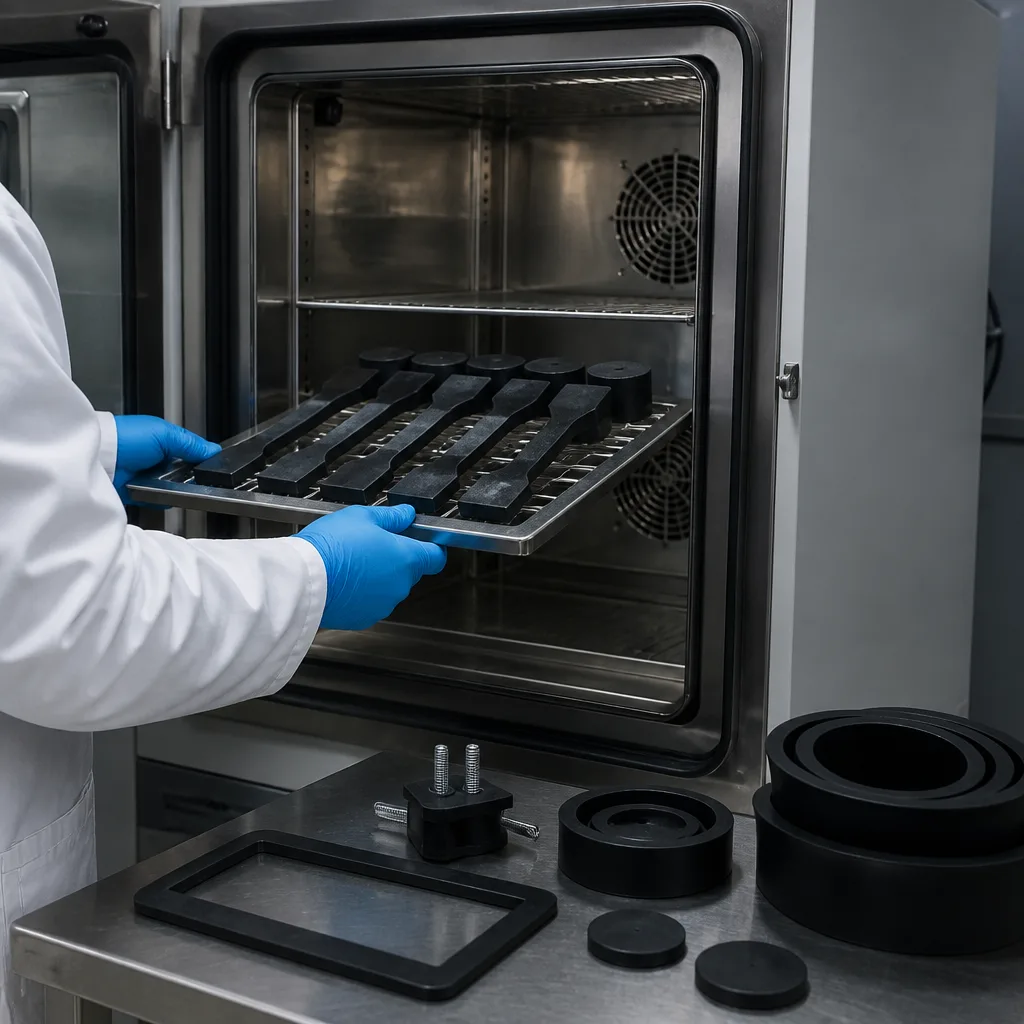
This standard describes a laboratory procedure for exposing elastomer samples to specified low temperatures for a predetermined period and then evaluating changes in their physical properties. However, this standard was not designed for new global vehicle programs and was subsequently replaced by the ISO 23529 standard. Nevertheless, it remains applicable to certain legacy or ongoing programs.
The primary purpose of the GME 60259 standard is to determine whether an elastomer can retain its functional properties after being exposed to cold environmental conditions. This test method helps engineers determine the following:
This standard is particularly valuable for verifying the rubber materials used in vehicles sold in regions experiencing severe winter temperatures.
The GME 60259 standard applies to numerous elastomeric materials, including:
Typical automotive applications of this standard include:
The described test method measures, in principle, how exposure to low temperatures affects the properties of elastomers. In general, the test follows these steps:
The aim is to simulate the environmental conditions encountered when driving a vehicle during the winter months.
After being exposed to cold, the material is typically evaluated in terms of the following aspects:
Rubber components become harder as temperatures drop. When an elastomer loses too much of its elasticity, several problems can arise:
The GME 60259 standard helps manufacturers identify materials that can maintain their performance in winter operating conditions.
This standard is generally applied in the qualification of the following:
The various advantages provided by the GME 60259 standard are as follows:
The GME 60259 standard works in conjunction with various related elastomer testing standards, including:
Although developed for General Motors Europe, the GME 60259 standard test principles are also applied in the following sectors:
Using the GME 60259 standard enables manufacturers to:
In conclusion, the GME 60259 standard is a crucial test method for evaluating the cold resistance of elastomers used in automotive applications. By measuring changes in hardness and assessing brittleness after controlled low-temperature exposure, this standard helps ensure rubber components remain flexible, durable, and functional in harsh winter conditions. While newer GM programs are transitioning to the ISO 23529 standard, the GME 60259 standard remains a valuable reference for understanding older projects and GM's historical material qualification practices.
For many years, our organization, with its competent and experienced staff, has been understanding the needs of its clients, providing the advanced testing services they require, and assisting them in the establishment, implementation, and improvement of management systems. Within this framework, we also provide testing services compliant with the GME 60259 standard.
To get an appointment, to get more detailed information or to request an evaluation, you can ask us to fill in our form and reach you.

