

Developed by BMW, a multinational vehicle manufacturer, the “BMW GS 97014 SHED chamber emission measurement” standard consists of the following sub-sections:
This standard is widely used in the automotive industry to ensure that materials used in vehicle interiors (such as plastics, textiles, foams, adhesives, leather, and coatings) release minimum amounts of potentially harmful or odorous volatile substances. It helps manufacturers comply with interior air quality requirements, passenger comfort standards, and environmental regulations.
The primary purpose of this standard is to measure volatile organic compound emissions under controlled conditions, focusing on a test called the CARB test. This test determines:
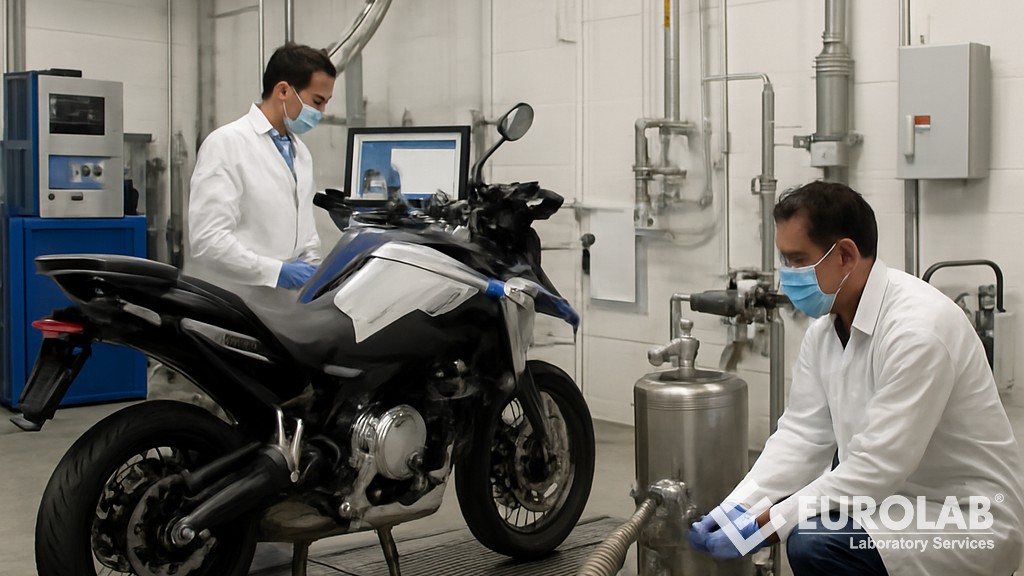
The test targets non-fuel-carrying components within the vehicle, helping to minimize new car odor, potential health irritants, and windshield fogging caused by condensable emissions. This method utilizes a SHED chamber (enclosed containment chamber for evaporative determination) or similar emissions test chamber. Samples are pre-conditioned for 7 days at 23 degrees plus/minus 2 degrees. The material or component is placed in a temperature-controlled chamber. Emissions are collected and analyzed. Typically, methods such as gas chromatography-mass spectrometry (GC-MS) are used for VOC identification and quantification. Real-world conditions are simulated to measure evaporative emissions without air exchange during the test phase (static or enclosed mode).
The BMW GS 97014-3 standard is a similar standard, but it includes air exchange (dynamic mode) and a summer test, generally at higher temperatures (e.g., 65 degrees). The BMW GS 97014-4 standard, on the other hand, focuses on odor assessment.
Suppliers are required to test interior materials, from instrument panels and seats to door panels and headliners, according to the BMW GS 97014-2 standard before obtaining approval for use in production vehicles.
This standard is widely used in the automotive industry to ensure that vehicle cabins maintain high air quality by limiting the emission of volatile organic compounds (VOCs) and other substances that can affect passenger health and comfort. The standard focuses on the emission behavior of components, semi-finished products, and materials (e.g., instrument panels, seats, door panels, carpets, adhesives, foams, textiles, and plastics) used in vehicle interiors.
This method determines the following:
This test is often known as a summer test because it simulates hot air conditions inside a vehicle parked in the sun. The procedure uses a small, controlled thermostatic emission test chamber with air exchange (ventilation) to mimic real-world conditions. The temperature is typically set to 65 degrees (representing high summer indoor temperatures). Humidity is controlled (typically around 5-15 percent relative humidity, as it is a dry heat simulation). Samples are conditioned and then tested for several hours or days. Fresh air is continuously supplied and replaced to simulate vehicle ventilation. The emitted compounds are collected and analyzed using techniques such as GC-MS (gas chromatography-mass spectrometry) for precise identification and quantification.
Modern vehicles contain many synthetic materials that can emit volatile organic compounds, especially when new or heated. Excessive emissions can lead to:
Companies that supply interior parts to BMW must pass this test before receiving production approval.
Modern vehicles incorporate numerous plastics, textiles, leather, adhesives, foams, and trim materials in the dashboard, seats, door panels, headliners, carpets, and other interior upholstery. These can release volatile organic compounds (VOCs), especially when new or under heat/sunlight, leading to the familiar new car smell. While some odors are expected and even desirable, strong, chemical, or persistently unpleasant smells are unacceptable.
The BMW GS 97014-4 standard contributes to customer satisfaction and brand image by ensuring that interior materials meet BMW's stringent quality requirements for odor neutrality or pleasant character. This method uses a test chamber with controlled air exchange (dynamic conditions) to simulate real vehicle conditions more closely than static methods.
The typical procedure includes the following:
This standard defines precise terminology, panel training requirements, room specifications, airflow rates, and acceptance criteria (typically maximum allowable odor intensity levels, usually up to 3–3,5 depending on the component group).
Suppliers to BMW must demonstrate compliance in the material approval and production part approval processes. Independent testing laboratories are accredited to perform the BMW GS 97014-4 standard test. This method helps eliminate odors originating from recycled materials, adhesives, or flame retardants.
For many years, our organization, with its competent and experienced team, has been understanding the needs of its clients, providing the advanced testing services they require, and assisting them in the establishment, implementation, and improvement of management systems. Within this framework, we also provide testing services in accordance with the BMW GS 97014 standard.
To get an appointment, to get more detailed information or to request an evaluation, you can ask us to fill in our form and reach you.

