

Developed by General Motors International (GMI), the “GMI 60246 Determination of Compressibility of a Cellular Elastomer under Specified Force” standard is a materials testing method used to evaluate the compressibility behavior of cellular elastomeric materials under a defined load. This standard is primarily used to assess the deformation properties of foam elastomeric materials (e.g., gaskets, seals, vibration isolators, pads, and cushioning elements) used in automotive components.
Cellular elastomers, including expanded rubber and elastomeric foams, are widely used in automotive applications because they provide the following properties:
However, these materials change their thickness and stiffness when subjected to continuous or repeated compression. The GMI 60246 standard was developed to create a consistent and repeatable laboratory method for measuring how much a cellular elastomer compresses when a specific force is applied. This allows suppliers and engineers to compare materials and verify that manufactured parts meet GM design requirements. The described test method provides information on the following:
The GMI 60246 standard applies to the following types of cellular elastomer materials:
Typical automotive applications for these materials include:
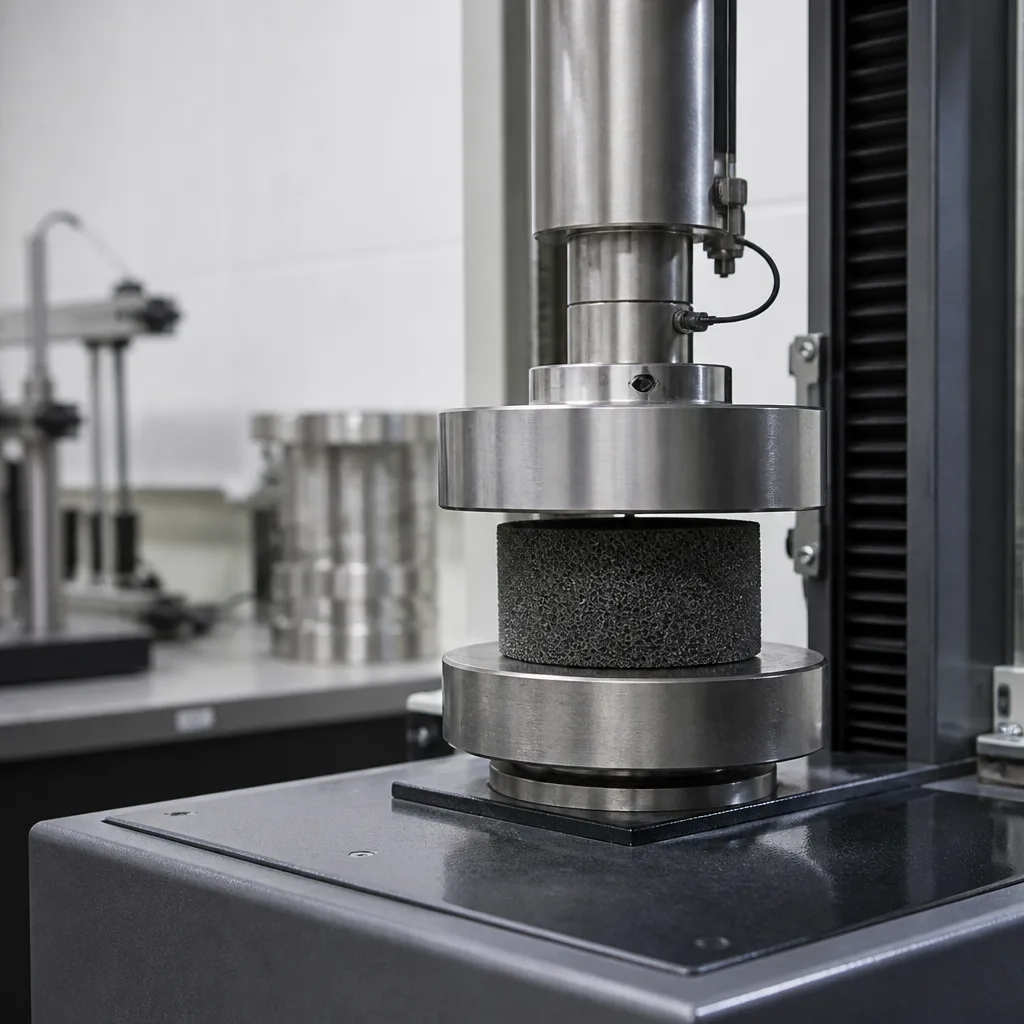
During testing, a test specimen of specific dimensions is prepared, its thickness is measured before loading, a specific compressive force is applied using a compression testing machine, the compressed thickness is measured, and the compressibility is calculated from the change in thickness. The result shows how the material responds to compression under standardized conditions.
The main equipment used in the tests includes:
The equipment must apply force evenly to the sample surface.
A typical assessment includes the following:
Multiple samples are usually tested to increase statistical reliability.
Various material properties affect compressibility, including:
Since these variables significantly affect the results, standardized tests are essential.
Essentially, this test method identifies the following:
The key parameters are:
The main components where compressibility is important are:
Compressibility directly affects vehicle quality because it influences the following:
Materials that are too tightly packed can lose their sealing performance, while materials that are too rigid can make assembly difficult or generate high closing forces.
The use of the GMI 60246 standard offers several advantages:
The materials evaluated using the described method are as follows:
The test method described in the GMI 60246 standard is based on measuring the thickness reduction of a cellular elastomer sample when a defined compressive force is applied. For the tests, a test sample is first prepared from the cellular elastomer material. Typical requirements are as follows:
Before compressing,
The sample is placed between two parallel compression plates. The testing machine applies a specified force. The compressed thickness is measured. The key parameters measured are:
The main result of the GMI 60246 standard is the amount of thickness reduction under load.
In the load-compression curve method, for some applications, the test can record the relationship between the following:
The result is the load-strain curve. This provides information about:
A steeper curve indicates a harder material. A flatter curve indicates a softer material.
In a recovery test (elastic recovery), the sample is allowed to recover after the applied force is removed, the final thickness is measured, and the permanent deformation is evaluated. This assesses the elastomer's:
Depending on the material application, GMI 60246 standard testing may be combined with aging and environmental conditioning testing (if required):
The GMI 60246 test report typically includes the following:
In short, the test method described in the GMI 60246 standard helps General Motors evaluate whether cellular elastomer materials can withstand the following vehicle service conditions:
A material with excessive compressive deformation can cause the following:
Therefore, the GMI 60246 standard provides a standardized way to compare elastomer materials and ensure consistent quality from suppliers.
For many years, our organization, with its competent and experienced team, has been understanding the needs of its clients, providing the advanced testing services they require, and assisting them in the establishment, implementation, and improvement of management systems. Within this framework, we also provide testing services compliant with the GMI 60246 standard.
To get an appointment, to get more detailed information or to request an evaluation, you can ask us to fill in our form and reach you.

