

The “GMW 3283 Schopper Abrasion Test for Automotive Interior Materials” standard, developed by General Motors Worldwide (GMW), includes a test method used specifically to evaluate the abrasion resistance of textiles and other automotive interior materials, and utilizes the Schopper abrasion test.
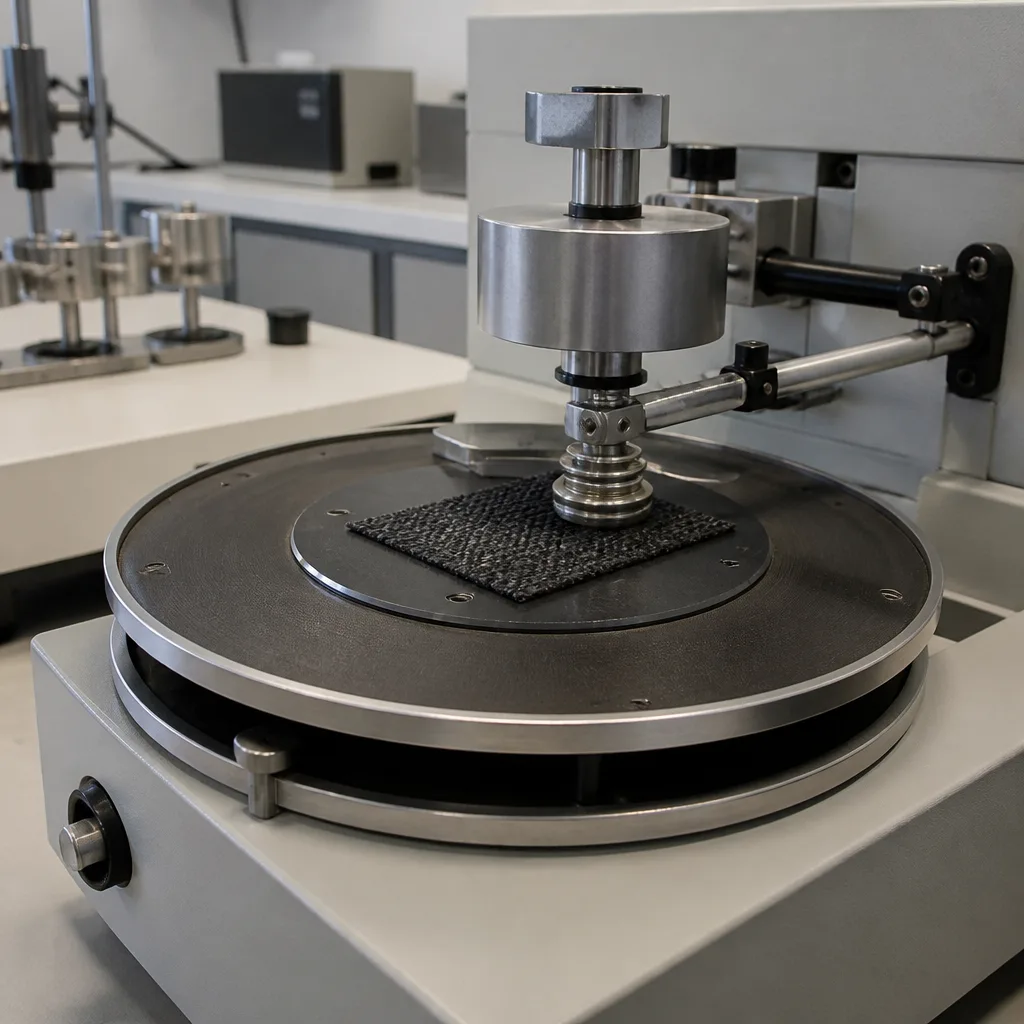
Wear resistance is an important property for automotive interior materials because surfaces such as seat fabrics, carpets, upholstery textiles, and other coverings are subjected to repeated friction during vehicle use. The GMW 3283 standard provides a controlled laboratory method to assess how well a material withstands this type of mechanical wear.
The primary purpose of the GMW 3283 standard is to determine a material's resistance to surface wear. This test creates controlled friction between a sample and an abrasive surface, allowing for the evaluation of any resulting wear or change in appearance. This method is particularly applicable to automotive interior materials where maintaining durability and appearance is important. Advanced laboratories specifically list the GMW 3283 standard as the Schopper wear test and validate its application as a wear resistance method.
The Schopper method is based on rotational wear in principle. A test specimen is mounted on a rotating test head, while an abrasive element applies friction to the specimen. As the specimen rotates, the abrasive component creates friction in the tangential direction. This repeated mechanical action gradually wears down the material surface. Therefore, the test simulates an important aspect of service conditions. Repeated contact and friction can cause:
The Schopper method is based on the same general rotary wear principle associated with the DIN 53863-2 standard, which covers rotary wear testing of textile surfaces. The GMW 3283 standard is commonly listed as an automotive application of this type of wear testing, along with the GME 60345 and VW/Audi PV 3908 standards.
The exact dimensions of the sample, conditioning requirements, abrasive material, loads, evaluation criteria, and acceptance requirements are all specified in the GMW 3283 standard. Generally, the testing process follows these steps:
The Schopper device uses rotary friction, and the direction of rotation can be periodically reversed to ensure even wear.
The GMW 3283 standard is specifically related to automotive interior textile materials. Potential applications include:
This method is used in conjunction with other material testing standards such as GMW 3182 for mass per area and GMW 3326 for tear strength, and its role in the characterization of automotive textile materials is undeniable.
The test primarily evaluates surface resistance to mechanical wear. Depending on the requirements of the applicable specification, the evaluation may include the following characteristics:
It is important to distinguish abrasion resistance from other properties such as tensile strength, tear strength, or scratch resistance. A material may have high tensile strength but low resistance to repeated surface friction.
Automobile interiors are constantly exposed to mechanical contact. Seat surfaces, floor coverings, and upholstery materials can be rubbed against by passengers, clothing, luggage, shoes, and other objects. A material with insufficient abrasion resistance may show premature deterioration, even if it initially has an attractive appearance. Therefore, the GMW 3283 standard helps manufacturers and suppliers with the following:
Wear testing is particularly important when a material is subjected to repeated friction throughout the expected service life of a vehicle.
The GMW 3283 standard should not be confused with other automotive wear tests. Different standards use different wear mechanisms. For example, some laboratories describe the GMW 3208 standard as another type of rotary abrasion method, while the GMW 3283 standard is specifically defined as the Schopper abrasion test.
The Schopper method is also associated with the following standards:
This relationship is useful when comparing different original equipment manufacturer requirements, but the methods should not be automatically considered interchangeable. Detailed test conditions and evaluation criteria can vary between standards.
The Schopper wear testing machine is used for the GMW 3283 standard. Typical equipment consists of:
Several parameters can influence wear results, including:
The GMW 3283 standard is used in various stages of automotive product development. During material selection, it can help engineers compare different textile structures. During development, it can identify changes to yarn, coating, backing, or finishing that increase durability. During production, it can provide a quality control test to verify that the supplied material remains within the required performance range. Therefore, the method is useful not only for final acceptance but also for comparative material development.
In conclusion, the GMW 3283 standard is particularly valuable for automotive suppliers when selecting and verifying interior fabrics and other materials where durability, appearance preservation, and resistance to daily abrasion are important performance requirements.
For many years, our organization, with its competent and experienced staff, has been understanding the needs of its clients, providing the advanced testing services they require, and assisting them in the establishment, implementation, and improvement of management systems. Within this framework, we also provide testing services in accordance with the GMW 3283 standard.
To get an appointment, to get more detailed information or to request an evaluation, you can ask us to fill in our form and reach you.

