

The “Ford FLTM BN 107-01 Friction Test” standard, developed by Ford Motor Company (Ford), describes a test method used in automotive material validation to evaluate friction resistance (color transfer due to friction) in interior upholstery materials such as textiles, synthetic leather, coated fabrics, and plastics. This method is widely used in automotive interior improvement studies to ensure that painted or coated surfaces do not transfer color to clothing, skin, or adjacent components during normal use.
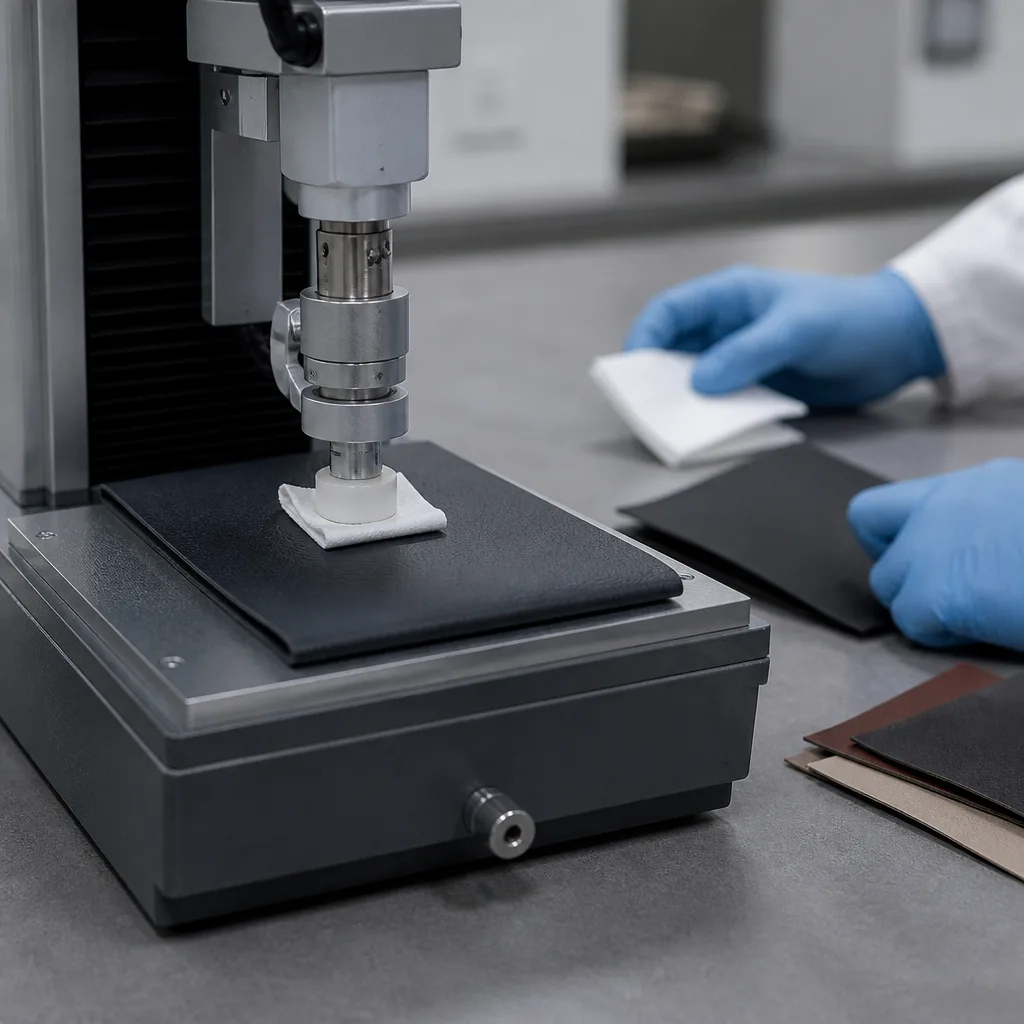
Friction testing is a standard laboratory method used to measure how easily the color of a material transfers to another surface through friction. It is primarily used for textiles, leather, coated fabrics, plastics, and automotive interior materials. Simply put, with friction testing, one checks whether a colored surface will "transfer" onto something else, such as clothing or skin, through friction.
This test works by rubbing a white standard cloth (rubbing cloth) against a colored sample under controlled conditions. Any dyes or pigments that transfer to the white cloth are then evaluated. This method simulates the following real-life contacts:
The primary purpose of the Ford FLTM BN 107-01 standard is to measure color fastness under friction conditions. This standard helps determine:
This is especially important for:
The friction test simulates real-life frictional contact, including the following:
Next, the amount of visible staining on the white cloth is assessed.
This test method typically evaluates two main conditions:
This reflects the following different real-world scenarios:
This testing method generally follows these steps:
Results are generally evaluated using the following methods:
Lower staining indicates better performance.
This belongs to the family of standard friction-related methods:
Ford uses the Ford FLTM BN 107-01 standard to ensure that interior materials meet the following requirements:
The Ford FLTM BN 107-01 standard is important because it controls one of the most visible and customer-sensitive quality risks in automotive interiors: color transfer (friction). If interior materials are not properly tested, paints or pigments can transfer to clothing, skin, or adjacent surfaces. Even small amounts of staining can instantly lead to customer complaints, warranty claims, and perceptions of poor manufacturing quality. The key reasons why this standard is considered important are:
In conclusion, the Ford FLTM BN 107-01 standard is a friction (color transfer) resistance test standard used to evaluate how much paint or pigment is transferred from automotive interior materials under friction conditions. This standard is essential for ensuring interior durability, aesthetic quality, and customer satisfaction in Ford vehicles.
For many years, our organization, with its competent and experienced staff, has been understanding the needs of its customers, providing the advanced testing services they require, and assisting them in the establishment, implementation, and improvement of management systems. Within this framework, we also provide testing services to businesses in accordance with the Ford FLTM BN 107-01 standard.
To get an appointment, to get more detailed information or to request an evaluation, you can ask us to fill in our form and reach you.

