Ford FLTM BN 151 Trim Component Adhesion Strength
The Ford FLTM BN 151 standard, developed by Ford Motor Company (Ford), includes a test method used to evaluate the adhesion strength of interior trim materials and bonded components in automotive applications. This standard ensures that materials such as emblems, badges, decorative trims, laminated fabrics, and coated interior parts maintain reliable adhesion performance when subjected to mechanical stress and environmental influences.
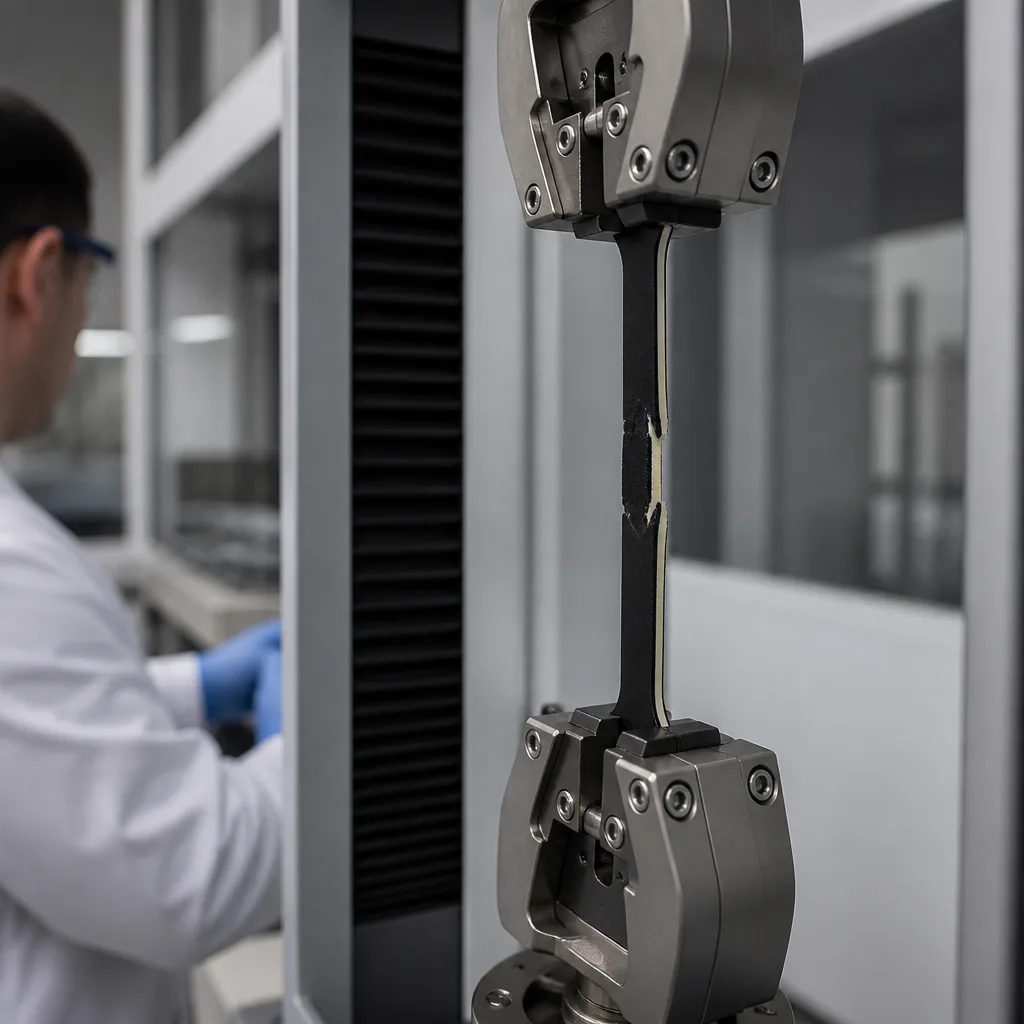
The Ford FLTM BN 151 test family is designed to measure how strongly two materials remain bonded together when force is applied to separate them. Typical applications include:
- Interior decorative furnishings
- Emblems and logos affixed to the panels
- Laminated fabrics and coated textiles
- Plastic or flexible substrates with adhesive layers
- Multilayer automotive interior components
These tests are critical to ensuring that internal components do not peel, separate, or delaminate over the life of the vehicle.
The Ford FLTM BM 151 standard consists of multiple sub-sections:
- Ford FLTM BN 151-01 Bond Strength of Trim Assemblies: This standard includes a test procedure to determine the bond strength (adhesion or peel strength) of glued trim assemblies and components used in vehicle interiors. It evaluates how well decorative or functional trim materials (such as fabrics, vinyls, foams, and coatings) adhere to substrates or other layers in finished assemblies.
This standard is commonly used in the following areas:
- Door panels, instrument panels, consoles, seats, and other interior trim parts.
- Bonded laminates or assemblies are laminates or installations where multiple layers are joined together using adhesive, heat, or other bonding processes.
This standard describes the following test methods:
- Method A: Original state
- Method B: After exposure to aging
- Method C: After exposure to moisture
This structure allows engineers to evaluate how adhesive strength changes over time and under environmental stress.
Method A is a test method used to evaluate the adhesion strength of automotive interior trim components in their original (unaged, unconditioned) state. This method specifically measures the initial peel adhesion strength of materials used in interior trim systems. For example,
- Vinyl coated fabrics
- Textiles
- Laminated flooring materials
- Welded or glued decorative elements
The main goal is to ensure that the internal components do not separate under normal service conditions. This method focuses on the following:
- Peel resistance in original condition (as manufactured)
- Adhesion integrity of welded or adhesive joints
- Resistance of floor layers to separation under shear load
In short, it checks how strong the adhesion is before any aging, moisture, or environmental exposure.
Method B is a version of the aged peel adhesion strength test for automotive interior trim components. This method evaluates how strong glued or welded trim remains after being subjected to thermal aging conditions. This method specifically covers:
- Weld seam strength / peel strength after heat aging
- Decrease in adhesion strength due to thermal exposure.
Method B is designed to simulate real-life vehicle thermal stress, such as:
- Warm climate interior conditions (instrument panel, doors, seats)
- Prolonged exposure to cabin temperature
- Thermal cycling effects on adhesives and welds.
This method checks whether the adhesion performance is still acceptable after aging.
Method C is a moisture-aged peel adhesion strength test used for automotive interior trim components. It determines the peel adhesion strength after exposure to moisture. It evaluates how glued or welded trim materials behave after exposure to high-humidity environments.
This method is designed to simulate real vehicle conditions such as the following:
- Rainy/humid climates
- Condensation in vehicle cabins
- Long-term moisture absorption in interior materials.
- Moisture stress on adhesives, foams, and textile laminations.
This method focuses on the following:
- Loss of adhesion due to moisture ingress.
- Hydrolysis of adhesives
- Swelling or weakening of textile/vinyl layers
- Change in failure mode (adhesive: cohesive or substrate failure)
In a nutshell,
- Method A = Initial strength
- Method B = Post-heat resistance
- Method C = Post-moisture strength
Ford FLTM BN 151-05 Determination of 180-degree peel adhesion strength of laminates: This standard is part of a series focusing on interior trim materials, textiles, and adhesive bonding performance. It is used to measure how strongly two bonded layers resist separation when peeled at a controlled angle. The described test method ensures that laminated interior components maintain their durability throughout the vehicle's lifespan. It is primarily used in the following areas:
- Interior trim laminates
- Coated components
- Multilayered decorative surfaces
- Textile or polymer layers bonded together with adhesive.
The aim is to prevent the following:
- Layer separation
- Edge lifting
- Cosmetic flaws
- Functional failure of glued parts
In general, this test follows these steps:
- A laminate sample is prepared (two glued layers).
- One end of the laminate is peeled back
- A tensile testing machine applies force at a 180-degree angle.
- The system records the following:
- Average peeling force
- Maximum force
- Failure mode (adhesive, cohesive, or substrate failure)
This test is commonly used for the following:
- Interior door panels
- Instrument panel decorative foils
- Textile-leather composites
- Foam-backed laminates
- Soft-touch surface materials
This standard is important for the following reasons:
- Internal durability: Prevents decorative surfaces from peeling or blistering throughout the vehicle's lifespan.
- Adhesive performance verification: Ensures that adhesives maintain their strength under conditions of heat, humidity, aging, and mechanical stress.
- Supplier quality control: This standard is used by original equipment manufacturers to approve materials, compare suppliers, and standardize production quality.
- Customer perception: Even if peeling trim isn't critical to safety, it's perceived as a significant quality defect.
Ford FLTM BN 151-06 Determination of 90-degree adhesion strength of interior materials to rigid or flexible surfaces: This standard evaluates the adhesion strength of bonded interior components when peeled off at a 90-degree angle. It is primarily used in the following areas:
- Emblems and badges affixed to surfaces
- Interior decorative coatings
- Laminated or coated interior components
- Plastic parts glued together with adhesive.
In general, this test follows these steps:
- A bonded sample (coating + substrate) is prepared.
- One edge is lifted and pulled at a 90-degree angle.
- A tensile testing device measures the force required to continue peeling.
- The results are recorded as follows:
- Average peeling force
- Maximum force
- Failure mode (adhesive/cohesion/substrate failure)
This standard differs from the Ford FLTM BN 151-05 standard primarily in the following respect:
- Ford FLTM BN 151-05 standard, 180-degree peel test (for more flexible laminates, films, coatings)
- Ford FLTM BN 151-06 standard, 90-degree peel test (for tougher bonding, emblems, coatings)
Therefore, the Ford FLTM BN 151-06 standard is generally more stringent for rigid connections and fixed-angle separation behavior.
This standard is important for the following reasons:
- Product durability: Prevents emblems, trims, or decorative parts from coming loose during vehicle use.
- Environmental resistance: Ensures the durability of the adhesion.
- Heat cycles
- Gender
- Aging
- Vibration
- Quality assurance: Used by Ford and its suppliers to verify the following:
- Adhesive performance consistency
- Production process stability
- Customer perception: Loose emblems or peeling finishes significantly reduce the perceived vehicle quality.
In conclusion, the Ford FLTM BN 151 standard is a key family of automotive testing methods used to evaluate the peel and bond strength of interior trim materials and bonded components. It ensures that interior parts remain securely bonded throughout the vehicle's lifespan, even under stress, heat, and aging conditions.
For many years, our organization, with its competent and experienced team, has been understanding the needs of its customers, providing the advanced testing services they require, and assisting them in the establishment, implementation, and improvement of management systems. Within this framework, we also provide testing services compliant with the Ford FLTM BN 151 standard.



