

The “DBL 5578 General supply specifications for elastomer profile sections and molded parts” standard, developed by Daimler, the owner of the Mercedes-Benz brand, is a technical supply specification for elastomer (rubber-like) components coated with low-friction or anti-friction layers. These parts are widely used in automotive applications, particularly in areas where friction reduction is essential, such as door seals, window seals, air seal strips, sliding mechanisms, or other body seals where smooth operation and wear resistance are crucial.
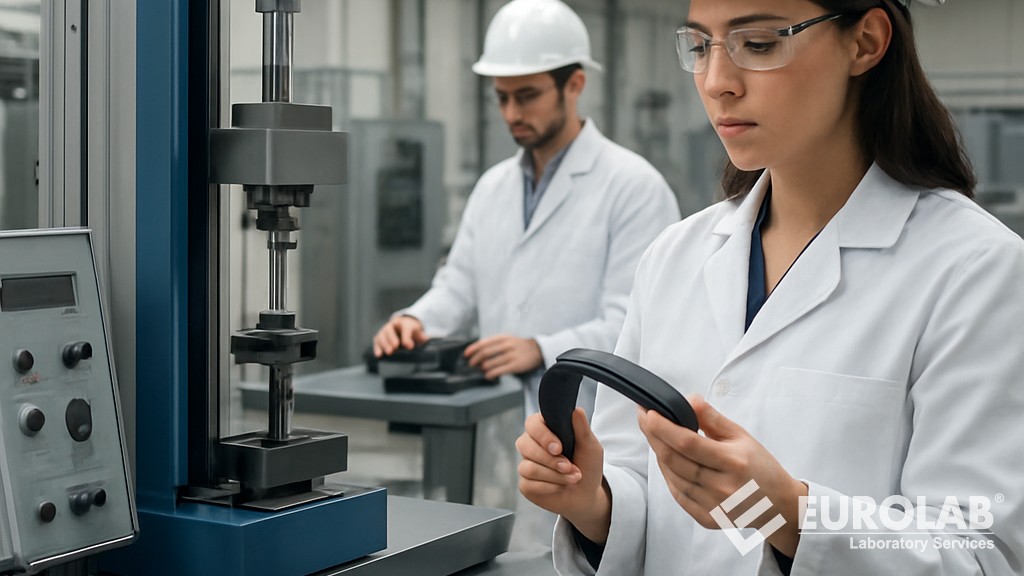
This standard defines the requirements and test methods for elastomer parts treated with a low-friction coating. This coating minimizes adhesion, noise (e.g., squeaking), and wear during movement, especially when in contact with glass, metal, or other surfaces.
The DBL 5578 standard is closely related to other DBL standards in the elastomer family, such as:
The DBL 5578 standard specifically addresses the performance of anti-friction coatings, ensuring they remain functional in real-world automotive conditions. This specification includes various tests to verify the coating's durability, adhesion, and resistance. Common test methods referenced in the DBL 5578 standard include:
These tests ensure that coated parts and seals meet Mercedes-Benz quality standards for interior and exterior body applications where reliable operation is required for the vehicle's lifespan.
These types of coated elastomer parts are used in the following areas:
Certain materials, such as thermoplastic vulcanizates or EPDM-based elastomers, are typically qualified according to the DBL 5578 standard for black-colored components.
In short, the DBL 5578 standard is an automotive supply specification and test standard developed for friction-coated elastomer parts used in vehicles, particularly in sealing, upholstery, and body applications where sliding contact occurs.
This standard describes both material requirements and test methods to ensure that elastomer components meet expectations for durability, performance, and quality in manufacturing and real-world use.
Elastomers are rubber-like polymers (e.g., EPDM, silicone, TPE) commonly used in automotive applications for sealing, vibration damping, gaskets, and air seal strips. Anti-friction coating is a surface treatment applied to these elastomer elements to reduce friction between contacting surfaces (e.g., between a door seal and a door frame).
This coating increases wear resistance, reduces noise and abrasion, and extends component life at sliding interfaces. Such parts are commonly found in door and trunk seals, window channels, body interfaces, or anywhere rubber meets painted or plastic parts and needs to slide without damage.
The DBL 5578 standard specifies qualification criteria and test procedures to ensure that coated elastomer parts meet the following requirements:
Typical test methods referenced under the DBL 5578 standard include the following:
These tests reflect the real-world stresses an elastomer part would encounter inside and outside a vehicle, from repeated contact to environmental exposure.
The DBL 5578 standard is part of a broader suite of DBL supply specification standards used by Daimler. Other related standards include:
The DBL 5578 standard focuses specifically on coated elastomer products that reduce friction, including seals, gaskets, and touch-sensitive interfaces where sliding friction is of paramount importance.
The DBL 5578 standard is considered important for automotive manufacturers and suppliers for the following reasons:
For many years, our organization, with its competent and experienced team, has been understanding the needs of its clients, providing the advanced testing services they require, and assisting them in the establishment, implementation, and improvement of management systems. Within this framework, we also provide testing services compliant with the DBL 5578 standard.
To get an appointment, to get more detailed information or to request an evaluation, you can ask us to fill in our form and reach you.

