

Developed by BMW, a leading German multinational company in the automotive industry, the “BMW PR 556 Resistance of unpainted thermoplastic surfaces in interiors to creams” standard describes a specific material testing method developed to evaluate the durability and resistance of certain automotive interior components. This standard focuses on unpainted thermoplastic surfaces used inside vehicles, such as instrument panel elements, door panels, trim pieces, center consoles, or other plastic parts not coated with paint or varnish.
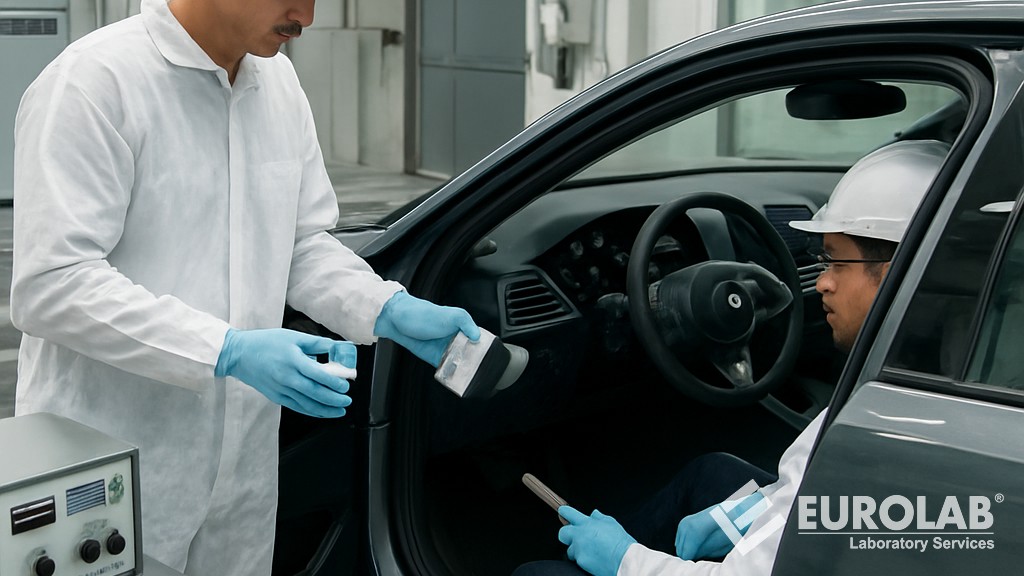
In daily vehicle use, interior plastics can come into contact with various consumer products that passengers may apply and accidentally transfer to surfaces, such as hand creams, body lotions, sunscreens, cosmetic creams, or similar substances. These creams often contain oils, emollients, surfactants, or solvents that can potentially cause:
The BMW PR 556 standard ensures that unpainted thermoplastics maintain their integrity and appearance when exposed to such substances, supporting BMW's high requirements for interior material quality, perceived value, and customer satisfaction in premium vehicles.
The basic testing method is the drop test (cream resistance). Essentially, this method follows these steps:
This test simulates real-world accidental contact scenarios more realistically than immersion or full surface application methods used in other chemical resistance tests.
The materials covered in this method are unpainted thermoplastics, especially for indoor applications (e.g., acrylonitrile butadiene styrene (ABS), polycarbonate/acrylonitrile butadiene styrene (PC/ABS), polypropylene (PP) or similar compounds).
Other test methods exist for broader chemical resistance (BMW PR 557) or fingerprint resistance (BMW PR 506), but the BMW PR 556 standard narrowly targets cream-like substances.
Unless explicitly stated otherwise, this method cannot be applied to painted/coated surfaces, outdoor plastics, textiles, leather, or elastomers.
Companies supplying interior components to BMW must demonstrate compliance with these and related standards to ensure that the parts are suitable for production vehicles.
This standard reflects BMW’s commitment to durable interior materials that are resistant to common consumer pollutants without the need for additional protective coatings.
The BMW PR 556 standard is important because it directly addresses real-world durability issues that affect the long-term look, feel, and perceived quality of a vehicle's premium interior—key factors in customer satisfaction.
Vehicle interiors, especially high-contact unpainted thermoplastic surfaces (e.g., dashboard trim, door handles, center consoles, armrests, or button surrounds), frequently come into contact with personal care products of the following types:
These products often contain oils, plasticizers, surfactants, alcohols, or solvents that can interact aggressively with certain plastics. Without adequate resistance, exposure can lead to:
This type of damage results from repeated, accidental contact (e.g., touching the console after applying hand cream) and becomes visible relatively quickly with daily use.
Buyers expect the products to look and feel new and luxurious for many years. Failures in cream resistance can lead to:
BMW PR 556 and similar standards ensure that suppliers provide durable materials without the need for extra protective coatings (which add cost/weight) or frequent maintenance.
For BMW suppliers, passing the BMW PR 556 standard is mandatory for part approval. This prevents substandard materials from reaching production facilities, reducing the risk of field problems, recalls, or costly post-launch redesigns. Many other original equipment manufacturers also have similar testing methods (e.g., the GMW14334 standard for creams and lotions), indicating that this is considered a common failure mode across the industry.
In conclusion, the BMW PR 556 standard helps protect the perceived value, durability, and owner satisfaction of BMW interiors by simulating and preventing one of the most common non-mechanical sources of cosmetic damage in everyday driving.
For many years, our organization, with its competent and experienced team, has been understanding the needs of its clients, providing the advanced testing services they require, and assisting them in the establishment, implementation, and improvement of management systems. Within this framework, we also provide testing services in accordance with the BMW PR 556 standard.
To get an appointment, to get more detailed information or to request an evaluation, you can ask us to fill in our form and reach you.

