

The ISO 20823 “Oil and related products – Determination of flammability properties of fluids in contact with hot surfaces – Manifold ignition test” standard, published by the International Organization for Standardization (ISO), describes a test method for determining the relative flammability of fluids when in contact with a hot metal surface at a constant temperature. However, it is also possible to measure fluid ignition temperatures by adjusting the manifold temperature. This method is primarily used to evaluate the ignition resistance of fire-resistant hydraulic fluids, which are by definition difficult to ignite. It can also be used with other types of fluids that are more flammable at lower surface temperatures, but this can significantly increase the hazards of this procedure.
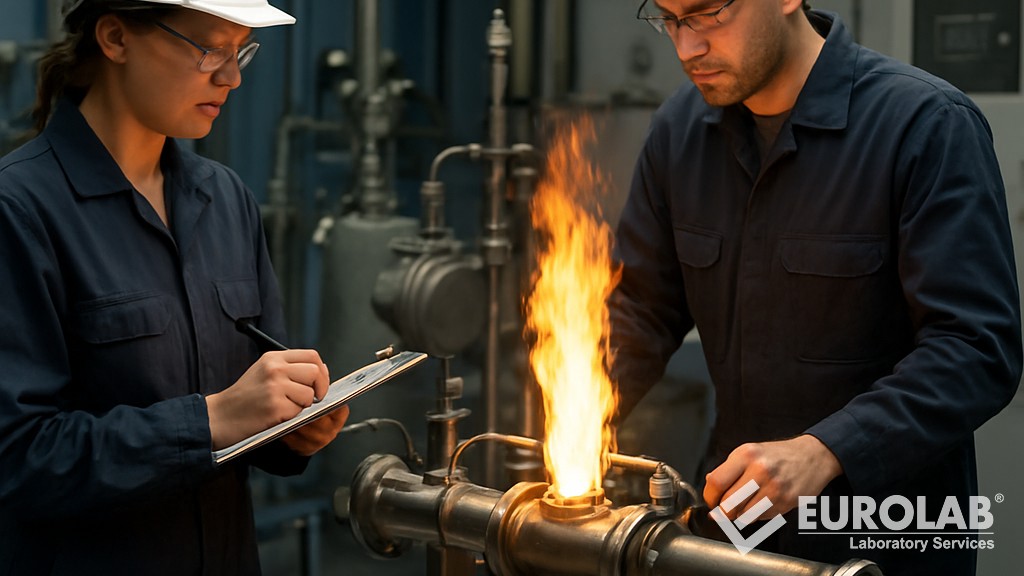
In principle, 10 ml of test liquid is dripped from a predetermined height and at a specified rate into a tube heated to 700 degrees or another temperature in series. The resulting spray is examined for flash or burning both on and after dripping from the tube.
Unless otherwise specified, samples should be taken in accordance with the procedures specified in ISO 3170 or an equivalent standard. Laboratory samples should be thoroughly mixed by vigorous shaking for 30 seconds before taking the test sample. The test sample should not be filtered, but any air bubbles that may arise during mixing should be allowed to escape from the liquid before testing.
In the world of high-risk industrial operations where machinery whizzes under extreme pressures and temperatures, safety is a lifeline. A hydraulic system is at risk in a steel mill or an offshore oil platform where a single spark from a hot surface can ignite a fluid and turn a routine maintenance check into a potentially catastrophic fire. This is where ISO 20823 and similar standards come into play, offering a rigorous framework for assessing and mitigating such risks.
The ISO 20823 standard includes a specific test method for evaluating the flammability of petroleum-based and related liquids when they come into contact with scorching metal surfaces.
Manifold ignition testing is a meticulously designed laboratory procedure that simulates industrial hazards. The basic steps of this test are as follows:
Unlike open flame tests (e.g., ISO 15029 standard for spray ignition), the manifold approach focuses on surface contact, a common type of failure in turbocharged engines or hydraulic presses. This is particularly vital for water-glycol or phosphate ester fluids used in high-risk environments where even a momentary failure can escalate to dangerous levels.
The ISO 20823 standard is a cornerstone of compliance and innovation in fire-prone industries. Key points include:
Beyond direct applications, the ISO 20823 standard also influences product development. Liquid manufacturers repeat formulations to improve flame resistance, add antioxidants or synthetic bases, and often use the phrase “ISO 20823 compliant” in their data sheets.
This standard prevents potential damage by isolating high-risk liquids early. From an environmental perspective, safer liquids mean fewer spills and emissions, aligning with sustainability goals.
For many years, our organization, with its competent and experienced staff, has been understanding the needs of its clients, providing the advanced testing services they require, and assisting in the establishment, implementation, and improvement of management systems. Within this framework, we also provide testing services to businesses in accordance with the "ISO 20823 Petroleum and related products - Determination of flammability properties of fluids in contact with hot surfaces - Manifold ignition test" standard.
To get an appointment, to get more detailed information or to request an evaluation, you can ask us to fill in our form and reach you.

