

The standard “BMW AA-0328 Peel resistance of adhesive tapes and protective covers (liners)”, developed by BMW, a multinational vehicle manufacturer headquartered in Germany, describes a method for measuring the peel resistance of adhesive tapes, self-adhesive films and information signs (labels) against peeling forces and for determining the peel resistance of the protective cover (liner).
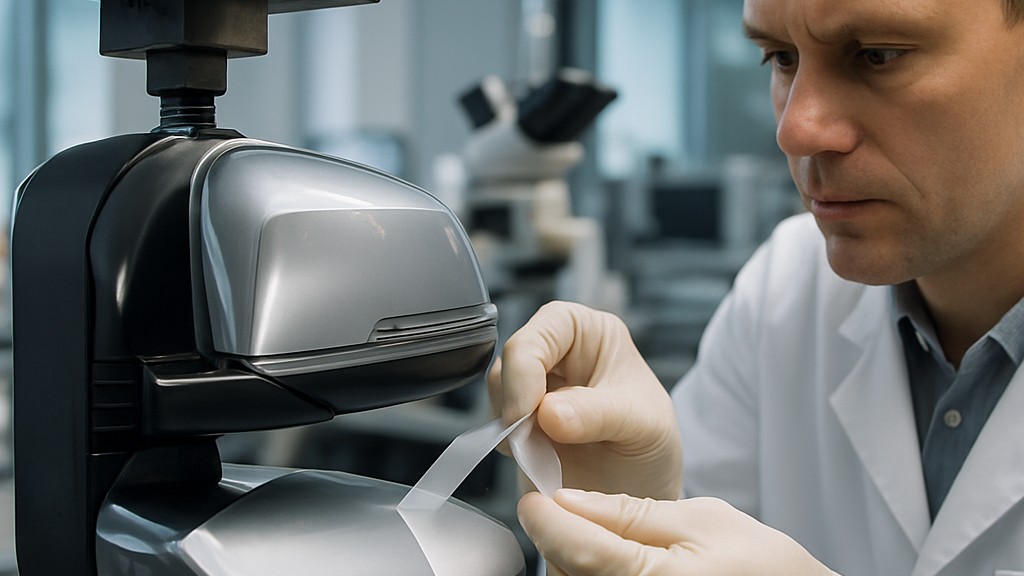
In the demanding world of automotive manufacturing, where every component must withstand harsh conditions, adhesive tapes play a critical role. From securing interior trim to bonding exterior panels, these tapes ensure vehicle structural integrity, noise reduction, and aesthetic appeal. As a leader in world-class automotive engineering, BMW implements rigorous standards to ensure quality and reliability. One such standard is BMW AA-0328, which focuses on evaluating the peel resistance of adhesive tapes. This standard is part of BMW's broader suite of test protocols designed to simulate real-world stresses such as temperature fluctuations, vibrations, and environmental exposure.
The BMW AA-0328 standard, adopted industry-wide, helps suppliers and manufacturers ensure adhesive materials meet the demands of luxury vehicles, where failures can lead to costly recalls or compromised safety.
The primary purpose of the BMW AA-0328 standard is to measure how well adhesive tapes adhere to surfaces under controlled peel forces, ensuring they don't detach prematurely over the life of the vehicle. This is crucial in automotive applications where tapes are exposed to:
BMW standardizes peel resistance testing to ensure consistency across suppliers and reduce variability in production. Non-compliance can lead to adhesion failures, noise, water ingress, and even structural issues in critical areas like airbag deployment systems. This standard aligns with BMW's comprehensive testing ecosystem, which includes related standards such as AA-0324 (salt spray test) and AA-0326 (shell corrosion test).
The BMW AA-0328 standard test procedure is a methodical and repeatable method that measures adhesive performance using a 90-degree or 180-degree peel test, depending on the application. Generally, this method involves the following steps:
These steps reveal how adhesives perform after extended use, a key difference from basic peel tests.
Tests are usually carried out in accredited laboratories equipped with climate chambers and universal testing machines.
The BMW AA-0328 standard is an integral part of various vehicle components:
To achieve BMW approval, suppliers regularly certify their products in accordance with the BMW AA-0328 standard. In-line checks using simplified peel testers in production ensure batch consistency.
As a result, the BMW AA-0328 standard sets the benchmark for adhesive reliability. It protects vehicle performance and passenger safety by rigorously testing peel resistance.
Our organization, with its competent and experienced team, has been understanding the needs of its customers for years, providing them with the advanced testing services they need, and assisting them in the establishment, implementation, and improvement of management systems. In this context, we also provide testing services in accordance with the "BMW AA-0328 Peel Resistance of Adhesive Tapes and Protective Covers (Linings)" standard.
To get an appointment, to get more detailed information or to request an evaluation, you can ask us to fill in our form and reach you.

