

Developed by Tesla, an American company that designs and manufactures electric vehicles, the “Tesla TS-0002476 Reliability Testing and Verification Specification – Environmental Testing Specification for Components and Subsystems in Tesla Motors Products” standard is a critical internal technical standard that defines the reliability testing and verification specification for components and subsystems used in Tesla’s vehicle lineup. Unlike simple material standards, the TS-0002476 standard serves as a comprehensive framework for environmental and mechanical stress testing, ensuring that parts can withstand the demanding lifecycle of an electric vehicle.
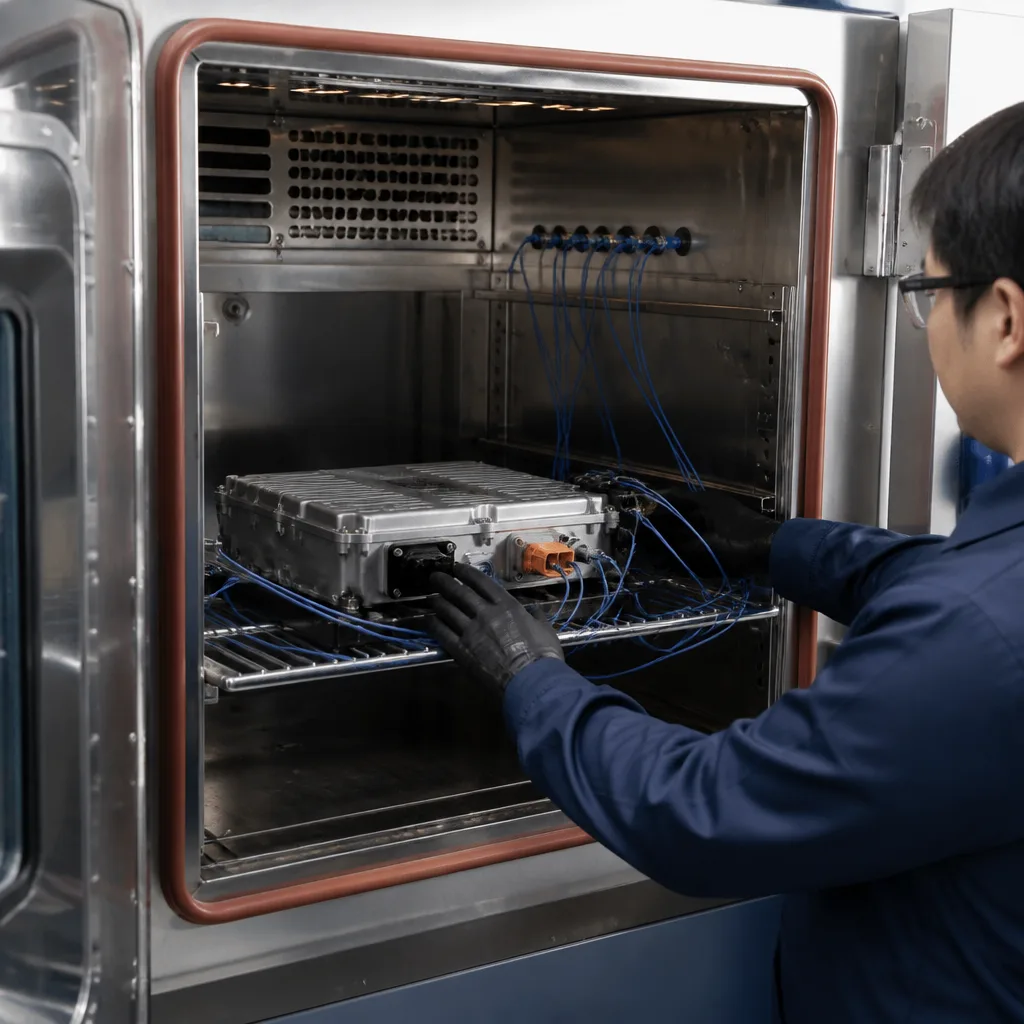
The primary objective of the TS-0002476 standard is to establish a unified, successful approach to reliability. This standard includes test methods used to verify the durability of equipment ranging from high-voltage battery cooling hoses to electronic control units (ECUs).
The main objectives of this standard are:
The TS-0002476 standard consists of multiple sections, each describing a specific test method or environmental condition. The basic test categories are as follows:
These tests examine resistance to extreme heat, cold, and rapid temperature changes.
These tests simulate road vibrations, potholes, and accidental falls during assembly.
These tests evaluate material stability against moisture ingress and corrosion.
These tests specifically target cooling circuits and battery thermal management systems.
Basic test examples:
The TS-0002476 standard does not exist in isolation; it is frequently specified as a mandatory test protocol in other Tesla material specifications. For example,
Compliance with the TS-0002476 standard is rigorous for suppliers. The basic requirements are as follows:
In short, the Tesla TS-0002476 standard is an internal engineering specification developed to verify the reliability and environmental durability of components and subsystems used in Tesla vehicles. This standard plays a critical role in ensuring that automotive parts can withstand real-world operating conditions throughout the vehicle's lifespan.
The main objectives of the TS-0002476 standard are as follows:
This standard is widely used in the following areas:
This standard applies to a wide variety of automotive components, including:
The tests described include validation at both the component level and the subsystem level.
The importance of this standard in automotive engineering is as follows:
These systems are highly sensitive to environmental stress and require rigorous validation.
In short, the Tesla TS-0002476 standard is the stress testing guideline for the company's engineering ecosystem. By subjecting components to accelerated aging (e.g., high temperature and humidity resistance or pressure cycling), Tesla ensures its vehicles maintain performance from freezing winters to humid summers.
In modern automotive engineering, especially for electric vehicles, such standards are essential to achieve high reliability, safety, and a long service life.
For many years, our organization, with its competent and experienced team, has been understanding the needs of its clients, providing the advanced testing services they require, and assisting in the establishment, implementation, and improvement of management systems. Within this framework, we also provide testing services to businesses in accordance with the Tesla TS-0002476 standard.
To get an appointment, to get more detailed information or to request an evaluation, you can ask us to fill in our form and reach you.

