

The “GM 9509P Solvent Resistance (Determination of Curing of Painted Surfaces)” standard, published by General Motors (GM), is an engineering test specification used to evaluate the solvent resistance of painted metal and plastic surfaces. This standard determines whether a paint coating has reached an adequate level of curing after the painting and baking process by measuring its resistance to solvent friction. This method is commonly known as a solvent friction test or a MEK (methyl ethyl ketone) friction test, depending on the specified solvent for the coating system.
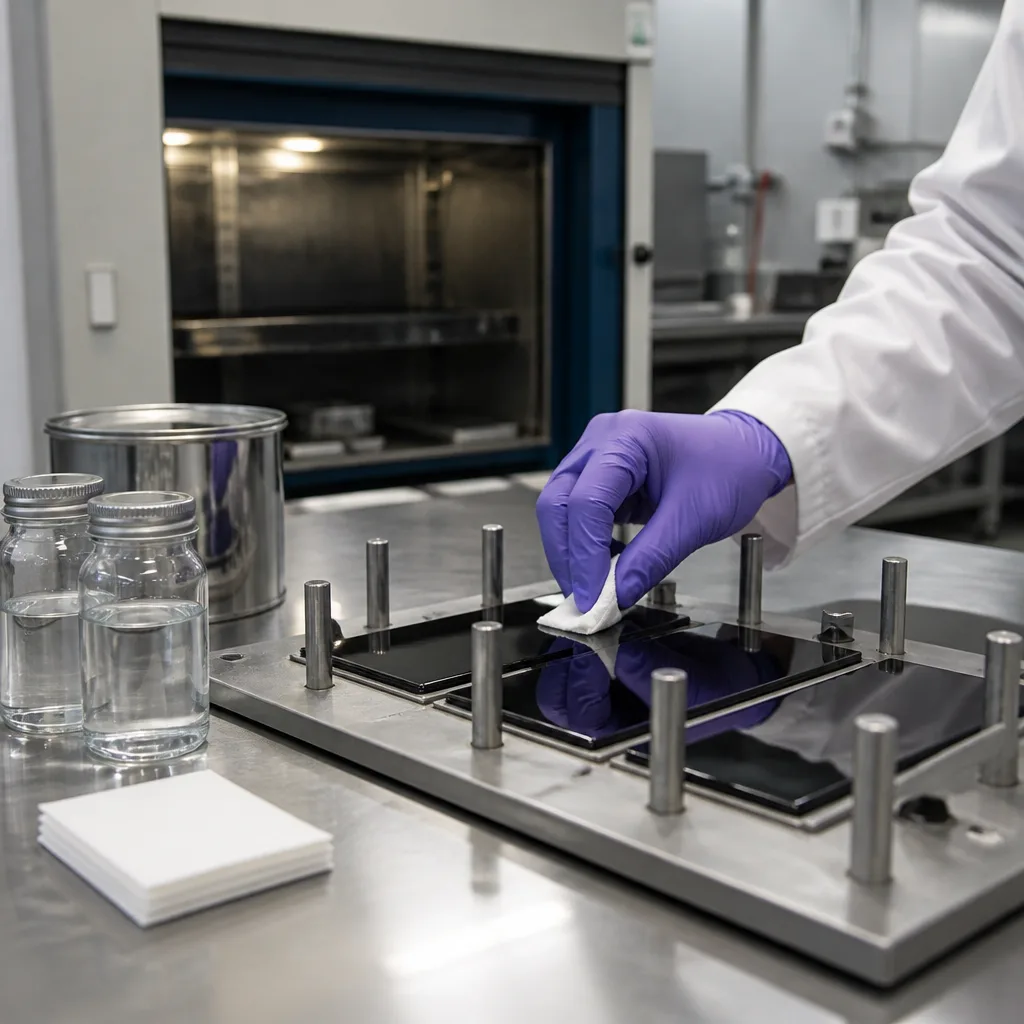
Although the GM 9509P standard was replaced by the GMW 15891 standard as part of the transition to GMW standards, it remains an important historical specification and is still used as a reference in many laboratory capabilities, legacy manufacturing documents, and supplier qualification records.
The primary purpose of the GM 9509P standard is to verify that a paint coating has cured correctly. In automotive manufacturing, paint systems undergo thermal curing in ovens to create a durable, cross-linked polymer network. If the curing process is incomplete, the coating may exhibit the following problems:
The GM 9509P standard provides a rapid production quality test that determines whether the curing process has reached the required solvent resistance level before vehicles proceed to final assembly.
The test method described is based on a simple concept:
A properly cured coating should exhibit resistance to solvent attack with little or no visible degradation.
The GM 9509P standard applies to numerous painted automotive components, including:
This method is suitable for evaluating the following:
Typical laboratory equipment used in these tests includes:
While some laboratories use automated rubbing devices to improve repeatability, manual testing is commonly used.
After scrubbing with the solvent, the coating is evaluated in terms of the following properties:
Acceptable limits vary according to the following:
Although developed for General Motors, the GM 9509P standard is widely implemented in the automotive supply chain by:
Many accredited laboratories continue to list the GM 9509P standard among their supported test methods because customers still maintain the older specifications.
The GM 9509P standard offers several advantages:
Because this test method can be completed in a few minutes, it is often used as an in-process quality control tool.
In contrast, while the GM 9509P standard is valuable, it does not evaluate every aspect of coating performance. For example, it does not directly measure the following:
For full paint suitability, additional coating tests covering these performance characteristics are required.
General Motors, while integrating its engineering standards into its global material (GMW) system, has developed the GMW 15891 standard, which provides updated requirements and globally harmonized procedures for solvent friction testing of painted surfaces, replacing the GM 9509P standard. Organizations working with existing GM vehicle programs should generally refer to the newer GMW specification, but the GM 9509P standard remains valid for older programs and historical documentation.
Automotive paint systems protect vehicle surfaces from corrosion, chemicals, environmental effects, and daily wear and tear, while also providing the desired appearance. An inadequately cured coating can lead to defects such as smooth surfaces, reduced chemical resistance, or premature coating failure.
In conclusion, the GM 9509P standard helps manufacturers verify that the paint curing process has been successfully completed before vehicles or components proceed to subsequent production stages. By providing a quick and reliable indication of coating curing, the standard supports consistent paint quality, improved durability, and reduced manufacturing defects. Although it has been superseded by another standard, this standard remains an important reference in General Motors' history of coating quality standards and is recognized by many testing laboratories.
For many years, our organization, with its competent and experienced staff, has been understanding the needs of its clients, providing the advanced testing services they require, and assisting them in the establishment, implementation, and improvement of management systems. Within this framework, we also provide testing services compliant with the GM 9509P standard.
To get an appointment, to get more detailed information or to request an evaluation, you can ask us to fill in our form and reach you.

