

Developed by BMW, a multinational vehicle manufacturer, the “BMW AA P 276 Temperature Cycle Test” standard is an internal test specification used in the automotive industry to evaluate the durability and performance of materials and components, particularly interior and exterior parts, coatings, plastics, adhesives, and trim elements, under extreme temperature variations.
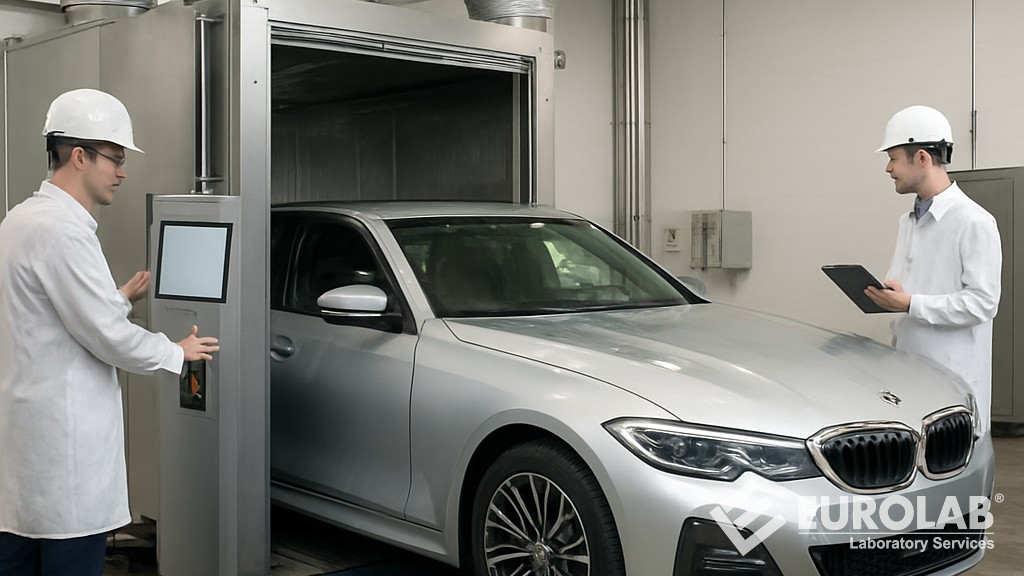
This standard defines temperature cycling testing (or thermal cycling testing). It simulates the thermal stresses that vehicle components are subjected to in real-world use. For example,
This test is part of BMW’s broader environmental simulation and aging resistance requirements for the qualification assessment of supplier parts. This helps ensure that components maintain their functionality, appearance and structural integrity throughout the vehicle’s lifespan.
The key elements of this standard are:
Many testing laboratories are accredited to perform this test according to this standard.
The BMW AAP 276 standard is sometimes listed alongside standards such as BMW AAP 275 (aging resistance) or BMW AAP 277 (humidity/low temperature load).
This type of thermal cycling is critical to BMW's quality assurance, especially for parts in challenging locations such as instrument panels, door panels, bumpers, or under-the-hood components.
Vehicles operate in a variety of climates: freezing winters in northern regions, scorching summers in deserts, or rapid daily temperature changes in continental areas. Components such as the dashboard, door panels, bumpers, gaskets, painted surfaces, and under-hood elements must withstand the following challenges:
This standard accelerates aging by simulating these conditions through controlled temperature cycling, allowing for the prediction of long-term performance over a short test period.
In the automotive industry, especially for a leading manufacturer like BMW, ensuring long-term durability, safety, and customer satisfaction is paramount. Vehicles must operate reliably in extreme and rapidly changing environmental conditions for a period of 10-15 years of ownership. The BMW AAP 276 standard addresses this issue by subjecting components (specifically interior and exterior trim, plastics, coatings, adhesives, gaskets, and fittings) to accelerated, repeated, controlled thermal stresses.
Modern cars encounter significant temperature variations on a daily and seasonal basis:
These are not gradual but occur rapidly, creating thermal expansion/contraction stresses in bonded or multi-material parts (e.g., plastic instrument panels with metal inserts, painted surfaces on plastic substrates, adhesives holding coatings) due to different coefficients of thermal expansion.
Without such testing, hidden weaknesses are revealed during service, leading to costly warranty claims, recalls, or safety issues. The BMW AA P 276 standard helps to reveal these:
These problems compromise aesthetics, noise, vibration, rigidity (NVH), protection against water and dust ingress, and even safety (e.g., damaged internal components affecting airbag deployment or visibility).
Accelerated testing is important for the following reasons:
Consequently, the BMW AAP 276 standard is necessary because vehicles are expected to deliver superior performance, a feeling of luxury, and reliability without compromise in all climates. Temperature cycling prevents premature component failure.
For many years, our organization, with its competent and experienced staff, has been understanding the needs of its customers, providing the advanced testing services they require, and assisting in the establishment, implementation, and improvement of management systems. Within this framework, we also provide testing services to businesses in accordance with the "BMW AAP 276 Temperature Cycle Test" standard.
To get an appointment, to get more detailed information or to request an evaluation, you can ask us to fill in our form and reach you.

