

The “GMW 16526 Water Absorption Test Method for Automotive Materials” standard, developed by General Motors Worldwide (GMW), is an engineering standard that specifies a method for determining the water absorption properties of materials used in automotive applications. This standard is primarily designed for materials and components where moisture absorption may affect dimensional stability, mechanical properties, durability, or functional performance.
Many automotive materials are exposed to humid environments, condensation, rainwater, washing processes, or systems containing coolant and water throughout their lifespan. Some materials absorb moisture, which can lead to swelling, reduced strength, changes in stiffness, or dimensional changes.
The GMW 16526 standard provides a standardized procedure for measuring how much water a material absorbs under controlled conditions. This allows engineers and suppliers to consistently compare materials and verify compliance with General Motors material requirements.
The main objectives of this standard are:
This standard applies generally to materials whose water absorption properties are relevant to automotive performance and includes the following:
The measured water absorption value can be used during material qualification, product development, and supplier verification.
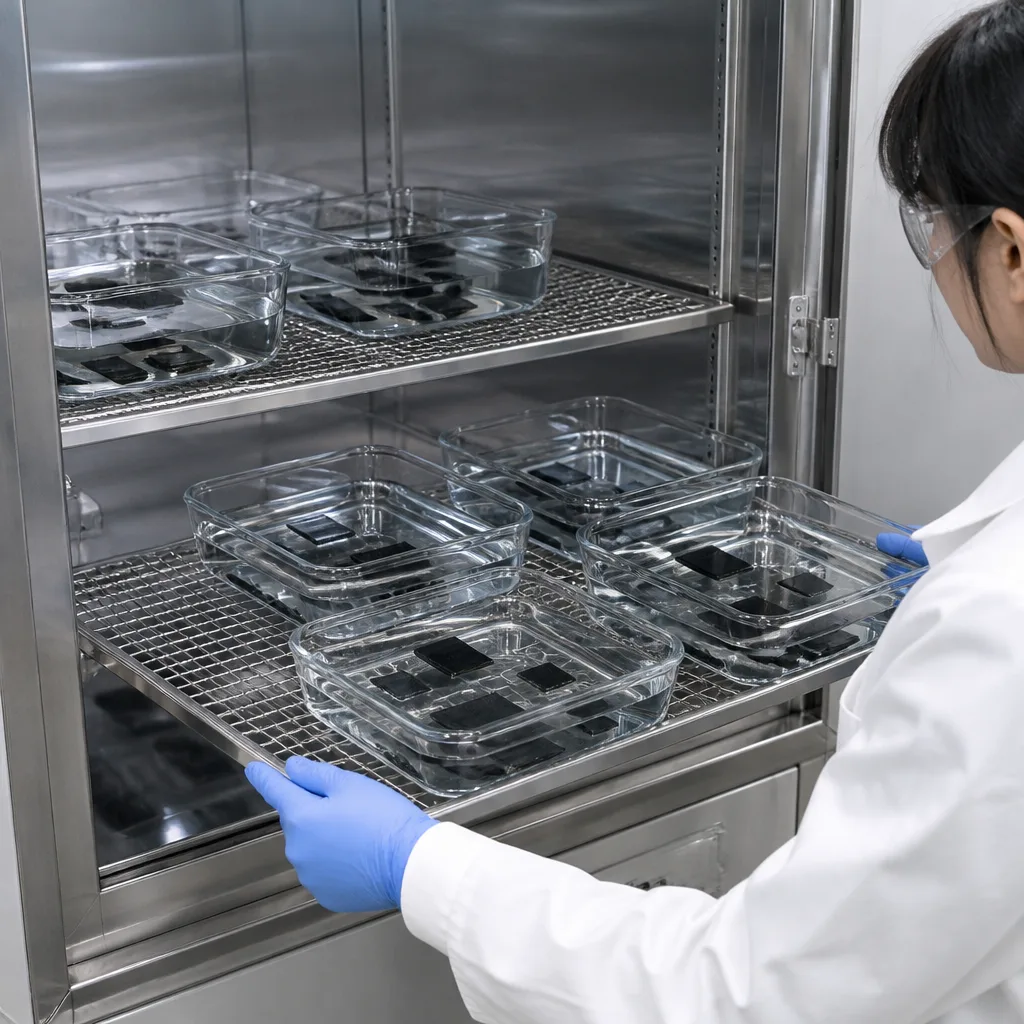
According to the GMW 16526 standard, test specimens are, in principle, conditioned and weighed before exposure to water. The specimens are then immersed or exposed to water for a specified period under controlled environmental conditions. After exposure, the specimens are weighed and evaluated again. The increase in mass is used to determine the amount of water absorbed by the material. Additional measurements may be taken to assess dimensional changes or property degradation.
The described test method generally follows these steps:
Typically, test equipment includes the following:
Moisture absorption can significantly affect the performance of automotive materials. Excessive water absorption can lead to:
Using the GMW 16526 standard, engineers can identify materials that maintain their properties when exposed to moisture and ensure reliable vehicle performance throughout the product lifecycle.
This standard is applicable to a variety of automotive materials, including:
These materials are commonly found in vehicle interiors, exteriors, engine compartments, and sealing applications.
Depending on the material specification, the following properties can be evaluated:
The results are compared against the acceptance criteria specified in the relevant General Motors material specification.
In the automotive industry, the GMW 16526 standard is frequently used in the following situations:
A test report prepared according to the GMW 16526 standard normally includes the following:
Water absorption is an important material property because moisture can significantly affect the behavior of many automotive polymers and composites. For example,
By using this testing method, suppliers can consistently assess these effects across different materials and production locations.
The GMW 16526 standard is generally used as a material characterization test rather than a full durability test. The results can be used as a reference in other material specifications that define the maximum allowable water absorption values for specific material families or applications.
In short, it provides a consistent method for comparing moisture absorption and verifying material performance.
In conclusion, the GMW 16526 standard establishes a controlled and repeatable method for measuring water absorption in automotive materials. The test is valuable because moisture absorption can affect dimensional stability, mechanical performance, electrical properties, and long-term durability. By standardizing sample preparation, water exposure, weighing, and calculation procedures, this standard enables General Motors and its suppliers to make reliable comparisons between materials and ensure that moisture-sensitive materials meet the requirements of their intended automotive applications.
This standard contributes to the durability, quality, and long-term reliability of modern automotive components by controlling moisture-related risks such as swelling, deterioration, and performance loss.
GMW 16526 standard is often used in conjunction with other material and environmental testing standards that evaluate the following aspects:
Together, these tests provide a comprehensive assessment of the material's suitability for automotive applications.
For many years, our organization, with its competent and experienced staff, has been understanding the needs of its clients, providing the advanced testing services they require, and assisting them in the establishment, implementation, and improvement of management systems. Within this framework, we also provide testing services in accordance with the GMW 16526 standard.
To get an appointment, to get more detailed information or to request an evaluation, you can ask us to fill in our form and reach you.

