

The “GMW 14132 Resistance to Adhesion” standard, developed by General Motors Worldwide (GMW), is a test standard used to evaluate the tendency of two contacting material surfaces to undergo adhesion, material transfer, or permanent surface changes when subjected to heat and pressure. This standard is particularly important for automotive interior materials, including reinforced and unreinforced plastic roll materials and treated leather.
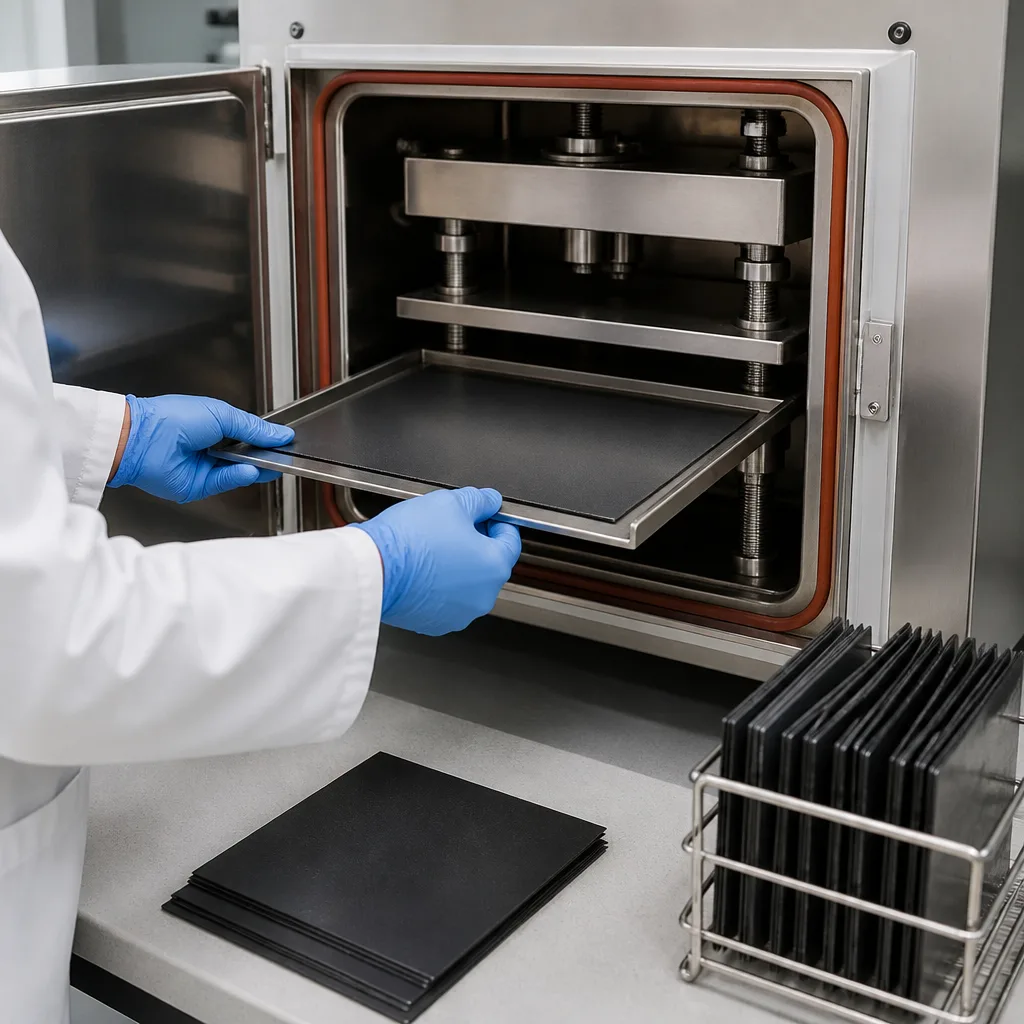
Adhesion is an undesirable phenomenon where two surfaces in contact become difficult to separate or cause changes in each other. For example, when sheets of a polymeric material are stored under pressure at high temperature, their surfaces:
This is especially important for automotive materials because components and semi-finished materials can be exposed to heat, pressure, stacking, and prolonged contact during manufacturing, transportation, and vehicle use.
The primary purpose of the GMW 14132 standard is to determine a material's resistance to blocking under the combined effects of heat and pressure. This standard defines blocking as a condition in which surfaces in contact interact to such an extent that permanent surface changes occur after separation.
In practical terms, this test answers an important question: will two contacting surfaces remain functionally and visually acceptable after being subjected to high temperature and pressure? This information can be used during material development, supplier qualification, and production quality control.
The GMW 14132 standard is primarily designed for the following:
These materials can be used in automotive applications such as:
Since the test standard itself does not define an acceptable limit for every application, precise applicability should always be confirmed against the material specification or General Motors drawing.
The basic principle in the GMW 14132 standard is simple. Two material surfaces are brought into contact and subjected to specified temperature and pressure conditions for a certain period of time. After conditioning, the samples are separated and examined for signs of adhesion. The evaluation may include the following observations:
The important point is that the test does not simply measure whether the surfaces are touching or separating. It assesses whether their contact under the specified environmental stress leads to unacceptable permanent damage.
Adhesion is greatly influenced by temperature and contact pressure. As temperature increases, some polymers, coatings, adhesives, and surface treatments may become softer or more susceptible to surface interaction. Pressure increases the actual contact between surfaces. Consequently, a material that does not adhere under normal laboratory conditions may adhere when subjected to the following conditions: heat + pressure + contact time. This makes the GMW 14132 standard particularly useful for simulating conditions that may occur during material storage, handling, processing, or service.
Adhesion resistance is important in automotive manufacturing because automotive materials are frequently produced and supplied in roll, sheet, layered, or stacked forms. Poor adhesion resistance can lead to a variety of problems.
Even if the material remains mechanically functional, such defects can lead to rejection due to appearance requirements.
The GMW 14132 standard can be integrated into a broader materials qualification program. A typical quality control strategy might include:
The test method described is particularly valuable when comparing the following:
A supplier can use testing during development to determine whether a formulation or finishing process provides sufficient resistance to clogging.
A crucial distinction must be made between the test method and the acceptance requirement. The GMW 14132 standard provides the procedure for evaluating blocking resistance. The relevant engineering specification, material specification, drawing, or customer requirement may determine what constitutes an acceptable result. Therefore, a laboratory should not assume that passing the test automatically means the material is approved for every General Motors application. The following should be checked in the relevant product specification:
The GMW 14132 standard belongs to a larger General Motors group of materials testing standards designed to check the performance of automotive materials under specific environmental and mechanical conditions. For interior materials, adhesion resistance complements other assessments such as:
Together, these tests help ensure that an interior material maintains its appearance, functionality, and durability throughout its manufacturing and vehicle lifespan.
In conclusion, the GMW 14132 standard is an important automotive materials test to determine whether contacting material surfaces can withstand the combined effects of heat and pressure without developing unacceptable permanent changes.
The importance of this standard extends beyond simple adhesion testing. Adhesion can affect the appearance, use, handling, storage, and long-term quality of automotive materials. By evaluating this behavior under controlled conditions, the GMW 14132 standard helps material suppliers and automotive manufacturers identify more stable and production-ready materials and formulations.
For many years, our organization, with its competent and experienced staff, has been understanding the needs of its clients, providing the advanced testing services they require, and assisting them in the establishment, implementation, and improvement of management systems. Within this framework, we also provide testing services in accordance with the GMW 14132 standard.
To get an appointment, to get more detailed information or to request an evaluation, you can ask us to fill in our form and reach you.

