

The FORD FLTM BO 116-03 standard developed by Ford Motor Company (FORD) describes a test method for determining interior floor fogging properties. For this test method, reference is made to the SAE J1756 standard developed by the Society of Automotive Engineers (SAE) (SAE J1756 Determination of fogging properties of interior automotive materials). This recommended practice describes two test methods for interior materials used in automobiles and other vehicles:
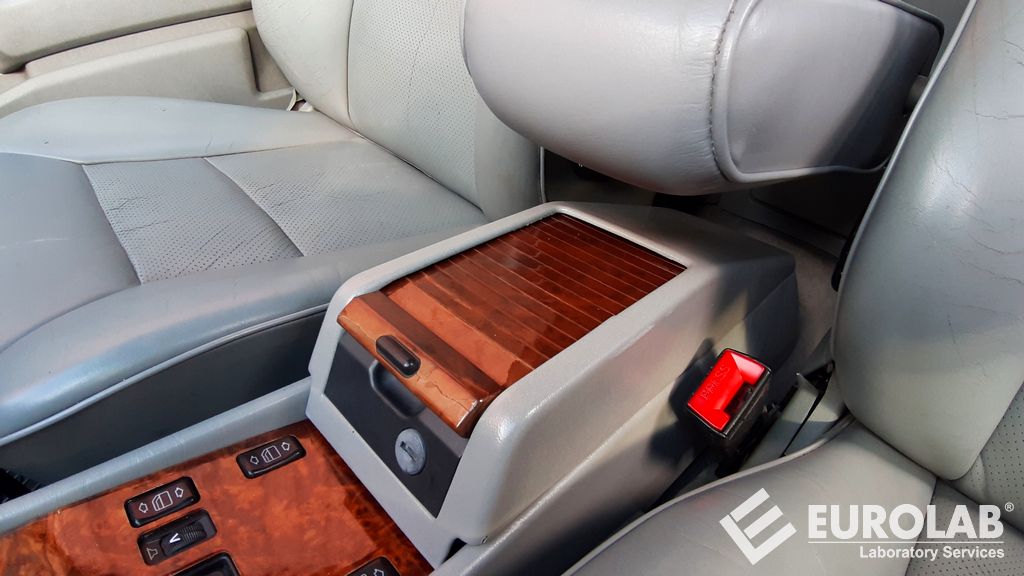
The SAE J1756 standard, which mainly includes gravimetric and photometric test methods, is applicable to the measurement of fog condensation on glass or aluminum foil surfaces within the limits of test conditions. It is the responsibility of those implementing this standard to establish appropriate safety and health practices and to determine the applicability of regulatory restrictions prior to use.
During the test, the sample is heated at 3 degrees for 100 hours, then cooled at 21 degrees and conditioned for 1-16 hours.
Fogging tests measure the tendency of plastic or elastomeric materials to volatilize substances that can condense and collect on other surfaces during use. These tests include test methods to evaluate the probability of a material to leave a luminous film on a glass surface (photometric method) or to leave a foreign material on an aluminum foil surface (gravimetric method). These tests are used to evaluate materials used in automotive or other vehicle interiors.
These tests are intended to detect condensation of volatile components evaporating from interior equipment on the vehicle window glass, particularly the windshield.
In short, materials such as plastic, fabric, rubber or leather used in vehicles evaporate at high temperatures, condense on the windshield, form a fog, and this causes dangerous driving conditions.
Among the numerous test, measurement, analysis and evaluation studies it provides for businesses in various sectors, our organization also provides test services to determine vehicle interior fogging properties within the scope of FORD FLTM BO 116-03 standard, with its trained and expert staff and advanced technological equipment.
To get an appointment, to get more detailed information or to request an evaluation, you can ask us to fill in our form and reach you.

