

The ASTM D3634 Standard Test Method for the Detection of Trace Chloride Ions in Engine Coolants, developed by the American Society for Testing and Materials (ASTM), describes a test method for determining chloride ions in engine coolants in the range of 5 to 200 ppm in the presence of up to 0,6% mercaptobenzothiazole.
Other substances that react with silver ions cause interference. Chloride in engine coolants containing aryltriazole instead of mercaptobenzothiazole can be detected directly using this test method without pretreatment with hydrogen peroxide.
This test method allows for the determination of very low chloride ion levels in engine coolants containing common corrosion inhibitors such as mercaptobenzothiazole or related mercaptans, which would normally prevent titration by forming silver salts that are insoluble in silver nitrate.
The ASTM D3634 standard describes a laboratory test method for determining low concentrations of chloride ions in engine coolants. This method is particularly valuable for coolants containing mercaptobenzothiazole corrosion inhibitors, which interfere with conventional chloride analysis methods. The ASTM D3634 standard provides an accurate analytical technique that eliminates this interaction and enables a reliable assessment of coolant quality.
Engine coolants are formulated to protect cooling systems against the following:
One of the most harmful contaminants in engine coolants is chloride ions. Even small amounts of chloride can accelerate the corrosion of the following materials:
The ASTM D3634 standard provides a standardized method for accurately measuring trace chloride levels so that manufacturers and laboratories can verify the purity of coolant before products are released to the market.
The ASTM D3634 standard covers the following:
This standard also states that coolants formulated with aryltriazole inhibitors instead of MBT can generally be analyzed directly without the peroxide pretreatment required for MBT-containing formulations.
Chloride ions are quite aggressive towards many metals used in automotive cooling systems. Excess chloride can cause:
With the increasing use of lightweight aluminum alloys in modern engines, strict chloride control has become even more important.
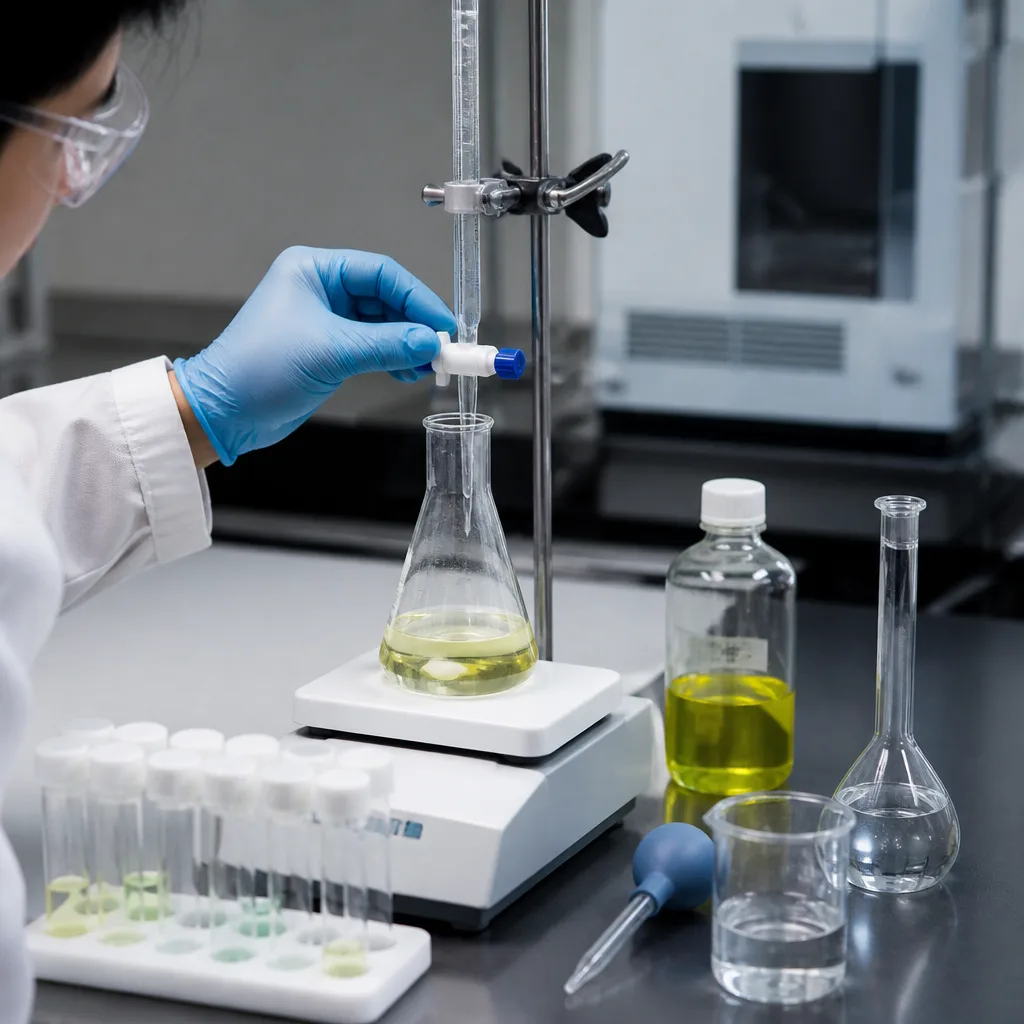
The ASTM D3634 standard, in principle, uses the silver nitrate titration technique. Normally, chloride reacts with silver nitrate to form insoluble silver chloride. However, MBT corrosion inhibitors also react with silver ions, producing erroneous results. To eliminate this problem, the ASTM D3634 standard primarily uses...
This pretreatment ensures that only chloride ions react during analysis, leading to accurate results.
During testing, laboratories typically use the following testing equipment:
Because chloride levels are very low, contamination control is crucial.
The described test method generally follows these steps:
This procedure is designed to provide repeatable and reproducible results across laboratories.
The ASTM D3634 standard is widely used in the following areas:
The ASTM D3634 standard supports quality assurance in the following areas:
The main benefits of the ASTM D3634 standard are as follows:
The ASTM D3634 standard is often used in conjunction with other engine standards. Coolant test methods include:
Together, these standards provide a comprehensive assessment of engine coolant quality.
Manufacturers use the ASTM D3634 standard for the following purposes:
Routine chloride monitoring helps prevent corrosion-related failures and extend the service life of cooling system components.
In conclusion, the ASTM D3634 standard is a crucial analytical standard for measuring trace chloride ion contamination in engine coolants. This standard provides a reliable method that compensates for interference from mercaptobenzothiazole corrosion inhibitors, enabling standard laboratories to obtain accurate chloride measurements in the 5–200 ppm range. Its application supports coolant quality control, corrosion prevention, regulatory compliance, and the long-term durability of automotive and industrial cooling systems. As engine cooling technologies continue to evolve, the ASTM D3634 standard remains a vital tool for ensuring the chemical integrity and performance of modern coolant formulations.
For many years, our organization, with its competent and experienced team, has been understanding the needs of its clients, providing the advanced testing services they require, and assisting them in the establishment, implementation, and improvement of management systems. Within this framework, we also provide testing services in accordance with the ASTM D3634 standard.
To get an appointment, to get more detailed information or to request an evaluation, you can ask us to fill in our form and reach you.

