

The “BMW TL 7 458 355 PVC Imitation Leather Technical Specification - Standard Quality” standard, developed by BMW, a leading German multinational company in the automotive sector, describes the requirements for PVC-based imitation leather (synthetic leather, artificial leather, or PVC simulated leather). This material is used in various automotive interior applications where a leather-like look, feel, and durability are required at a cost-effective level, without possessing the superior performance of genuine leather or higher-quality synthetics.
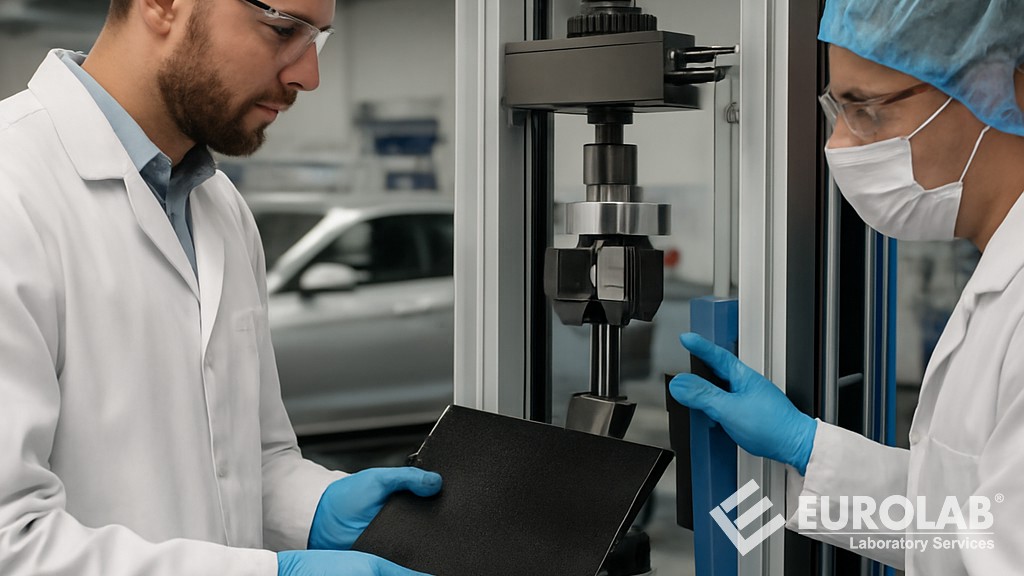
This standard sets strict requirements for suppliers providing PVC imitation leather for use in BMW vehicle interiors. It also ensures consistency in the following areas:
This applies to standard quality classes, meaning it's typically used in less visible or less stressed areas (e.g., door panels, lower instrument panels, seat backrests or other upholstery parts in basic/mid trims) rather than higher-end premium or extended leather alternatives.
The essential features covered by this standard are as follows:
This standard aligns with BMW’s broader interior materials standards and ensures the long-term durability of parts (typically over 10 years of simulated aging) and compliance with global regulations (such as REACH and RoHS).
The main areas of application for the BMW TL 7 458 355 standard in vehicles are as follows:
Door handles and interiors
Advanced laboratories perform proficiency and batch testing according to this standard. Suppliers must demonstrate compliance through sample submissions, and ongoing audits ensure production consistency.
This standard reflects BMW’s emphasis on balancing cost, aesthetics, durability, and sustainability in interior materials. PVC synthetics offer good abrasion resistance and easy cleaning compared to fabric, while being more economical than genuine leather.
Section 3.1.8.3 “Three-layered drape” of the BMW TL 7 458 355 standard refers to the specific requirements and test method for wrinkling (drape/fold formation/three-layered drape behavior) of standard quality PVC imitation leather.
This section falls under the broader scope of material performance criteria. It evaluates the ability of three-layer PVC synthetic leather (typically a PVC coating over a foam layer and textile backing) to create controlled, natural-looking folds or drapes without excessive or uneven wrinkling when applied to curved or contoured interior components (e.g., during thermoforming, wrapping, or assembly in door panels, instrument panels, or seats).
The key issues addressed in BMW standard TL 7 458 355 § 3.1.8.3 are as follows:
The BMW TL 7 458 355 standard is important because it serves as a critical quality control point for PVC artificial leather (synthetic leather) used in BMW vehicle interiors. This ensures that these materials meet the brand's high expectations regarding durability, appearance, safety, environmental compatibility, and long-term customer satisfaction in a cost-effective manner. This standard plays such an important role for the following reasons:
In conclusion, the BMW TL 7 458 355 standard is not just a procedure, but a tool BMW uses to ensure that even standard-grade synthetic leather contributes to a durable, attractive, safe, and luxurious interior experience that meets customer expectations. Failure to comply with this rule can result in interiors wearing out faster, emitting unpleasant odors, or appearing of poor quality. This negatively impacts resale value, customer satisfaction, and ultimately, sales.
For many years, our organization, with its competent and experienced staff, has been understanding the needs of its clients, providing the advanced testing services they require, and assisting them in the establishment, implementation, and improvement of management systems. Within this framework, we also provide testing services in accordance with the BMW TL 7 458 355 standard.
To get an appointment, to get more detailed information or to request an evaluation, you can ask us to fill in our form and reach you.

