

Developed by BMW, a multinational vehicle manufacturer headquartered in Germany, the standard “BMW PR 303.4 Climatic cycle test” describes a climatic cycle test method for determining the wear resistance of equipment parts under varying climatic conditions. This test method simulates the life cycle environments a product encounters and ensures that the product can perform satisfactorily in its intended environments.
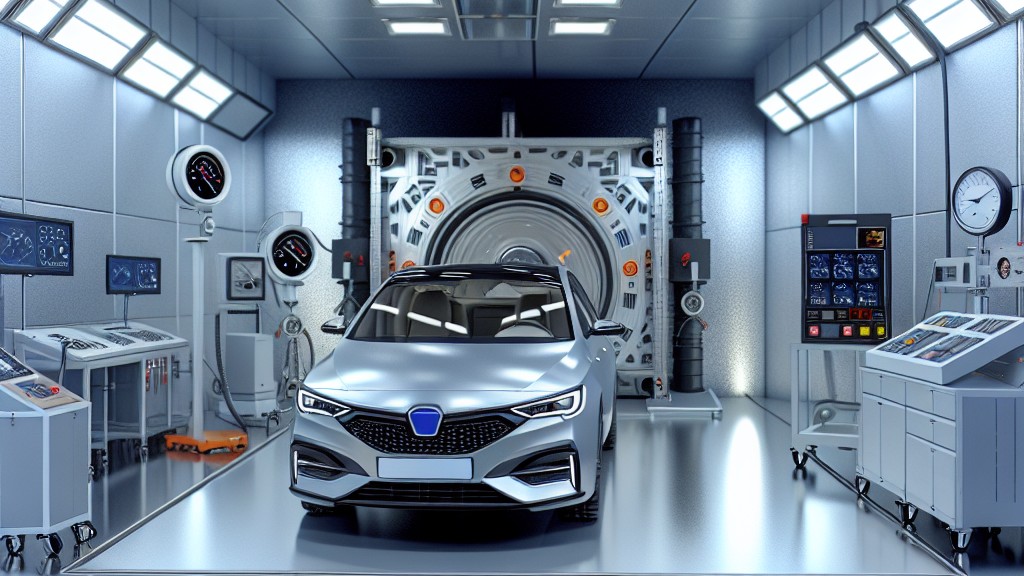
Temperature, humidity and other climatic effects can affect the performance of vehicle parts and components, or even cause damage.
In climate cycling tests, mainly the following are tested: high and low temperatures, humidity, altitude, ingress protection, water spray, heavy rain, drip test, salt corrosion, immersion, extreme pressure, thermal shock and water resistance.
Climate change testing is used to evaluate the durability of materials against climatic environmental influences. This test involves exposing test samples to varying temperature and humidity phases. The aim is to observe and evaluate the aging effects on test samples to ensure that they meet long-term durability requirements under different climatic conditions.
In climate cycling tests, a series of climate cycling test chambers designed for different testing needs are used. For example, a thermal humidity chamber can simulate various environments such as high temperature and humidity, low temperature and low humidity to test the performance of products in different temperature and humidity environments. The temperature range includes extreme temperatures from minus 70 degrees to plus 150 degrees. The humidity range is 2 percent to 3 percent relative humidity, with a relative humidity accuracy of plus/minus 10-98 percent. The internal volume can be from 100L to 1000L. Various temperature and humidity change modes are supported to meet different testing requirements. The use of high-quality insulation materials reduces heat and moisture loss, reduces energy consumption, and keeps the temperature and humidity stable. Users can accurately set the temperature, humidity, time and other parameters according to different testing requirements to ensure the consistency and repeatability of the test conditions. The climatic test chambers have overload protection, short circuit protection, pressure protection and similar features, and also have self-diagnosis and alarm functions to ensure the safety of equipment and personnel.
Briefly, test chambers used in climatic cycling tests help test how various temperatures and humidity affect products such as industrial components, electronics, and biological materials. Researchers and manufacturers may also use climatic chambers to measure the effects of various temperature settings, humidity, and light forms on a product. A climatic test chamber, or climate chamber, is an enclosure that gives users control over environmental and climatic conditions. These chambers can be set up to maintain static conditions or to simulate changes in temperature and other environmental conditions.
Climate test chambers create controlled environments that allow researchers and manufacturers to simulate and study the effects of different climate conditions on products. Whether it’s extreme temperatures, changing humidity levels, or even specific lighting conditions, climatic test chambers provide precise control over these factors. Replicating real-world environments enables comprehensive testing, quality assurance, and product development across many industries.
Many climate test chambers can perform multiple tests to help manufacturers save time and reduce costs.
Our organization has a strong staff that closely follows the developments in the world in the field of science and technology and constantly improves itself. Among the numerous test, measurement, analysis and evaluation studies provided for businesses in various sectors, there are also test services in accordance with the "BMW PR 303.4 Climate Cycle Test" standard.
To get an appointment, to get more detailed information or to request an evaluation, you can ask us to fill in our form and reach you.

