

The “DAF KEUR 00821-020 Dimensional stability after heat aging” standard, developed as part of the official approval or certification process for parts, materials, or processes used in trucks manufactured by DAF, a Dutch truck manufacturer, describes a procedure for determining the dimensional stability of plastic parts at high temperatures without external mechanical loading.
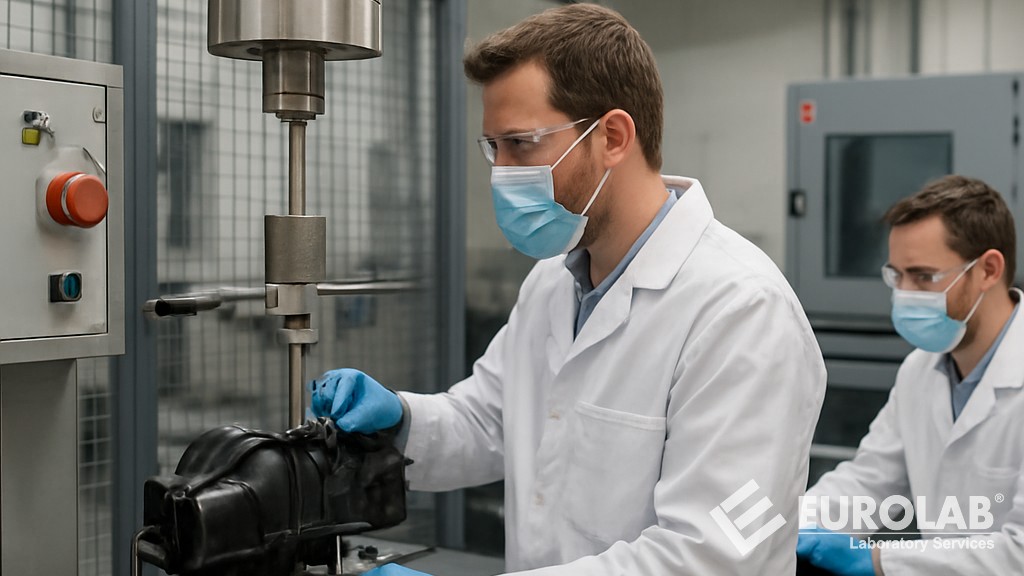
DAF's own series of internal material and component testing standards ensures that interior and exterior materials (such as plastics, textiles, coatings, and upholstery panels) used in truck cabs meet the demanding durability, safety, and performance requirements for heavy-duty commercial vehicles.
The DAF KEUR 00821-020 standard evaluates the dimensional stability of materials after exposure to thermal aging. This is particularly critical for interior components such as instrument panels, door panels, seats, headliners, and other plastic or composite parts that can be exposed to high temperatures inside a truck cab, especially in hot climates or with prolonged exposure to sunlight.
This testing method checks how much a material changes in size (shrinkage, expansion, bending, or deformation) over time when exposed to high temperatures. Excessively deformed materials can lead to fit issues, gaps, rattling, aesthetic deterioration, or even functional problems in a vehicle's interior.
This standard belongs to the broader KEUR 00821 series, which focuses on material specifications for interior applications in trucks. Related standards in this series include:
Other standards in this series generally cover aspects such as resistance to environmental factors in truck cabs.
Heat aging dimensional stability tests in the automotive and trucking industries typically follow these common practices:
Similar tests are generally compatible with or based on international standards such as “ISO 188 Rubber, vulcanized or thermoplastic - Accelerated aging and heat resistance tests” or “ISO 2796 Cellular plastics, rigid - Dimensional stability test”, but adapted to truck-specific conditions (higher thermal loads, longer service life expectations).
Trucks operate in extreme conditions: heat from engines, prolonged idling, cabs exposed to the sun in summer, or temperature fluctuations. Materials must maintain their shape and integrity for 10-15 years. Deterioration of dimensional stability can be caused by:
DAF suppliers must demonstrate compliance with DAF KEUR 00821-020 and related standards in their part approval processes. This standard plays a crucial role in ensuring the long-term reliability and quality of truck interiors.
Heavy-duty trucks, such as those manufactured by DAF, operate in much harsher thermal environments than typical passenger cars, and their interior materials must maintain their shape and performance for very long service lives (typically 10-15 years or 1-2 million kilometers). This is why this standard is necessary. The main reasons for the need for this standard are as follows:
DAF's KEUR series of standards goes beyond general automotive norms (e.g., ISO 188 or PV 1303 heat aging tests) with stricter limits or conditions.
In short, the DAF KEUR 00821-020 standard prevents heat-induced dimensional changes that could compromise the long-term compatibility, function, appearance, and reliability of the truck cab interior. This directly impacts driver comfort, perceived quality, warranty costs, and the resale value of the truck for fleet operators.
For many years, our organization, with its competent and experienced staff, has been understanding the needs of its customers, providing the advanced testing services they require, and assisting them in the establishment, implementation, and improvement of management systems. Within this framework, we also provide testing services to businesses in accordance with the DAF KEUR 00821-020 standard.
To get an appointment, to get more detailed information or to request an evaluation, you can ask us to fill in our form and reach you.

