

The “GMW 14127 Automotive Interior Materials Impact Cold Crack Test” standard, developed by General Motors Worldwide (GMW), includes a test method used to evaluate the resistance of automotive interior materials to cracking when subjected to impact at low temperatures. This method is particularly applicable to leather, coated textiles, plastic roll materials, films, plastics, and elastomeric materials used in vehicle interiors.
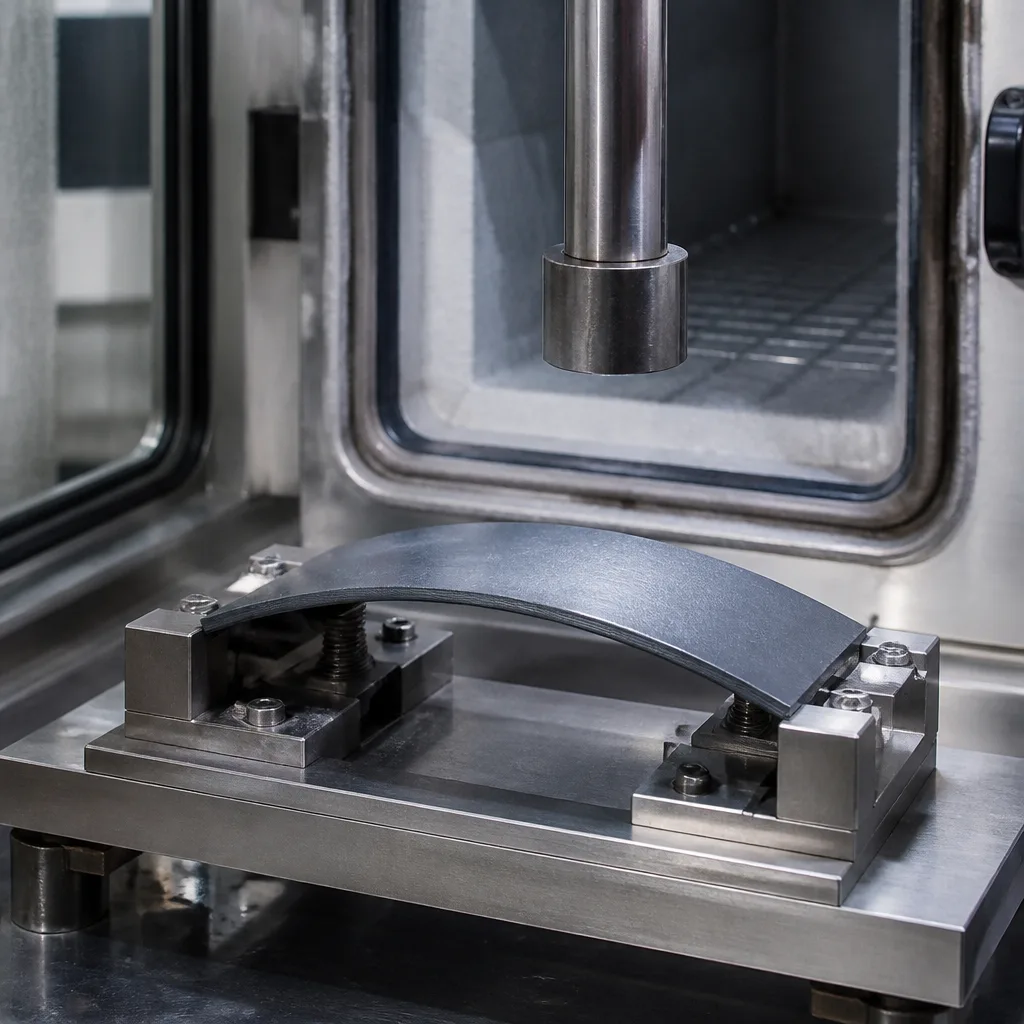
This method addresses a significant real-world problem: an interior material that remains flexible and attractive at normal temperatures can become brittle when exposed to extreme cold. If the material is then struck, pressed, or otherwise impacted, its surface coating or exterior may crack. The GMW 14127 standard provides a controlled method for evaluating this behavior.
The primary purpose of the GMW 14127 standard is to determine the resistance of automotive interior materials to impact-induced cracking at -30 degrees Celsius. For leather, the test evaluates cracking of the top coating. For plastic roll products, it evaluates cracking of the top coating or top leather. The procedure is designed for passenger car interior components. This makes the test particularly useful for the following materials:
Automotive interiors are subject to significant temperature fluctuations. A vehicle parked outside in winter can reach temperatures far below normal room conditions. At low temperatures, many polymers, coatings, adhesives, and flexible materials become less ductile. Therefore, a material may behave differently at -30 degrees than at 23 degrees.
Cracking may initially appear as a minor defect, but repeated use can cause the damaged area to enlarge. Depending on the application, this can lead to:
Therefore, the GMW 14127 standard provides a way to identify materials susceptible to this type of cold weather damage before they are used in production equipment.
The GMW 14127 standard is closely related to the GMW 14126 standard. While the GMW 14126 standard evaluates the resistance of folded materials to cold cracking, the GMW 14127 standard evaluates cracking caused by impact at low temperatures. Test laboratories list both standards together under cold cracking/temperature resistance testing. The distinction is important: the GMW 14126 standard focuses on cold cracking associated with folding, while the GMW 14127 standard focuses on cold cracking associated with impact. Therefore, a material may perform well in one test and poorly in another because the mechanical stresses are different.
The basic principle of the GMW 14127 standard test is to condition the test specimen at a low temperature and then subject it to a controlled impact. The available equipment documentation for the GMW 14127 standard describes a test setup consisting of a drop weight system comprising a tube with adjustable height, a release mechanism, and a specimen fixture.
The low-temperature environment is important because the aim is to reproduce the reduced flexibility and increased brittleness that may occur during operation in cold weather conditions.
The characteristic temperature specified for the GMW 14127 standard is minus 30 degrees. The purpose of this standard is to determine resistance to impact cracking at minus 30 degrees. Essentially, the samples and test setup need to be conditioned at minus 30 degrees plus/minus 2 degrees for 2 hours plus/minus 0,25 hours. These conditions should be considered as an indication of the test procedure. For precise requirements, the relevant material specification should always be used.
The test uses a controlled drop weight impact. The required impact intensity may depend on the material or component being evaluated.
Following the impact, the sample is examined to determine if cracks are present. The critical question is not whether the sample was impacted, but whether the impact caused unacceptable damage to the material's surface. Typical defects of interest include:
Acceptance criteria are generally determined according to the relevant material or component specification, rather than assuming that every small visual sign means failure.
The GMW 14127 standard has a relatively wide range of applications. It can be applied to a variety of materials, including:
A typical test setup requires the following:
The equipment must be able to consistently generate the specified impact energy.
A key aspect of the setup is ensuring the sample remains at the required low temperature throughout the relevant portion of the test.
The GMW 14127 standard is particularly valuable during material selection and verification. A supplier may have several candidate materials that appear identical under normal laboratory conditions. Cold impact testing can reveal significant differences in their low-temperature behavior.
The GMW 14127 standard can also be used as part of supplier and production quality programs. It can help manufacturers with the following:
The GMW 14127 standard belongs to a broader group of automotive low-temperature durability tests. For example,
These methods should not be considered automatically interchangeable. The necessary method is determined by the tool manufacturer, material specification, drawing, or verification plan.
The main advantages of the GMW 14127 standard test method are as follows:
For many years, our organization, with its competent and experienced staff, has been understanding the needs of its clients, providing the advanced testing services they require, and assisting them in the establishment, implementation, and improvement of management systems. Within this framework, we also provide testing services in accordance with the GMW 14127 standard.
To get an appointment, to get more detailed information or to request an evaluation, you can ask us to fill in our form and reach you.

