GMW15357 Component Rating Scale
The purpose of the rating scale, described in the "GMW15357 Component Rating Scale" standard developed by General Motors, is to ensure cross-vehicle comparison and consistency among personnel. Corrosion rating involves the detection of an objectionable surface, and judgment is largely subjective. In developing General Motors' corrosion scales, an effort was made to provide objective criteria to guide subjective judgment. Essentially, nothing in this standard supersedes applicable laws and regulations.
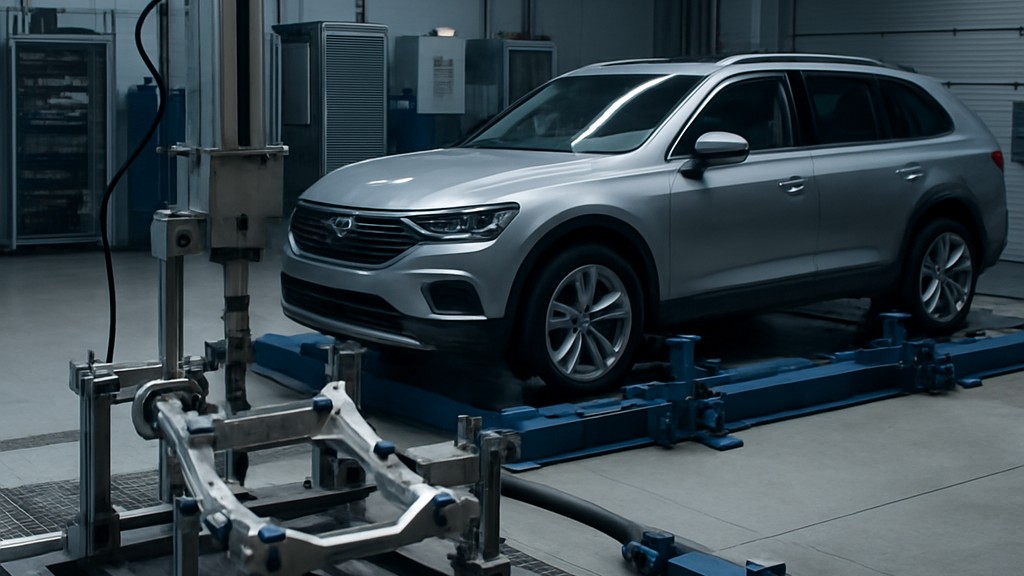
The purpose of the GMW15357 standard is to provide a structured and consistent framework for visually assessing and grading corrosion on various vehicle components. This standard includes grading guidelines, descriptive text, and photographic examples to assist inspectors in determining corrosion severity on body parts, under-hood components, fasteners, and similar surfaces.
This standard is widely used in General Motors corporate corrosion testing and field investigations. It ensures consistency across inspections across teams, locations, and times. It also assists in quality control, warranty reviews, and engineering validation of materials and coatings.
The GMW15357 standard is important because it provides a consistent, objective, and visual method for assessing corrosion in automotive components. This standard is critical to the automotive industry for the following reasons:
- Ensures consistent corrosion assessment: Corrosion appearance is subjective, and without a common scale, two inspectors may rate the same part differently. The GMW15357 standard eliminates this subjectivity by providing a structured rating scale with photos and descriptions so everyone speaks the same language.
- Improves product quality and durability: Using this standard, engineers and quality teams can:
- It can identify underperforming components in the early stages of testing.
- Can compare corrosion resistance between different designs, materials or suppliers.
- Can verify that coatings and corrosion protection systems meet GM standards.
This results in longer-lasting and higher quality vehicles.
- Supports engineering and design decisions: Corrosion ratings from this standard help engineers:
- They can decide when to change materials (e.g., from mild steel to stainless steel).
- Coating systems are improved (e.g., paint, e-coating, galvanizing).
- Components that retain moisture or salt are redesigned.
- Basis for warranty and field investigations: When corrosion problems arise in the field, the GMW15357 standard helps:
- Standardize demand assessment between dealers and engineers.
- Ensuring fair warranty decisions based on visual significance.
- Tracing systemic issues across different models or production batches.
- Global consistency across General Motors operations: General Motors is a global company. The GMW15357 standard enables teams across countries to:
- Evaluate corrosion in the same way, using the same scale.
- Use of a common technical language regardless of region or facility.
The GMW15357 standard primarily defines the component corrosion rating system, the visual rating scale used to assess corrosion severity. However, it is designed to be used in conjunction with a series of standard test methods, each of which produces parts or samples that are evaluated using the GMW15357 scale. A breakdown of the main test procedures typically used is as follows:
- Cyclic corrosion testing: These tests adhere to the standard "GMW14872 Cyclic corrosion laboratory test." Parts are subjected to repeated cycles of salt spray, humidity, drying, and temperature changes. This is followed by periodic inspections and corrosion scoring using the standard GMW15357. Performance is monitored by both visual scoring and mass loss of corrosion coupons. During the production part approval process, parts must meet specific scoring requirements (e.g., a minimum score of 8 or 9, depending on the part classification).
- Salt spray fog test: These tests comply with the "GMW3286 Neutral salt spray test." Uncoated surfaces are exposed for 336 hours or up to 1000 hours for highly corrosive parts, and zinc-coated parts are exposed for 240 hours. Acceptability is defined by the absence of corrosion other than scratches, limited rebound (e.g., no more than 3 mm), and controlled levels of red or white corrosion.
- Copper accelerated acetic acid salt spray test: These tests comply with GMW14458. They are typically used as a more stringent accelerated corrosion test for coated or painted parts, particularly aluminum.
- Filiform corrosion test: These tests comply with the GMW15287 standard. Painted aluminum is primarily targeted: microscopic filament-like corrosion beneath coatings is evaluated after approximately 672 hours in a humid environment. This test requires a limited filament length (maximum 4 mm).
- Scratch and abrasion tests: These tests comply with the standards "GMW14669 Scratch resistance under salt spray conditions," "GMW14829 Tape adhesion," and "GMW14872 Scratch inspection protocols." This method ensures the resistance of coatings to damage before and during exposure to corrosion.
- Scratch/leakback testing: These tests comply with the standard "GMW15282 Measurement of corrosion leakback from scratches." This method evaluates the spread of corrosion resulting from an intentional scratch or scratch. It is quantified according to the points of the GMW15357 standard (e.g., maximum 2 mm leakage).
Each of these test methods produces parts or panels that are visually assessed and scored according to the GMW15357 scale (usually from 1 to 10, with higher numbers indicating less corrosion). The standardized scale ensures consistent and comparable results across facilities, product lines, and test sessions.
As a result, the GMW15357 standard is essential for ensuring consistent and objective assessment of corrosion in General Motors vehicles.
Our organization, which has been supporting businesses across all sectors for years through a wide range of testing, measurement, analysis, and evaluation activities, has a strong team of employees who closely follow global developments in science and technology and are constantly improving themselves. In this context, we also provide testing services in accordance with the "GMW15357 Component Rating Scale" standard.



