

The “Fiat 7-M9001 Surface-Treated Rubber Parts” standard, developed by Fiat Chrysler Automobiles (FCA) (now Stellantis), an Italian-American automotive company, is an internal material and performance specification used within the Fiat automotive engineering system for evaluating surface-treated rubber components. This standard is associated with various test methods covering the mechanical strength and adhesion performance of coated or treated elastomer parts used in vehicles.
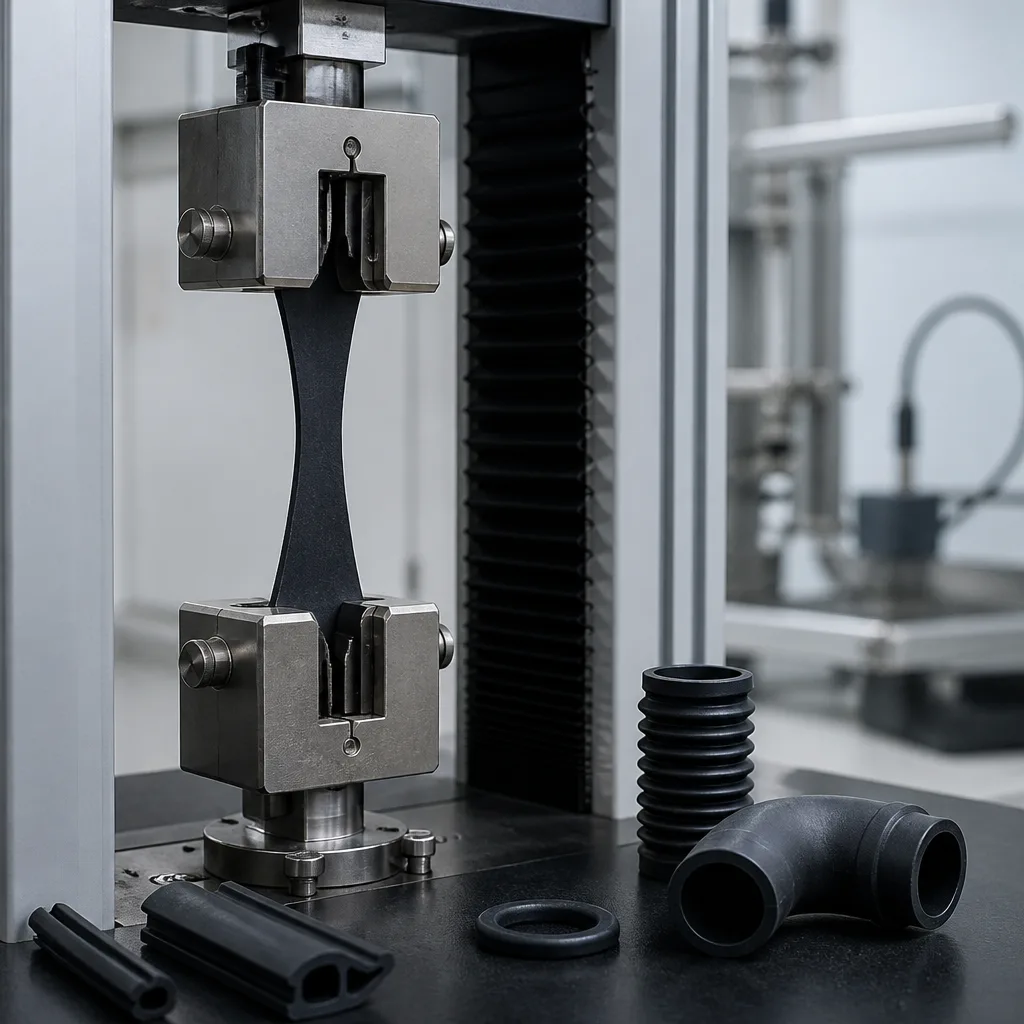
This specification is often referred to by the related LP.7M042 code, which indicates the compatible laboratory procedures used by suppliers and testing laboratories for the qualification of automotive rubber materials.
Modern vehicles contain numerous rubber-based parts that require surface treatment for the following purposes:
The goal of this process is to test the role and privilege manipulation in order to access the resources of a
The Fiat 7-M9001 standard establishes a standardized method for verifying that these treated rubber parts maintain their performance under mechanical and environmental stress. Without a controlled specification, suppliers could deliver inconsistent rubber components.
This can lead to premature cracking, peeling, loss of sealing performance, squeaking, water leakage, or cosmetic defects.
The Fiat 7-M9001 standard includes multiple procedures focusing on different performance characteristics:
Vehicle seals and flexible exterior components must remain functional in cold climates where rubber hardens significantly.
Surface coatings must not impair the mechanical integrity of the rubber substrate. Components subjected to repeated stress must retain their elasticity throughout the vehicle's lifespan.
This test is important because poor coating adhesion can lead to the following:
The materials typically considered are:
These materials are common in:
The automotive industry requires supplier quality standards with high repeatability. The Fiat 7-M9001 standard helps ensure that rubber components supplied by different manufacturers perform consistently across global production schedules. This specification supports:
Because rubber degradation directly affects the following:
These tests are critical for vehicle reliability.
The Fiat 7-M9001 standard is part of a broader Fiat materials engineering framework that includes:
This standard is typically used in conjunction with additional material and environmental specifications during full component verification programs.
The Fiat FCA 7-M9001 standard is necessary because it ensures that coated, painted, or surface-treated rubber parts used in vehicles maintain their performance, appearance, and durability throughout the vehicle's lifespan. Without a standardized test specification like this standard, suppliers could provide parts of inconsistent quality, leading to premature failure. The main reasons why this standard is necessary are as follows:
This is especially important for seals and flexible components that are subjected to repetitive movements.
This standard helps identify potential weaknesses in parts before they reach production.
In short, tests conducted according to the Fiat 7-M9001 standard help manufacturers in the following areas:
This standard is particularly important for:
In conclusion, the Fiat 7-M9001 standard is important because it establishes uniform test methods for evaluating the adhesion, flexibility, and mechanical strength of coated rubber materials used in vehicles. By ensuring these components can withstand environmental and mechanical stresses throughout the vehicle's lifespan, the standard helps improve reliability, appearance, customer satisfaction, and overall vehicle quality.
For many years, our organization, with its competent and experienced staff, has been understanding the needs of its customers, providing the advanced testing services they require, and assisting them in the establishment, implementation, and improvement of management systems. Within this framework, we also provide testing services in accordance with the Fiat 7-M9001 standard.
To get an appointment, to get more detailed information or to request an evaluation, you can ask us to fill in our form and reach you.

