

The “GMW 14775 Tripping Resistance of Textile Materials” standard, developed by General Motors Worldwide (GMW), is a test standard used to evaluate the snagging resistance of textile materials. This standard is particularly important for automotive textile materials where exposed threads or loops may snag on sharp or protruding objects, especially during vehicle use.
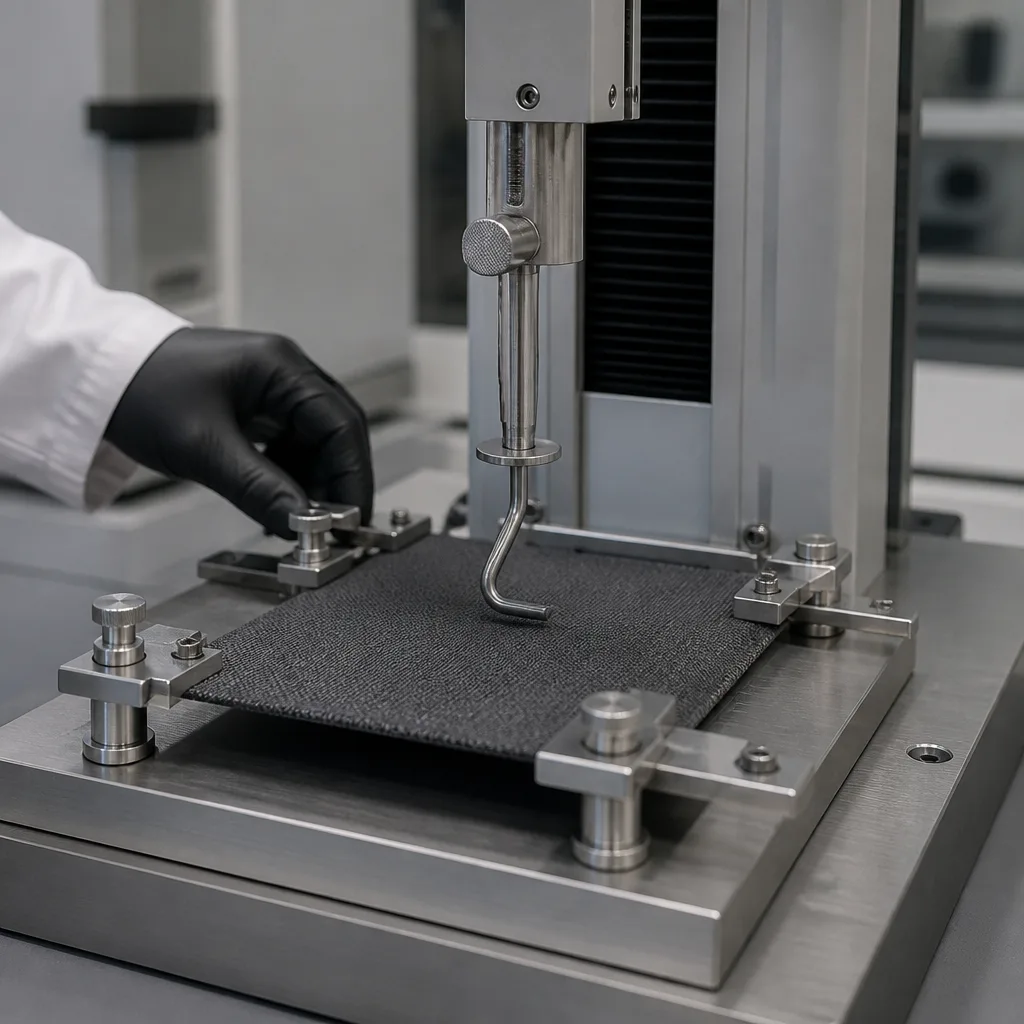
Entanglement occurs when a thread or filament on a textile surface gets caught on an external object and is pulled from its normal position. For example, a textile upholstery fabric, door trim, headliner, or other interior textile material can become entangled in:
As a result, a pulled thread, loop, protruding filament, or a deteriorated textile surface may form. Therefore, snagging resistance is an important indicator of the textile's ability to maintain its appearance and functional integrity during vehicle use.
The primary purpose of the GMW 14775 standard is to provide a standardized method for determining how well a textile material withstands mechanical pinching and tensile forces. This test helps General Motors and its suppliers assess whether a textile is sufficiently resistant to damage that may occur in the following situations:
The ultimate goal is to prevent premature deterioration of the textile's appearance.
GMW 14775 standard relates to textile materials, therefore it may be applicable to the following automotive textile applications:
Exact applicability depends on the specific General Motors material or component standard.
The general principle of a tensile test is to subject the textile surface to a controlled pulling process. A test specimen is prepared from the textile material and subjected to a specific mechanical interaction with a tensile device or object. The device catches the exposed threads and attempts to pull or dislodge them. After the test, the specimen is examined for the following visible damages:
The degree of damage is then assessed according to the requirements of this standard and the relevant material specification. The test equipment, sample dimensions, conditioning, number of cycles, evaluation criteria, and acceptance limits are included in this standard.
Snagging can significantly affect the visual quality of automotive interiors. A textile may initially have excellent appearance and mechanical properties, but may still be unsuitable if its fibers are easily pulled from the surface. Good snag resistance offers several advantages:
Fitting should not be confused with abrasion resistance. These are different concepts.
Features: Clamping resistance, Abrasion resistance
Therefore, a textile may have good abrasion resistance but relatively poor snag resistance.
Automotive manufacturers place great importance on the appearance and durability of interior textiles. The textile surface must withstand not only repeated friction but also accidental contact with objects that could snag individual fibers. Therefore, the GMW 14775 standard is part of a broader material evaluation approach that includes:
Together, these tests provide a more complete picture of textile performance.
Using a common General Motors testing method provides a consistent basis for:
It also helps enable textile suppliers and General Motors engineering organizations to evaluate snagging performance using a common methodology.
In summary, the GMW 14775 standard is an automotive material testing standard designed to evaluate the resistance of textile surfaces to yarn pulling and snagging damage. The described test method is important because snagging can quickly create visible defects in automotive textile components, even if the material otherwise possesses good durability. By evaluating snagging resistance, General Motors and its suppliers can select textile materials that maintain their appearance, integrity, and perceived quality throughout vehicle use.
Anyone working with automotive interior textiles should evaluate the GMW 14775 standard along with other durability tests such as abrasion, tear, tensile, color fastness, and flammability tests.
For many years, our organization, with its competent and experienced staff, has been understanding the needs of its clients, providing the advanced testing services they require, and assisting them in the establishment, implementation, and improvement of management systems. Within this framework, we also provide testing services in accordance with the GMW 14775 standard.
To get an appointment, to get more detailed information or to request an evaluation, you can ask us to fill in our form and reach you.

