

The “ VW 96379 Exterior - Testing of Add-ons - Climate Test” standard, developed by the Volkswagen automotive company , applies to Porsche AG. This test standard defines the climatic test conditions for exterior add-ons made entirely or partially of plastic material. It is primarily applied to complete assemblies, such as front-end systems. This test method serves to evaluate the behavior of parts under the influence of climatic changes (e.g., susceptibility to cracking, deformation, separation of the composite structure).
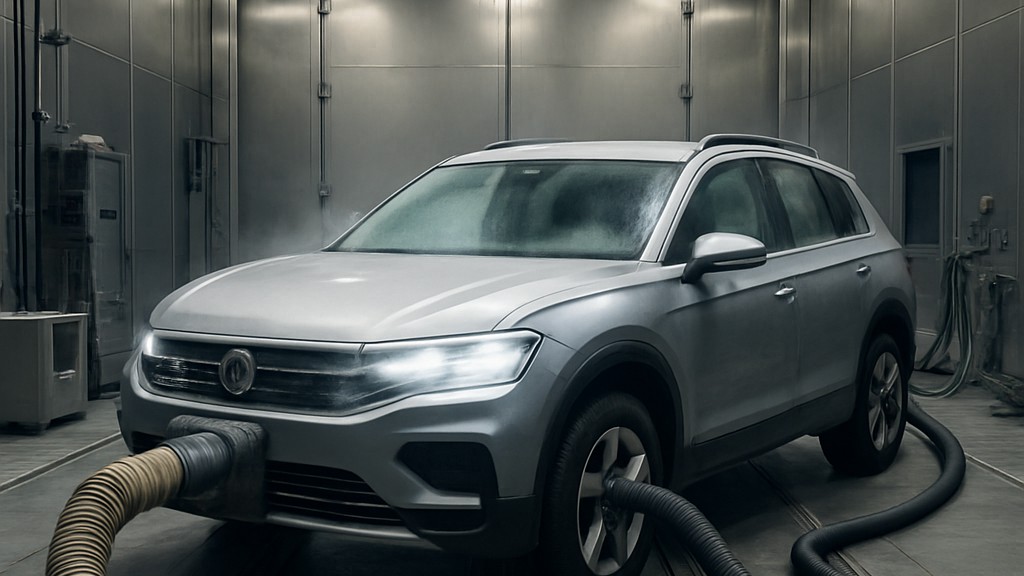
During test preparation, the parts to be tested should be secured in their mounting positions using the original connection points, fasteners, and tightening torques. Any deviations should be documented. Test racks should be designed to prevent any impact on the test specimens. The parts to be tested (individual parts or assemblies) or the entire vehicle should be placed in a suitably prepared climate chamber and tested using the required number of cycles.
The parts are pre-aged as agreed with the Porsche AG materials testing department.
The defined duration of the exposure phases during the abrasion process should be observed. The cooling and heating phases can be varied depending on the capacity of the climate chamber used. The resulting extra time should not exceed one-third of the cycle time. Any deviations should be noted in the test report. Humidity control is not required during low-temperature phases (temperatures below 0°C). The test chamber should be loaded at 23°C and a relative humidity of approximately 30% during the exposure phase. Temperature and humidity values should be recorded throughout the abrasion period.
One cycle lasts 12 hours and includes the following climatic conditions:
The actual water content of the air during heating up to 90 degrees Celsius and 30 percent relative humidity should not exceed 95 g/m³.
During the assessment, the components/vehicle must be evaluated before the climate test begins. Component geometry must be measured photometrically at appropriate measurement points before and after the test. A second optical assessment must be performed after the first test cycle. Further assessments must be performed approximately after the third, seventh, tenth, twenty-five, fifty-seventh, seventh, and tenth cycles. The final report must document both the initial condition before the test and all subsequent changes.
The test method described in VW standard 96379 evaluates the durability of exterior vehicle components under varying environmental conditions such as temperature fluctuations and humidity. This standard is also published as PPV 4015 among Porsche's test standards. The primary objective of the PPV 4015 test method is to ensure that exterior vehicle components can withstand:
By subjecting components to these conditions, manufacturers can evaluate potential issues such as material degradation, discoloration, or structural failures before the parts are used in real vehicles.
The PPV 4015 test is widely used by Porsche and other Volkswagen Group brands to verify the quality and longevity of exterior parts. It is also considered the benchmark for environmental durability testing within the industry. For example, advanced testing laboratories offer services to conduct PPV 4015 testing to ensure automotive components meet the stringent requirements set by manufacturers.
The VW 96379 (and PPV 4015) standard test method general procedure involves subjecting components to cycles of varying temperature and humidity levels to simulate real-world environmental stresses. This typically includes:
Components are inspected after test cycles for the following symptoms:
These tests are critical in the automotive industry for several key reasons:
In short, these tests are important for preventing field failures, improving product quality, meeting legal regulations and customer expectations, and ensuring brand trust and vehicle life.
Our organization, which has been supporting businesses across all sectors for years through a wide range of testing, measurement, analysis, and evaluation activities, has a strong team of employees who closely follow global developments in science and technology and are constantly improving themselves. In this context, we also provide testing services in accordance with the "VW 96379 Exterior - Additional Parts Testing - Climate Testing" standard.
To get an appointment, to get more detailed information or to request an evaluation, you can ask us to fill in our form and reach you.

