

The “Ford FLTM BO 131-01 Determination and Evaluation of Odor from Interior Trim Materials, Components and Assemblies” standard, developed by Ford Motor Company (Ford), describes a test method for evaluating odors emanating from interior trim materials, components and assemblies used in the passenger or luggage compartment of a vehicle. This standard helps ensure that automotive interior materials do not produce unpleasant, disturbing or unacceptable odors that could negatively impact customer satisfaction and perceived vehicle quality.
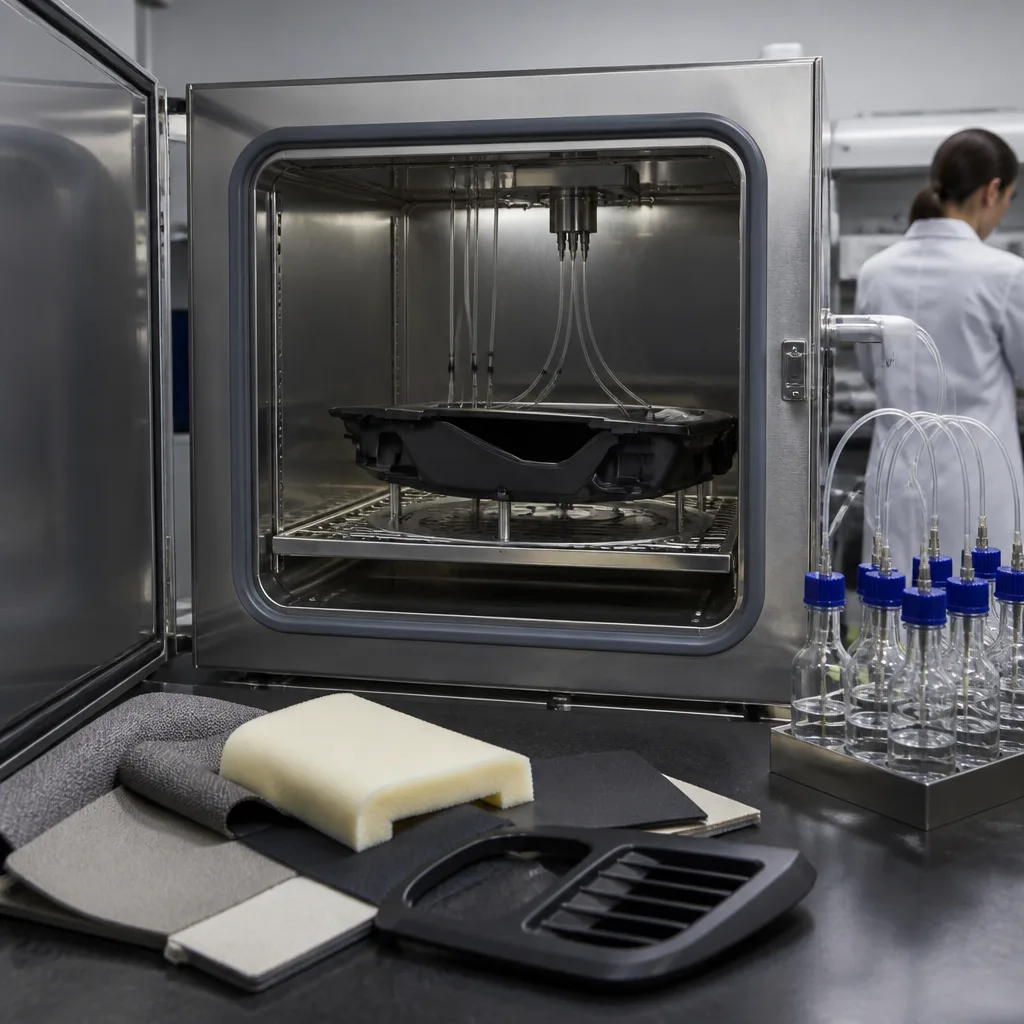
Because vehicle interiors contain numerous polymers, textiles, foams, adhesives, coatings, and composite materials, odor management has become a critical aspect of automotive material qualification. The Ford FLTM BO 131-01 standard includes a structured procedure for identifying and evaluating odor sources before materials are approved for production.
This standard applies to:
The goal is to determine if a material, component, or part is emitting odors that are unacceptable to those inside the vehicle.
In principle, this standard uses a sensory odor assessment approach. Test samples are conditioned in a controlled environment to encourage the release of volatile compounds that can produce odors.
Typical test conditions include:
This method is designed to simulate conditions that might occur inside a parked vehicle in hot environments, where high temperatures can increase the release of volatile substances from internal materials.
Common sources of odor identified by the Ford FLTM BO 131-01 standard include:
This method helps determine which component contributes most to the overall cabin odor.
When this standard was first developed, it focused on resin-bonded headliner materials and related components. Subsequent revisions have expanded its scope to cover a wider range of interior trim materials, components, and assemblies used in vehicle cabins.
The Ford FLTM BO 131-01 standard is part of a broader group of automotive indoor air quality and odor assessment standards, including the following:
These standards are widely used by automotive manufacturers and suppliers to control odor emissions from vehicle interior materials.
This standard is generally used in the following situations:
Tests are typically performed by automotive original equipment manufacturers, first-tier suppliers, and accredited materials laboratories.
Implementing the Ford FLTM BO 131-01 standard helps manufacturers in the following areas:
The Ford FLTM BO 131-01 standard is important because it evaluates the odors emitted by interior materials, components, and parts used in vehicle cabins. Odor quality is a significant factor in a customer's perception of vehicle quality and comfort. The main reasons why this standard is considered necessary are as follows:
In short, without odor standards like Ford FLTM BO 131-01,
In conclusion, the Ford FLTM BO 131-01 standard is a critical automotive testing method for evaluating odors emanating from interior trim materials, components, and parts. By exposing materials to high temperatures and conducting structured odor assessments, the standard helps manufacturers identify undesirable odors before vehicle production begins. As a result, cabin air quality improves, customer satisfaction increases, and the overall perception of vehicle quality rises.
For many years, our organization, with its competent and experienced staff, has been understanding the needs of its customers, providing the advanced testing services they require, and assisting them in the establishment, implementation, and improvement of management systems. Within this framework, we also provide testing services to businesses in accordance with the Ford FLTM BO 131-01 standard.
To get an appointment, to get more detailed information or to request an evaluation, you can ask us to fill in our form and reach you.

