DAF KEUR 00822-101 Determining Mass (Gramage) Per Unit Area for Coating Materials - Basic Procedure
The “DAF KEUR 00822-101 Determination of mass per unit area (grammage) for coating materials – Basic Procedure” standard, developed as part of the official approval or certification process for parts, materials, or processes used in trucks manufactured by DAF, a Dutch truck manufacturer, describes a precise method for measuring the mass per unit area (typically g/m²) of coating materials or their individual layers. Accurate grammage is fundamental for:
- Ensuring consistent material quality and thickness in production.
- Meeting weight targets for vehicle components (important for the truck's overall weight, fuel efficiency, and load-carrying capacity)
- Verification of the supplier's compliance with DAF's design specifications.
- Support for calculations for other properties (e.g., cost per area, thermal insulation, sound absorption, or durability expectations)
Typical applications of this standard include:
- Multilayer composites: Fabric + foam + backing (e.g., seat upholstery, door panels)
- Textile fabrics, synthetic leathers, or upholstered materials for seats, walls, ceilings, and blinds.
- Materials where weight directly affects performance, comfort, or regulatory compliance (e.g., lightweight designs in modern long-haul trucks)
The following steps are generally followed when administering the test:
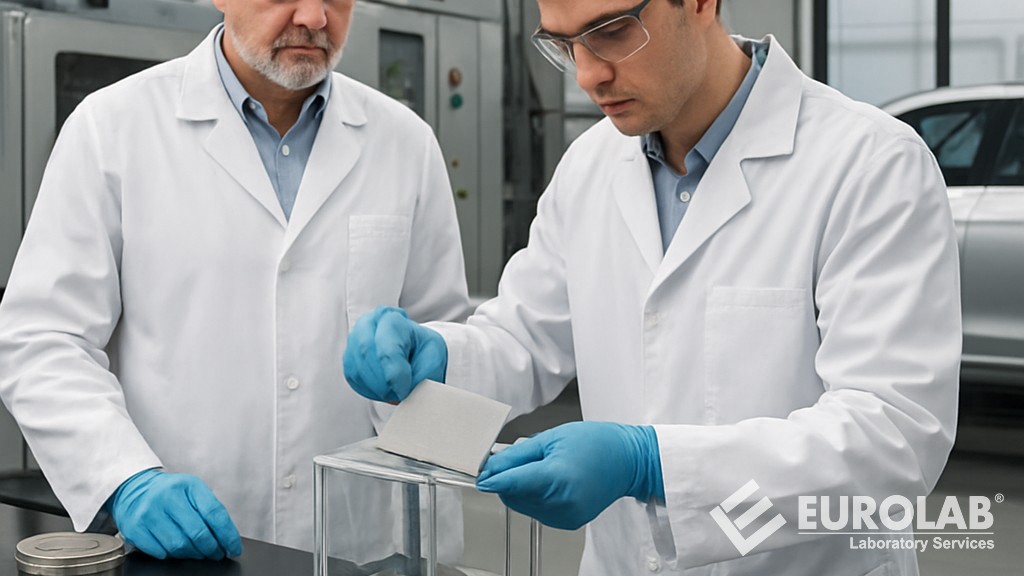
- Samples are cut according to a defined area (e.g., 100 cm² or 500 cm² templates).
- For homogeneous materials: The entire sample is weighed and the measurement is taken in g/m².
- For layered/composite materials (common in truck interiors), the following procedures apply:
- § 6.1.3.1: Procedure for fabric layers (e.g. outer fabric or mesh)
- § 6.1.3.2: Procedure for foam or support layers
- Weighing is performed under controlled conditions (ISO 139 standard or equivalent temperature and humidity).
- Results are generally reported as average mass per unit area, along with tolerances specified in the material approval drawing.
This test is a fundamental but important characterization step, usually required before or in conjunction with more complex tests (e.g., tear strength, abrasion resistance, light fastness tests in the DAF KEUR 00822 standard series).
The relevant standards in the DAF KEUR 00822 standard series are as follows:
- KEUR 00822-104: Determination of tear strength.
- KEUR 00822-106: Adhesion (resistance to layer separation)
- KEUR 00822-107: Color fastness to light.
- KEUR 00822-108: Color fastness to friction.
- KEUR 00822-115: Resistance to aging
- KEUR 00822-116: Resistance to wear and tear.
- KEUR 00822-120: Condensation behavior
Determining the weight of truck interiors is important for the following reasons:
- Consistency and quality control: Variations in mass per area can indicate manufacturing defects (e.g., uneven coating thickness, inconsistent foam density), leading to performance issues such as poor seam strength or uneven wear.
- Vehicle weight management: DAF trucks aim for optimized curb weights for better fuel economy and higher payload capacity; every gram counts in the cab materials covering large surfaces.
- Comfort and functionality: Heavier fabrics/foams may provide better sound insulation or seating support, while lighter ones reduce fatigue during long-distance applications. Weight helps to strike this balance.
- Cost and supply chain: Suppliers are qualified based on meeting exact grammage specifications, preventing over- or under-engineering that could affect pricing or durability.
This seemingly simple weighing test is crucial for heavy-duty trucks for the following critical reasons:
- Precise vehicle weight control and efficiency: Heavy-duty trucks must meet strict gross vehicle weight ratings while maximizing load capacity. Cab interiors occupy large surfaces (seats, walls, ceilings, doors). Small variations in grammage (e.g., due to uneven lamination or fabric density) can add to required weights across a production series or fleet. Accurate mass measurement under this standard ensures materials meet precise weight targets, helping to optimize fuel consumption, reduce carbon dioxide emissions, and improve load capacity. These are important factors for fleet operators' profitability and regulatory compliance.
- Ensuring production consistency and defect detection: Coating materials are often multilayer composites (surface fabric + polyurethane foam + backing/cover). Production processes such as coating, foaming, or bonding can lead to inconsistencies:
- Uneven weight distribution indicates defects (e.g., fine spots in the foam, irregular adhesive application, or variable yarn density).
- The standardized method (conditioned samples, precise area cutting, high-precision weighing) provides repeatable, comparable results.
Without this basic testing, quality issues go undetected and can lead to rejected batches, assembly problems, or premature service failures.
- The basis for performance and durability predictions: Weight is directly related to and influences many other characteristics tested in the DAF KEUR 00822 standard series:
- Higher grammage generally increases abrasion resistance (DAF KEUR 00822-116), tear strength (DAF KEUR 00822-104), and adhesion/layer separation resistance (DAF KEUR 00822-106).
- It affects comfort (feeling of fullness, sound absorption in noisy cabins), thermal insulation and even fogging behavior (DAF KEUR 00822-120).
- Total mass measurement (and layer-specific variants) provides engineers with reliable data to balance lightweight design with long-term robustness in demanding truck operations.
- Supplier qualification, traceability, and global consistency: DAF sources materials worldwide. This standard mandates a uniform, repeatable method across suppliers and testing laboratories. This eliminates ambiguity in specifications and reduces disputes.
Mass per unit area is not an insignificant detail; it is a key control parameter supporting weight optimization, quality assurance, performance reliability, supply chain integrity, and economic viability for truck cab liner materials. This forms the starting point of DAF’s broader interior material approval process, ensuring cabs remain durable, comfortable, and efficient even after 10-15 years of intensive use.
For many years, our organization, with its competent and experienced staff, has been understanding the needs of its customers, providing the advanced testing services they require, and assisting them in the establishment, implementation, and improvement of management systems. Within this framework, we also provide testing services to businesses in accordance with the DAF KEUR 00822-101 standard.



