

Developed by BMW, a multinational vehicle manufacturer, the “BMW GS 95024 Electrical and Electronic Components in Motor Vehicles” standard consists of several sub-sections published under the same title. Essentially, the BMW GS 95024 standard is a critical series of technical standards regulating the verification, testing, and environmental durability of electrical, electronic, and mechatronic components in BMW vehicles. Generally cross-referenced with the industry-wide LV 124 standard, this standard ensures that every electronic module, from the engine control unit to the infotainment systems, can withstand the demanding service life of a car.
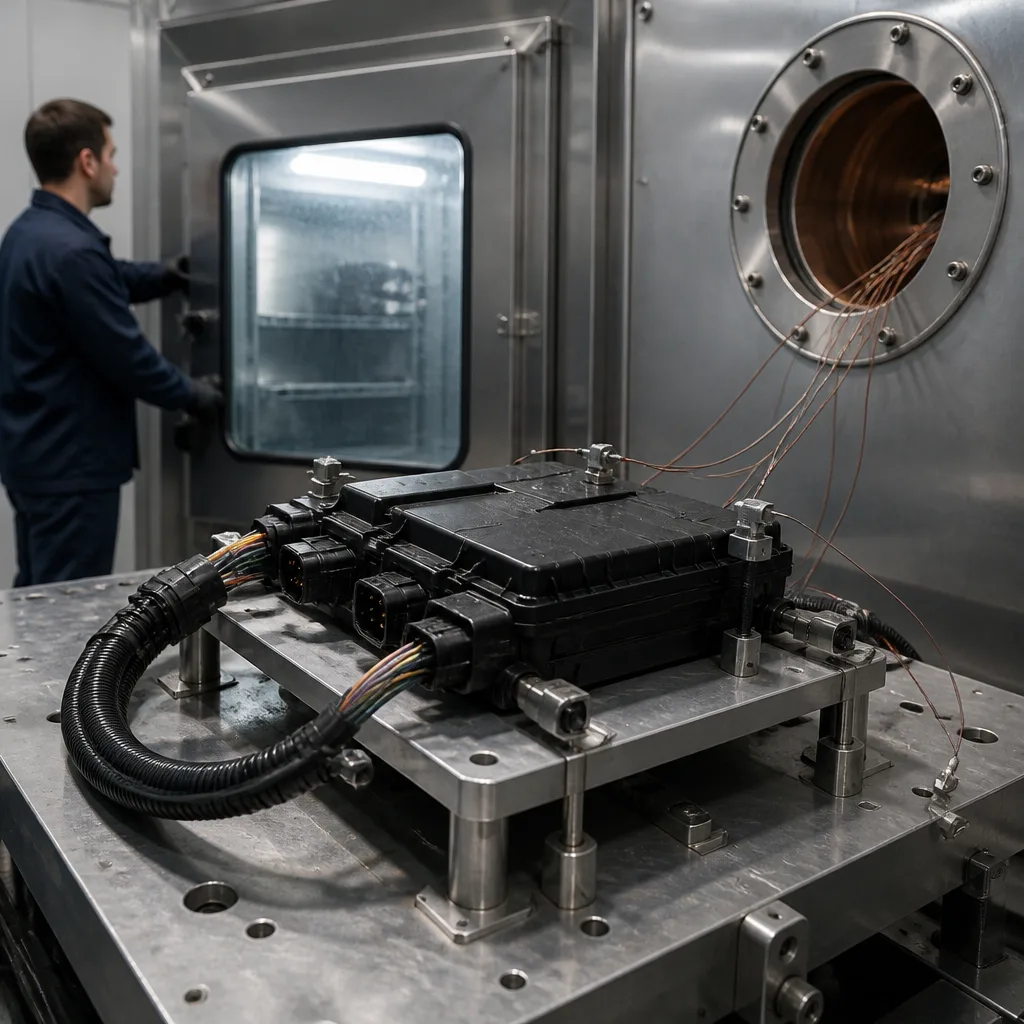
This standard series includes the following sub-sections:
BMW GS 95024 standards apply to all components used in motor vehicles up to 3,5 tons. This serves as a roadmap for suppliers to verify that their products meet BMW's strict quality and safety criteria before reaching the assembly line.
The goal is to define test methods and conditions that simulate the entire life cycle of a vehicle. The aim is for components to remain functional under varying electrical loads and extreme environmental stresses.
The BMW GS 95024-2-1 standard focuses on how components handle power surges and electrical interference. The key tests included in this standard are:
The GS 95024-3-1 standard ensures that the physical equipment can withstand weather conditions and the physical demands of riding.
These tests are particularly important for modern vehicles with complex electronics and connectivity features.
These scenarios enable realistic lifecycle testing of the components.
In the automotive world, the GS 95024 standard is essentially a specific implementation of BMW's LV 124 standard. The LV 124 standard is a common standard developed by major German original equipment manufacturers (including Volkswagen, Daimler, and Porsche). While the basic tests are almost identical, BMW adds specific task profiles and performance requirements tailored to vehicle architectures. These standards are periodically updated to reflect new technologies such as the unique electrical requirements of high-voltage electric vehicle systems and advanced driver assistance sensors.
In short, the BMW GS 95024 standard is a comprehensive internal specification developed by the BMW Group for testing electrical, electronic, and mechatronic components used in motor vehicles. It defines environmental requirements, test conditions, and verification procedures to ensure components can withstand real-world automotive stresses.
The BMW GS 95024 standard series is based on the German automotive standard LV 124, used industry-wide and jointly developed by major original equipment manufacturers such as Audi, Daimler, Porsche, and Volkswagen. BMW has adapted this standard into its own GS 95024 framework to align it with internal engineering practices and product requirements.
GS 95024 standards primarily apply to the following:
This standard includes test conditions, environmental stress profiles, operating conditions, and use scenarios. Importantly, it does not directly certify the components, but rather provides the test framework used during verification. Sub-sections of this standard provide modular and flexible test strategies, addressing a specific dimension of component verification.
The BMW GS 95024 standards are considered important for the following reasons:
In conclusion, the BMW GS 95024 standard series is one of the cornerstones of automotive component validation within the BMW ecosystem. By defining rigorous environmental, electrical, and mechanical testing requirements, it ensures that vehicle electronics remain reliable throughout their entire lifecycle, from manufacturing to the end of their service life.
Given that electronics play a central role in performance, safety, and user experience in today's vehicles, the BMW GS 95024 standard is essential for maintaining quality, consistency, and technological progress in the automotive industry.
For many years, our organization, with its competent and experienced team, has been understanding the needs of its clients, providing the advanced testing services they require, and assisting them in the establishment, implementation, and improvement of management systems. Within this framework, we also provide testing services in accordance with the BMW GS 95024 standard.
To get an appointment, to get more detailed information or to request an evaluation, you can ask us to fill in our form and reach you.

