

Automotive materials can be exposed to moisture, high temperatures, and high relative humidity during vehicle use, transportation, storage, and environmental conditioning. These conditions can promote the growth of mold or other microorganisms, especially in materials containing organic or biodegradable components.
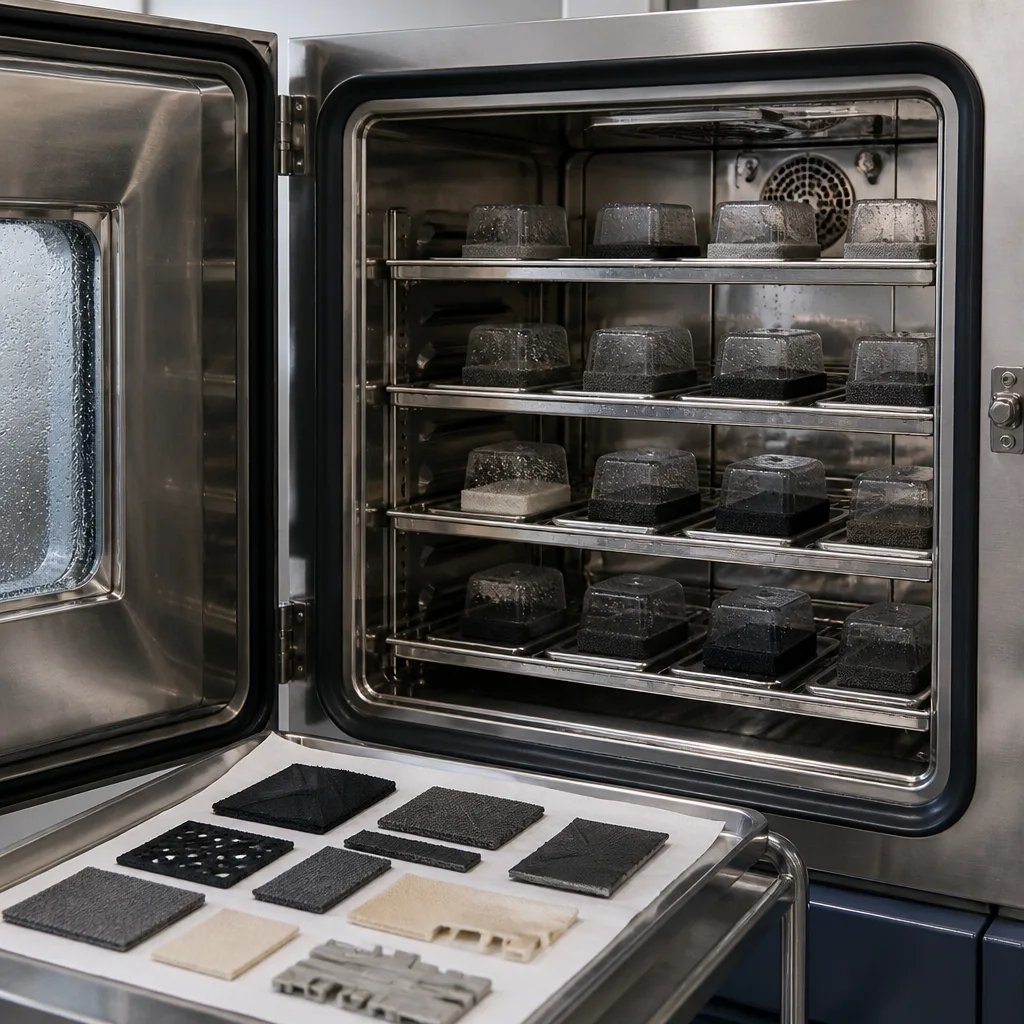
The “GMW 3259 Mold Resistance of Automotive Materials” standard, developed by General Motors Worldwide (GMW), provides a test procedure to determine how well an automotive material resists mold growth when exposed to heat and moisture. This standard also evaluates associated odor characteristics that may develop as a result of microbial activity.
This standard is particularly important for automotive interior materials, where mold can cause not only visible deterioration but also unpleasant odors and a perceived decrease in quality.
The primary purpose of the GMW 3259 standard is to determine an automotive material's resistance to mold growth under heat and humidity conditions. This assessment is important because humidity and temperature can create favorable conditions for microbial growth. A material that performs satisfactorily under normal laboratory conditions may develop mold when exposed to prolonged humid environments. Therefore, the standard provides a controlled method to evaluate whether a material retains acceptable appearance and odor characteristics after exposure.
The GMW 3259 standard is applicable to a wide range of automotive materials. Test laboratories use this standard for the following materials:
These applications are particularly important in vehicle interiors, where textiles, foams, leather, plastics, and coated materials can trap moisture.
The basic principle of the described test method is to expose the prepared material samples to controlled hot and humid conditions that can promote mold growth. The samples are subjected to an environmental and microbiological challenge defined according to the requirements of the standard. After exposure, it is determined whether mold growth occurs and whether the material develops undesirable properties.
Advanced laboratories state that samples are exposed to defined climatic conditions with a targeted microbiological load and then evaluated for mold/fungal growth, surface changes, and material-related effects.
In general, the testing process follows these steps:
Odor characteristics associated with exposure during testing are also taken into account. This is an important feature of the GMW 3259 standard assessment.
The GMW 3259 standard primarily evaluates the following:
Mold resistance is especially important for automotive interiors because moisture can enter vehicles through a variety of mechanisms, including condensation, wet clothing, spills, wet shoes, and inadequate drying. Mold can cause:
In conclusion, mold resistance is a crucial part of evaluating the durability and quality of interior materials.
Mold formation is largely influenced by environmental conditions. High humidity provides moisture, while high temperatures can accelerate biological activity. This makes the combination of heat and humidity particularly useful for accelerated laboratory evaluation.
The goal is not to precisely recreate every possible real-world environment. Instead, controlled laboratory exposure provides a reproducible way to compare materials and determine if they possess sufficient resistance.
The GMW 3259 standard is particularly important for components and materials inside vehicles. For example,
Testing laboratories list the GMW 3259 standard, particularly for automotive interior material categories including textiles, leather, plastics, elastomers, foams, coated textiles, and biomaterials.
A key aspect of the GMW 3259 standard is the link between mold resistance and odor properties. Mold can produce noticeable odors even if visual growth is limited. This is important for automotive interiors because passengers can detect unpleasant odors even at relatively low levels. Therefore, this standard differs from the GMW 3205 standard, which specifically addresses the resistance of interior materials to odor dispersion. While both standards may apply to automotive interior odor and environmental performance, they address different testing objectives.
GMW 3259 standard is an automotive requirement specific to original equipment manufacturers, rather than a general statement that a material is mold-resistant. Therefore, passing this standard should not be interpreted as automatic proof that a material will be resistant to all types of fungi and all environmental conditions.
The precise acceptance criteria are contained within the GMW 3259 standard. In practice, the assessment may include the degree of visible mold growth and associated material or odor effects. Because acceptance requirements may be application-dependent, suppliers should not use general mold resistance criteria in place of the requirements specified by General Motors.
The GMW 3259 standard can be used in material development and supplier qualification processes to compare alternative materials. For example, an automotive manufacturer might compare various upholstery or carpet constructions and subject them to the same mold resistance test conditions. Materials that demonstrate better resistance can then be evaluated for applications where moisture exposure is expected. This test is useful in the following areas:
For many years, our organization, with its competent and experienced staff, has been understanding the needs of its clients, providing the advanced testing services they require, and assisting them in the establishment, implementation, and improvement of management systems. Within this framework, we also provide testing services in accordance with the GMW 3259 standard.
To get an appointment, to get more detailed information or to request an evaluation, you can ask us to fill in our form and reach you.

