

The “Ford FLTM BI 123-01 Corrosion Test – Painted Sheet Metal Corrosion Test – Laboratory Simulated Arizona Test Site Test” standard, developed by Ford Motor Company (Ford), describes a test procedure used to evaluate the relative corrosion performance of paint coating systems applied to test panels and vehicle body sheet metal parts. This standard is designed to simulate the corrosive conditions of the Arizona test site vehicle accelerated corrosion test (CETP 00.00-R-311).
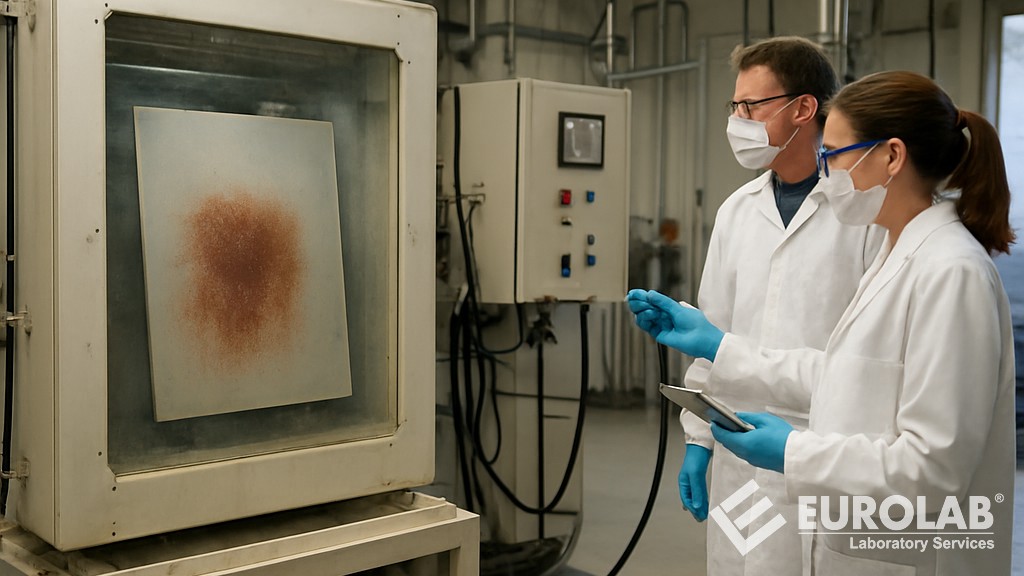
In the risky world of automotive manufacturing, where vehicles brave everything from scorching desert heat to road salt and gravel, durability is paramount. Among the standards for improved material performance, the Ford FLTM BI 123-01 standard stands out as a critical protocol for evaluating the corrosion resistance of painted sheet metal. This standard simulates the harsh environmental conditions of Arizona's test sites to ensure Ford's and its suppliers' vehicles can withstand challenging real-world conditions.
Focusing on paints, coatings, and exterior finishes, this standard is much more than just a laboratory procedure. It is a cornerstone of quality assurance. Suppliers worldwide rely on this test to certify components and utilize it to verify compliance. In the age of electric vehicles and lightweight materials, this test retains its importance by adapting to new alloys and environmentally friendly coatings.
The Ford FLTM BI 123-01 standard addresses corrosion, one of the biggest problems in the automotive industry. Rust isn't just a matter of aesthetics; it also compromises structural integrity, leading to costly recalls and safety risks. This test specifically targets painted sheet metal used in body panels, hoods, doors, and underbody components, evaluating how resistant protective coatings are to accelerated weathering.
Ford's extensive testing facility in Arizona exposes vehicles to extreme UV radiation, temperature fluctuations (daytime temperatures up to 50 degrees and nighttime freezing), low humidity, and abrasive dust. These conditions accelerate corrosion far more rapidly than in temperate climates. Laboratory simulation compresses years of exposure into weeks, allowing manufacturers to predict long-term performance without waiting for field data. The key objectives are:
Unlike simpler salt spray tests (e.g., ASTM B117 standard), the cyclical nature (sequential wet-dry phases) of the Ford FLTM BI 123-01 standard provides a more realistic assessment by better mimicking natural corrosion cycles. This standard requires manufacturers to use specialized equipment such as cyclical corrosion chambers for precision testing. These chambers maintain precise temperatures (typically 38-60 degrees), humidity levels (50-100 percent relative humidity), and salt concentrations. The test method generally consists of the following steps:
The cycles mimic the daily changes of Arizona, with optional UV light exposure for fade resistance.
One of the challenges of this standard is adapting to lightweight materials: aluminum and high-strength steels corrode differently, necessitating updates for electric vehicle battery housings.
For suppliers, passing this standard is not only about compliance, but also a competitive advantage when bidding on high-value contracts.
In short, the Ford FLTM BI 123-01 standard protects vehicles against the silent progression of corrosion by simulating the harsh test sites of Arizona in a laboratory environment, ensuring longevity and reliability for drivers worldwide.
For many years, our organization, with its competent and experienced staff, has been understanding the needs of its clients, providing the advanced testing services they require, and assisting in the establishment, implementation, and improvement of management systems. Within this framework, we also provide testing services to businesses in accordance with the "Ford FLTM BI 123-01 Corrosion test - Painted sheet metal corrosion test - Laboratory simulated Arizona test site test" standard.
To get an appointment, to get more detailed information or to request an evaluation, you can ask us to fill in our form and reach you.

