ECE R-158 UN Regulation No 158 Devices for Rear View or Detection Devices
The standard “ECE R-158 UN regulation No 158 Devices for rear vision or detection means” describes the uniform provisions for the approval of motor vehicles and devices for reversing movement in order to enable the driver to be aware of vulnerable road users behind the vehicles.
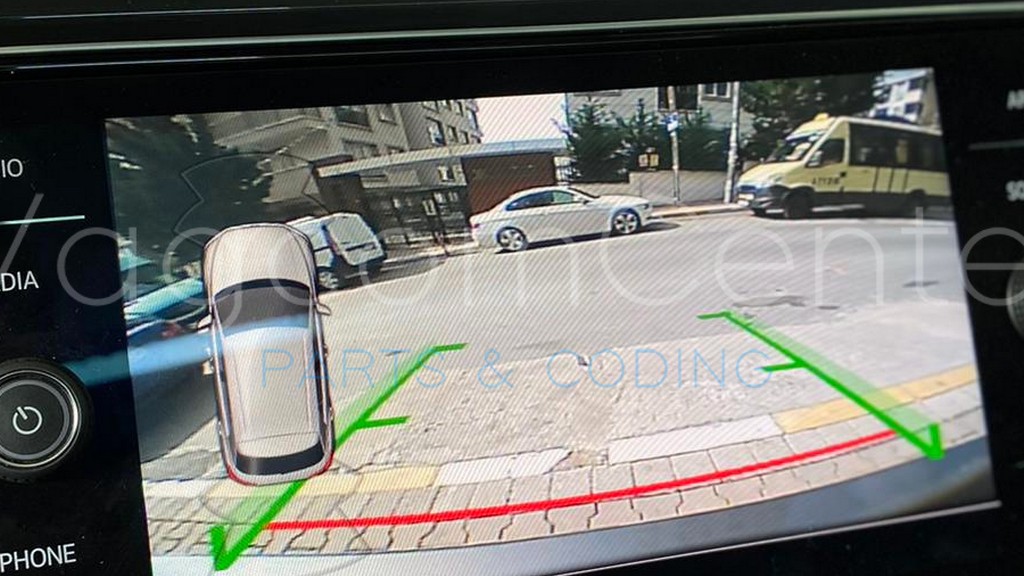
This standard applies to:
- Approval of reverse safety devices as defined in Part I intended to be fitted to vehicles in categories M and N
- Approval for the installation of reverse safety devices as defined in Part II in the case of installation on vehicles in categories M and N.
- At the manufacturer's request, the contracting parties may approve parts I and II for installation on vehicles of other categories and on these vehicles.
- The following M and N category vehicles are exempt from this standard: vehicles for which the fitting of any device for reverse gear safety is incompatible with road use and vehicles which are partially or completely exempt from this standard, subject to the decision of the type-approval authority.
- If a vehicle has more than one device, the manufacturer shall specify the device that meets the provisions of this standard.
For the purposes of this standard, the following terms and definitions apply:
- Reversing devices mean devices intended to provide a clear view behind the vehicle within the fields of view defined in this standard. These may be conventional mirrors, a rearview camera system or other devices capable of providing information about the field of view to the driver.
- Close-range rear-view mirror device means a device giving the field of view defined in this standard.
- Indirect vision devices mean devices that provide information about the fields of vision defined in this standard.
- Rear view camera system means any system designed to produce an image of the outside world and provide a clear view through the camera to the rear of the vehicle within the field of view. Luminance contrast refers to the ratio of brightness between an object and its immediate background/surroundings that allows the object to be distinguished from the background/surroundings. Resolution refers to the smallest detail that can be distinguished by a perceptual system, i.e., perceived separately from the larger whole. The resolution of the human eye is expressed as visual acuity. The visual spectrum refers to light having a wavelength within the range of the perceptual limits of the human eye (380-780 nm).
- Near-view mirror means any device designed to provide a clear view, by means of a reflective surface, to the rear of the vehicle within the fields of view defined in this standard, excluding devices such as periscopes.
- Test object means a cylindrical object with a height of 0,8 m and a diameter of 0,30 m.
- Field of view means the portion of three-dimensional space above ground level that is viewed with the aid of a device for indirect vision. Unless otherwise stated, this is based on the view provided by a device or devices other than mirrors. This may be limited by the relevant detection distance corresponding to the test object.
- Perception system means a system that uses signals to enable the driver to detect objects in the area adjacent to the vehicle. Auditory information means information that uses auditory signals provided by a perception system, as defined above, to enable the driver to detect objects in the area adjacent to the vehicle. Optical information means information that uses optical signals provided by a perception system, as defined above. Tactile information means information that uses tactile signals provided by a perception system, as defined above, to enable the driver to detect objects in the area adjacent to the vehicle.
- Sensing field refers to the portion of three-dimensional space above ground level that is monitored with the help of a sensing system.
- Device type for reverse gear safety means devices that do not differ in the following basic characteristics:
- The design of the device, if relevant, how it is attached to the body
- In the case of mirrors, the shape, dimensions and radius of curvature of the reflective surface of the mirror
- When it comes to the rear view camera system, the field of view, magnification
- When it comes to sensing systems, the type of sensor, the type of information signal
Application for approval of a type of device for indirect vision is made by the owner of the trade name or trademark or his duly authorized representative. If the samples submitted for approval meet the requirements of this standard, approval of the relevant type of device for indirect vision is granted.
Among the numerous testing, measurement, analysis and evaluation studies that our organization has carried out for businesses in various sectors, it also provides testing services defined in the “ECE R-158 UN regulation No 158 Devices for rear vision or detection devices” standard with its trained and expert staff and advanced technological equipment.



