

The “Ford FLTM BO 151-01 Low Temperature Impact Resistance” standard, developed by Ford Motor Company (Ford), describes a test method used to evaluate the low-temperature impact resistance of plastic, polymeric, and coated automotive parts. This standard determines whether a material can withstand sudden impacts after exposure to cold environmental conditions without cracking, breaking, chipping, or suffering other types of damage.
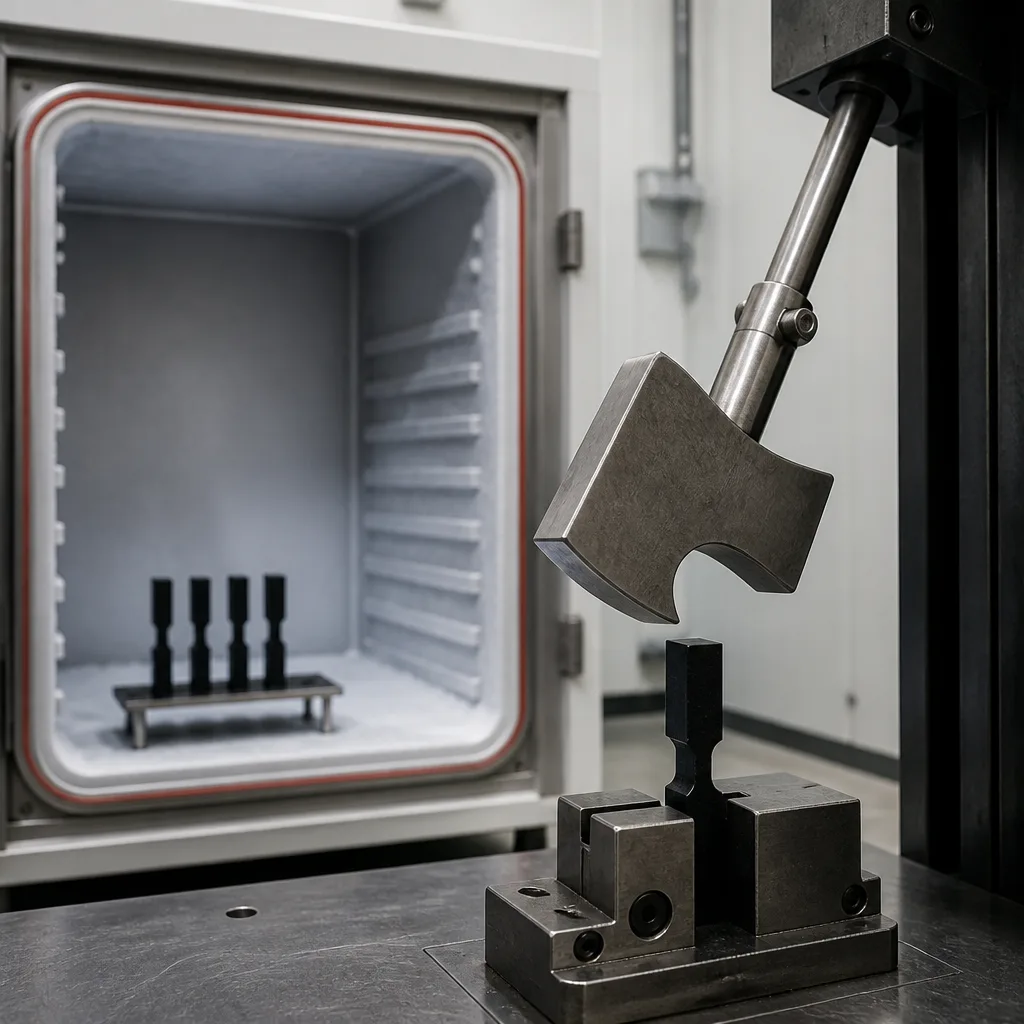
Automotive parts are often exposed to extremely low temperatures during winter operations. Materials that perform well at room temperature can become brittle in the cold. Ford FLTM BO 151-01 helps engineers verify that parts maintain sufficient toughness and durability under these conditions.
Typical applications of this standard include:
This method evaluates a material's resistance to damage by subjecting it to impact after conditioning it at a specific low temperature.
This standard includes procedures for dropping the ball during impact:
These procedures simulate the impacts that can occur during vehicle operation in cold weather conditions.
In general, the testing procedure follows these steps:
This testing method is primarily used in the following areas:
Testing according to the Ford FLTM BO 151-01 standard offers several advantages:
Low-temperature impact resistance is a critical property because automotive parts can be subjected to:
A component that meets the Ford FLTM BO 151-01 standard is more likely to maintain its structural integrity and appearance throughout its service life. This standard is important because it ensures that automotive materials and components can withstand impacts in cold weather conditions without cracking, breaking, or losing functionality. Vehicles are often exposed to temperatures well below freezing, at which point many plastics and coatings become more brittle and susceptible to damage. This standard is considered necessary for the following reasons:
Tests conducted according to this standard identify these weaknesses before a vehicle goes into production.
By verifying cold strike performance before production, Ford and its suppliers can mitigate these risks.
In short, the Ford FLTM BO 151-01 standard is important because it evaluates a material's resistance to impact damage after exposure to low temperatures. This standard helps improve durability, safety, quality, and customer satisfaction while reducing the risk of cold weather failures in automotive components. It is a key part of Ford's material qualification and product validation process.
In conclusion, the Ford FLTM BO 151-01 standard is a key automotive testing standard that evaluates the impact resistance of materials and components at low temperatures. Through controlled drop-ball testing, it helps ensure that plastic and polymer-based automotive parts remain durable, safe, and functional in cold weather conditions. This method plays a significant role in Ford's material qualification and supplier approval processes.
For many years, our organization, with its competent and experienced staff, has been understanding the needs of its customers, providing the advanced testing services they require, and assisting them in the establishment, implementation, and improvement of management systems. Within this framework, we also provide testing services to businesses in accordance with the Ford FLTM BO 151-01 standard.
To get an appointment, to get more detailed information or to request an evaluation, you can ask us to fill in our form and reach you.

