

The “GMI 60306 Test Method for Determining the Low Temperature Resistance of Automotive Interior Trim Materials” standard, developed by General Motors International (GMI), is an engineering standard that includes a test method for determining the low-temperature resistance of automotive trim materials. This standard was developed to evaluate how interior trim materials perform when exposed to extremely cold environments. It is primarily designed for flexible materials such as plastic films, vinyl, coated fabrics, and similar decorative automotive trim products. The final version of this standard is designated “Not for new design” and has been replaced by the “GMW 14126 Cold Crack Resistance of Folded Materials” standard for future General Motors vehicle programs. This new standard harmonizes cold crack testing across General Motors’ global engineering organization while incorporating updated test practices and broader applicability to modern automotive materials.
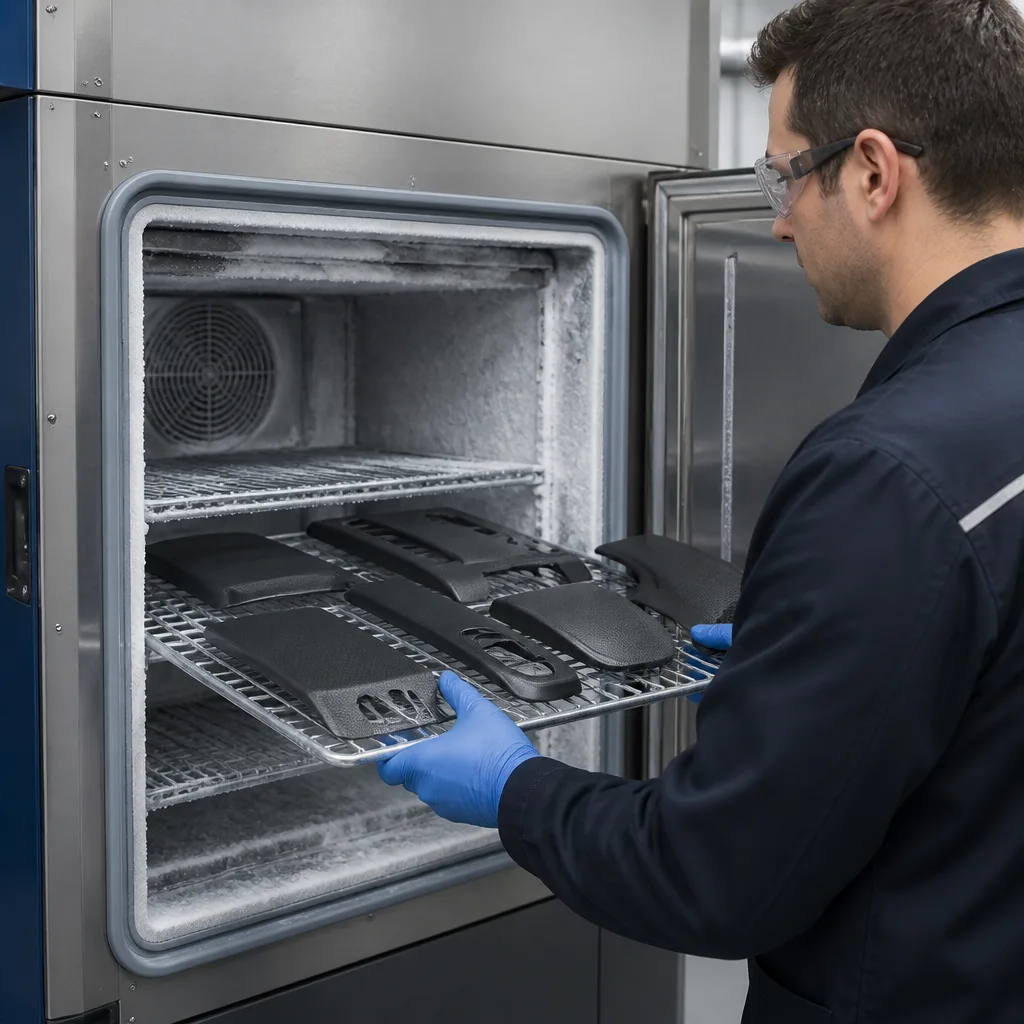
Automotive interior trim materials are routinely exposed to harsh winter conditions in many parts of the world. At low temperatures, many polymers lose their flexibility and become brittle, increasing the risk of cracking or permanent damage during assembly or normal vehicle operation.
The objectives of the GMI 60306 standard are as follows:
This standard applies to many automotive interior trim materials, including those listed below:
These materials are commonly used in the following areas:
The described test method, in principle, evaluates whether a material remains intact after being exposed to low temperatures. The typical procedure is as follows:
The severity of the test depends on the material performance required for the intended vehicle application. After testing, inspectors evaluate the following:
Materials that do not exhibit significant defects are considered suitable for cold weather applications.
Low-temperature performance is critical in automotive engineering because vehicle interiors can be exposed to temperatures below -30 degrees Celsius in northern climates. Poor cold resistance can lead to:
Tests conducted according to the GMI 60306 standard help manufacturers avoid these problems before production.
This standard is generally used in the following situations:
Suppliers use the results to demonstrate compliance with General Motors' material performance requirements.
The use of the GMI 60306 standard offers several advantages:
The GMI 60306 standard is part of a broader family of General Motors Europe indoor material testing methods and includes:
Together, these standards evaluate the mechanical, thermal, environmental, and aesthetic performance of automotive interior materials.
In conclusion, the GMI 60306 standard includes an important test method used to evaluate the low-temperature resistance of automotive upholstery materials. This standard helps ensure the reliability and durability of vehicle interiors in severe winter conditions by assessing a material's ability to withstand cold conditions and mechanical stress without cracking or losing flexibility. Although it has been superseded by the GMW 14126 standard for newer vehicle programs, the GMI 60306 standard remains relevant for understanding legacy material properties and validating components used on older platforms.
For many years, our organization, with its competent and experienced team, has been understanding the needs of its clients, providing the advanced testing services they require, and assisting them in the establishment, implementation, and improvement of management systems. Within this framework, we also provide testing services compliant with the GMI 60306 standard.
To get an appointment, to get more detailed information or to request an evaluation, you can ask us to fill in our form and reach you.

