

The “GMW 3387 Automotive Textile Fiber Degradation Determination Procedure” standard, developed by General Motors Worldwide (GMW), is used to evaluate the resistance of automotive textile materials to fiber degradation after accelerated weathering exposure. This standard is particularly important for automotive fabrics used in applications such as seat upholstery, carpets, headliners, door panels, and other textile-based interior components that may be exposed to prolonged light and environmental conditions.
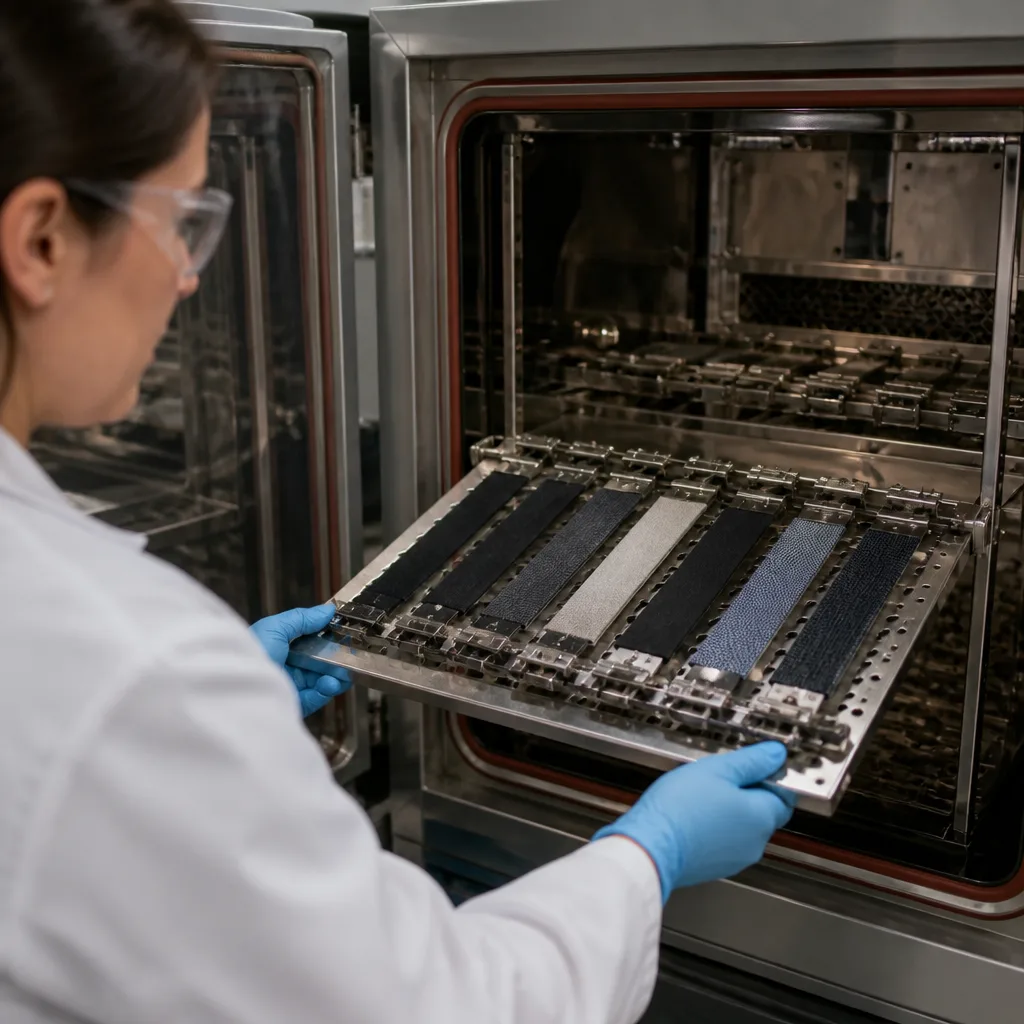
The primary purpose of the GMW 3387 standard is to determine whether textile fibers degrade after being exposed to accelerated weathering. Automotive textiles can be exposed to sunlight, heat, and other environmental factors during vehicle use. These conditions can gradually weaken the fibers and cause the following changes:
GMW 3387 standard provides a standardized approach to assessing this degradation so that textile materials can be compared and evaluated against General Motors requirements.
The basic concept is to expose a sample of an automotive textile to accelerated weathering and then evaluate the condition or performance of the fibers. In practical testing, weathering accelerates environmental impacts that would occur over a much longer period in actual vehicle service. After exposure, the textile is inspected or tested to determine the degree of fiber degradation. Therefore, the method differs from measuring the initial strength of a textile. The key question is: how well does the textile maintain its fiber integrity after exposure to environmental impacts? This makes the GMW 3387 standard a durability-focused test.
Accelerated weathering is a crucial part of the procedure. Automotive textiles can be significantly exposed to solar and environmental influences, especially in vehicle interiors where sunlight can enter through windows. Accelerated exposure aims to reproduce the damaging effects associated with long-term environmental exposure in a controlled laboratory environment. Therefore, the GMW 3387 standard is associated with textile testing related to weathering. Test laboratories list, among other automotive weathering methods, fiber degradation, particularly after xenon exposure.
The exact dimensions of the sample, exposure conditions, evaluation criteria, and acceptance requirements are specified in the GMW 3387 standard. Generally, the testing process follows these steps.
Since these details may depend on the relevant revision and material specification, a controlled standard should always be used for precise exposure parameters and acceptance criteria.
Fiber degradation refers to the deterioration of the individual fibers that make up a textile. For example, a fabric may initially possess sufficient mechanical integrity, but after prolonged exposure to radiation and environmental conditions, its fibers may weaken or become more brittle. Eventually, the fibers may break or lose their ability to maintain the necessary textile structure. This degradation is particularly important for automotive upholstery because the material must withstand both environmental impacts and mechanical use.
The GMW 3387 standard applies to automotive textile materials. Potential applications include:
This standard is also used by independent laboratories as part of automotive textile testing programs. For example, accredited laboratory scopes define GMW 3387 under fiber degradation testing.
This standard is normally just one part of a larger textile qualification program. For example, textile tests related to General Motors might include:
These tests evaluate different failure mechanisms. The GMW 3387 standard focuses specifically on the degradation of fibers after exposure to weathering.
The GMW 3387 standard is important because a textile material may have excellent properties when new, but can deteriorate significantly during use. For automotive manufacturers, this creates various risks:
The stated test result should not be interpreted as a general statement of whether a textile passed or failed. The applicable engineering specification or material specification defines the necessary acceptance criteria. The laboratory report should normally specify the material, sample information, exposure conditions, test procedure, evaluation method, and the resulting degradation assessment.
An important practical application is the use of xenon arc weather resistance testing. Accredited testing laboratories specifically list xenon post-fiber degradation in conjunction with GMW 3387. Xenon arc equipment is widely used in accelerated weather resistance testing because it can reproduce essential properties of sunlight under controlled laboratory conditions. In these tests, textiles are evaluated to determine whether the fibers have degraded after exposure. This makes the GMW 3387 standard particularly useful when the aim is to assess the long-term light/environmental exposure resistance of automotive textiles.
In conclusion, the GMW 3387 standard is designed to evaluate the resistance of automotive textiles to fiber degradation after accelerated exposure to weathering. This standard is important for the qualification of automotive textile materials because the materials used inside vehicles must maintain their structural integrity and functional performance after prolonged exposure to environmental factors. Therefore, this standard helps manufacturers and suppliers identify textile materials that can provide the necessary long-term durability.
For many years, our organization, with its competent and experienced staff, has been understanding the needs of its clients, providing the advanced testing services they require, and assisting them in the establishment, implementation, and improvement of management systems. Within this framework, we also provide testing services in accordance with the GMW 3387 standard.
To get an appointment, to get more detailed information or to request an evaluation, you can ask us to fill in our form and reach you.

