

Determination of Abrasion Resistance of Daimler PB VWL 323 Pile Surface

Determination of Abrasion Resistance of Daimler PB VWL 323 Pile Surface

The “Daimler PB VWL 323 Determination of Abrasion Resistance of Pile Surfaces - Test Method” standard, developed by the Daimler-Benz automotive company, is a Daimler automotive material testing specification focused on evaluating the abrasion resistance of pile materials. Here, pile refers to raised textile surfaces such as velvet, carpet pile, flocked fabrics, or upholstery fibers. The described method is primarily used to verify automotive interior textiles and upholstery components that are subjected to repeated abrasion during vehicle use.
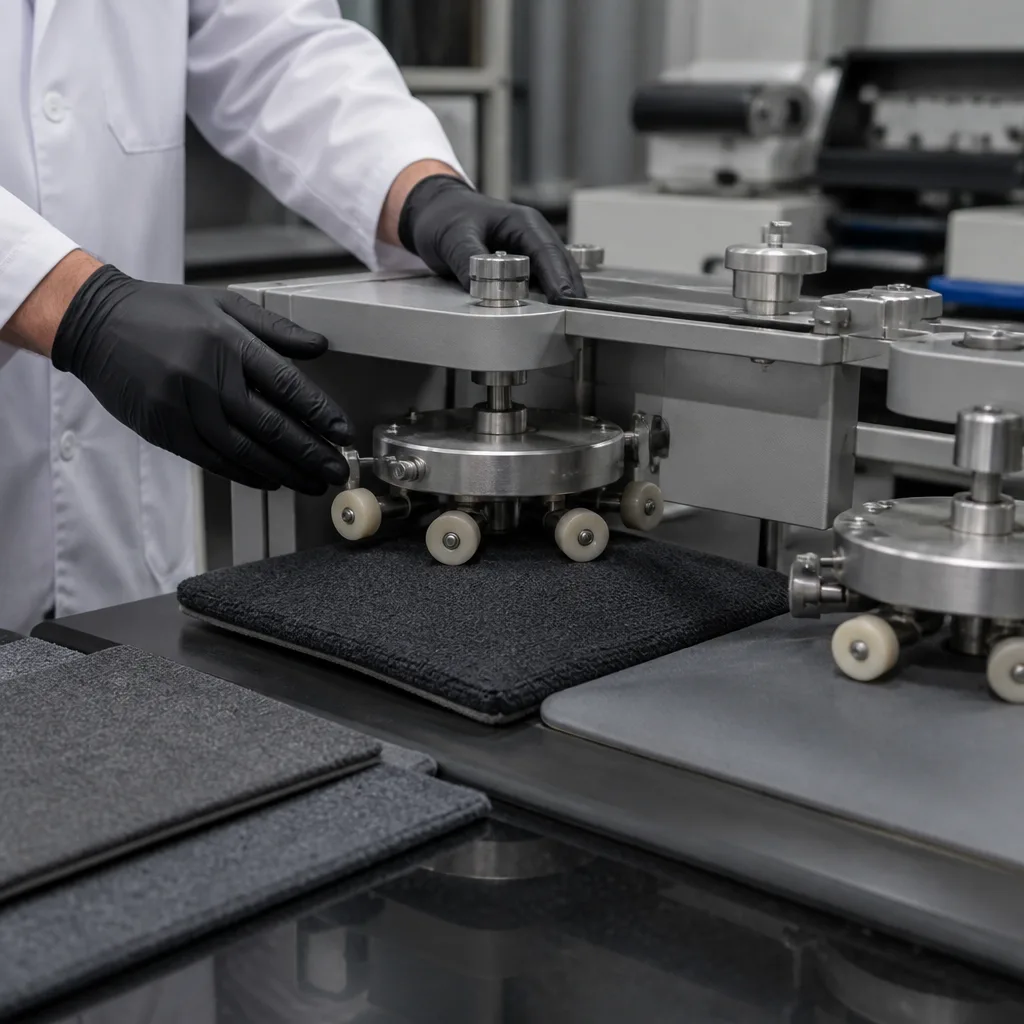
Determination of Abrasion Resistance of Daimler PB VWL 323 Pile Surface

This test method determines how well the air surface withstands the following conditions:

  • Fiber abrasion
  • Surface flattening
  • Loss of pile structure
  • Exposure of support material
  • Visual deterioration after repeated wear and tear.

This method is especially important for the following:

  • Automotive carpets
  • Upholstery fabrics
  • Door trim textiles
  • Velvet coverings

This specification evaluates the durability of textile pile under controlled abrasion conditions. Typical evaluation criteria include:

  • Air loss rate
  • Changes in surface appearance
  • mass loss
  • Exposure of the substrate/support surface.
  • Number of wear cycles until failure

The test method described here is conceptually related to internationally accepted wear systems, such as the Martindale method defined in the ISO 12947 standard. This method generally follows these steps:

  • Preparation of textile samples
  • These are subjected to repeated mechanical friction/wear.
  • Examining the air surface after specific cycles.
  • Evaluation of wear resistance visually or by mass loss.

Automotive original equipment manufacturer standards generally adopt principles from the following textile wear systems:

  • Martindale wear
  • Taber erosion
  • Rotary drum wear

The Martindale abrasion method is widely used for pile and upholstery fabrics and is frequently referenced as a comparative standard in automotive textile testing. ISO 12947 evaluates the following:

  • Sample deterioration
  • mass loss
  • Change in appearance after wear cycles.

Wear resistance is critical because vehicle interiors are constantly subjected to the following frictions:

  • Passenger boarding and alighting
  • Sliding contact
  • Foot traffic on carpets
  • Clothing friction
  • Repeated sitting cycles

Poor wear resistance can lead to the following:

  • Premature wear
  • Aesthetic deterioration
  • Customer complaints
  • Decrease in perceived quality

In automotive interiors and technical textiles in particular, the abrasion resistance of a pile surface is very important. A pile surface is a textile that has fluffy fibers or loops such as the following:

  • Velvet
  • Carpet
  • Flocked fabrics
  • Upholstery textiles
  • Headliners and trim fabrics

This testing method is considered important for the following reasons:

  • Appearance preservation: Plush materials are chosen partly because of their visual and tactile qualities. Poor abrasion resistance results in:
    • Fiber flattening
    • bald spots
    • Pubescence
    • color change
    • Irregular tissue

In the vehicle interior, these defects quickly become visible in the following areas:

    • Seat edges
    • mats
    • Door handles
    • Luggage covers
  • Durability and lifespan: Automotive interiors are constantly subjected to the following friction:
      • Passengers getting on and off the vehicle
      • Shoes rubbing against the carpet
      • Clothes sliding on the seats
      • Repeated touching and cleaning.

    If the bristled surface wears down too quickly, the material can deteriorate long before the vehicle's expected lifespan.

    • Customer perception of quality: Interior wear is one of the first things customers notice. Even if the vehicle is functioning perfectly, worn textile surfaces can make the entire car look old or cheap. Luxury brands like Mercedes-Benz and Volkswagen place great emphasis on wear performance, as interior quality significantly impacts brand perception.
    • Safety and functional performance: In some cases, air conditioning malfunction may affect functionality.
      • Floor coverings may lose their protective properties.
      • Acoustic insulation may deteriorate.
      • Surface friction properties may change.
      • Support materials may be exposed.
    • Supplier qualification: Daimler PB VWL 323 and similar original equipment manufacturer standards are used to approve materials before production. Suppliers that fail wear tests may not be suitable for vehicle programs.

    Automotive textiles are generally expected to withstand the following:

    • Thousands to tens of thousands of wear cycles
    • Repeated cleaning
    • Temperature and humidity changes
    • UV exposure and wear

    However, this is far more challenging than many other home textile applications.

    The abrasion resistance of a bristled surface is particularly important in the following sectors:

    • Automotive interiors
    • Airplane seats
    • Railway interiors
    • Commercial furniture
    • Public transport flooring
    • High-traffic carpets

    In conclusion, the Daimler PB VWL 323 standard is important for ensuring that pile surfaces offer durability, visual quality, customer satisfaction, and long-term performance.

    For many years, our organization, with its competent and experienced team, has been understanding the needs of its clients, providing the advanced testing services they require, and assisting them in the establishment, implementation, and improvement of management systems. Within this framework, we also provide testing services compliant with the Daimler PB VWL 323 standard.

    WhatsApp

