

Developed by General Motors Europe (GME), the “GME 6867 Accelerated Aging Test for Polymer Safety Parts” standard is a materials testing standard that specifies the accelerated aging procedure for polymer safety parts used in automotive applications. The aim of this standard is to evaluate how plastic and elastomer components perform after being subjected to simulated long-term environmental conditions such as high temperature, humidity, and aging cycles before being approved for vehicle production.
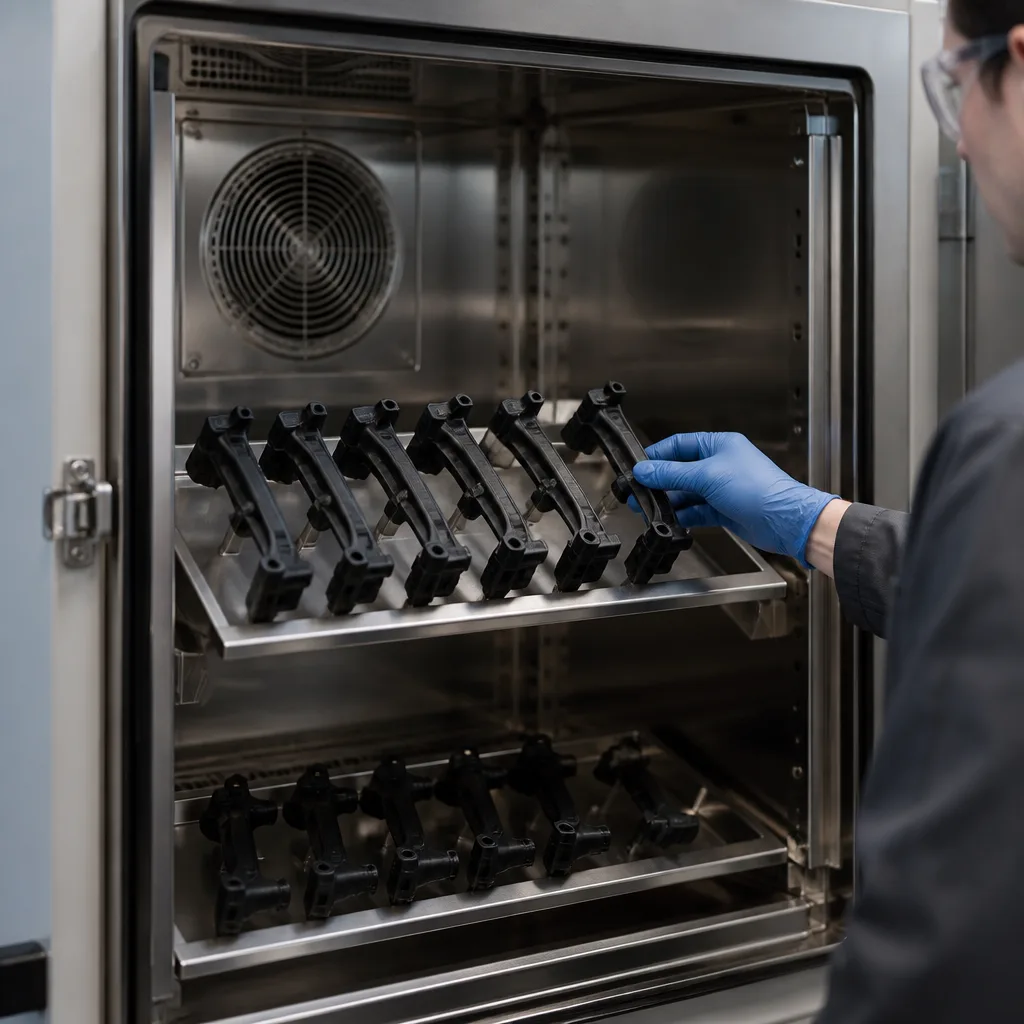
Automotive polymer components are expected to maintain their mechanical strength, dimensional stability, and functional performance throughout a vehicle's service life. Safety-related parts are particularly critical because failures can affect passenger protection or vehicle operation.
The GME 6867 standard provides a standardized laboratory method for:
The GME 6867 standard applies primarily to the following polymeric safety components:
Typical applications of this standard include:
The complete list of applicable components depends on General Motors engineering specifications for the vehicle program.
In principle, the GME 6867 standard accelerates the natural aging process of polymer parts by exposing them to more severe controlled environmental conditions than normal service conditions. Typical aging factors include:
After aging, the following changes are examined in the parts:
The aim is to determine whether the component still meets the original engineering requirements after simulated long-term use.
Depending on the component, various aging test methods are applied. The characteristics evaluated in these tests are as follows:
Additional component-specific testing may also be required according to the relevant General Motors material specification.
Polymer materials naturally degrade over time for the following reasons:
Without accelerated aging assessment, materials that initially meet specifications may experience the following problems:
The GME 6867 standard helps identify these potential problems before components go into mass production.
This standard offers several advantages:
After the aging process, the components are evaluated from various perspectives. Typical evaluation criteria include:
Acceptance criteria are generally defined by the relevant General Motors engineering drawing or material specification.
The GME 6867 standard is often used in conjunction with other General Motors materials and environmental standards, covering topics such as:
Together, these standards enable comprehensive validation of automotive polymer materials throughout the product development process.
Although the GME 6867 standard was developed for General Motors, the described test method is also applicable to organizations operating in the following fields:
In short, the GME 6867 standard is necessary because automotive polymer safety components must remain reliable and functional for many years under demanding vehicle operating conditions. Plastic materials can gradually lose their mechanical and functional properties due to heat, humidity, oxidation, chemical exposure, and prolonged stress. This standard provides a controlled method for predicting these changes before components are installed in vehicles. This standard is considered important for the following reasons:
The GME 6867 standard is necessary because it provides a scientific method for verifying that polymer safety components will continue to function reliably after years of vehicle use. It reduces the risk of age-related failures and helps General Motors and its suppliers deliver safer, more durable vehicles.
In conclusion, the GME 6867 standard is a crucial engineering standard for accelerated aging of polymer safety components. By simulating long-term environmental exposure under controlled laboratory conditions, this standard enables manufacturers to verify that safety-critical polymer components retain their required mechanical and functional properties throughout a vehicle's expected lifespan. This standard plays a vital role in material adequacy, supplier approval, and the long-term reliability of automotive safety systems.
For many years, our organization, with its competent and experienced staff, has been understanding the needs of its clients, providing the advanced testing services they require, and assisting them in the establishment, implementation, and improvement of management systems. Within this framework, we also provide testing services compliant with the GME 6867 standard.
To get an appointment, to get more detailed information or to request an evaluation, you can ask us to fill in our form and reach you.

