

The “RIVIAN RMS.7002 Powder Coating Material Specifications” standard, developed by RIVIAN, an American electric vehicle (EV) manufacturer and automotive technology company, describes powder coating materials and processing characteristics for vehicles.
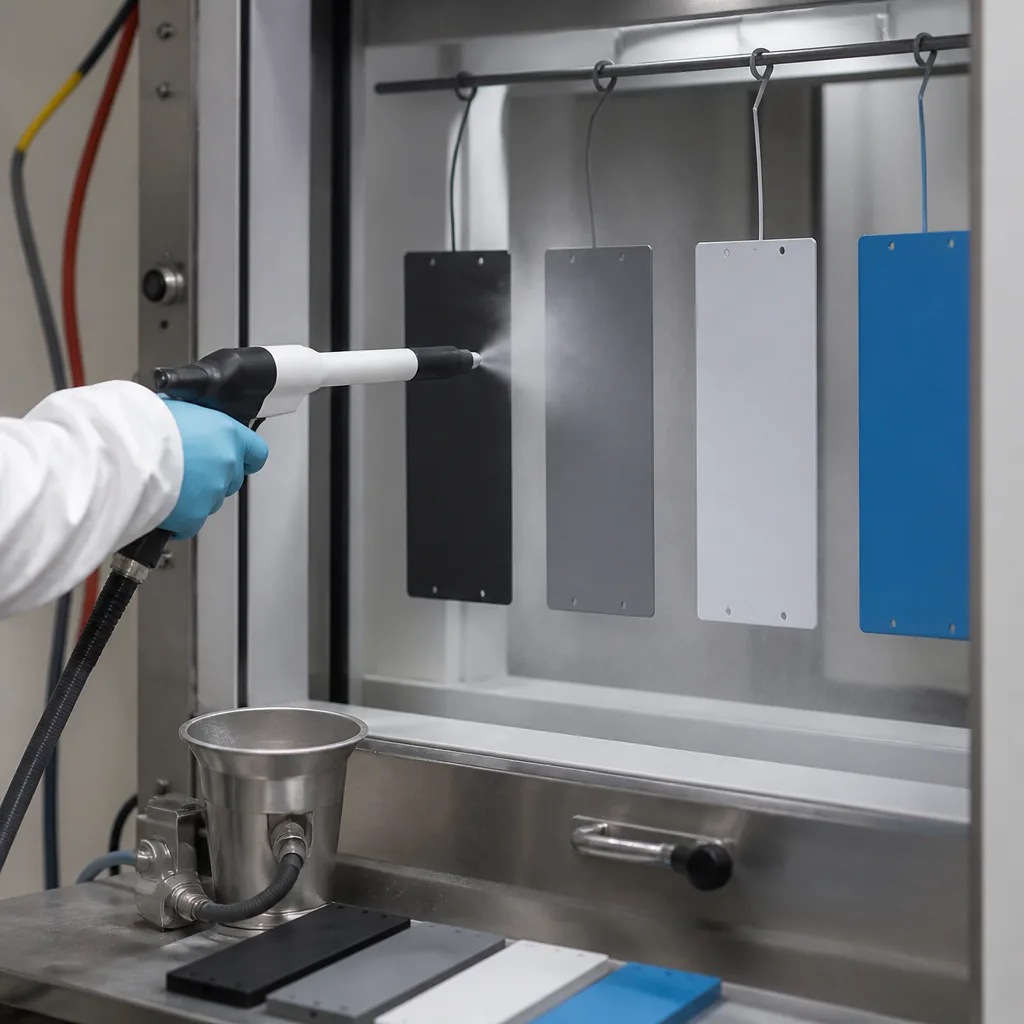
Powder coating consists of non-volatile components applied dry and bonded together by heat or radiation to form a continuous fused film for protective or decorative purposes. This standard contains minimum performance requirements for powder coating application. The requirements depend on the location and function of the powder coating and may be used alone or in combination with electroplating, priming, converting, zinc plating, or a topcoat paint in a system.
Rivian's RMS standards are internal engineering standards. They typically include the following:
The RMS.7002 standard is used to define requirements for materials, components, or systems used in next-generation platforms. This standard ensures consistency, safety, and performance across all supplied parts.
The RMS.7002 standard generally includes the following requirements:
These requirements ensure that the materials can withstand real-world operating conditions in electric vehicles.
Electric vehicles are designed for a variety of climates, so the materials need to maintain their performance over time.
These ensure that all suppliers verify materials in a consistent and repeatable manner.
This is compatible with modern electric vehicle architectures where battery safety and efficiency are critical.
The requirements in the RMS.7002 standard are defined under the following headings:
The performance requirements in the RMS.7002 standard are listed under the following headings:
For example, in terms of appearance, the coating surface must be smooth/continuous and free from bubbles, separation, pitting, nodules, runoff, and contamination. Inspection should be performed visually with the naked eye and with an optical microscope at 10x magnification. The Class A surface appearance must be approved by Rivian.
In terms of thickness, the coating thickness should be in the range of 40-100 microns, unless recommended by the raw material supplier or otherwise approved by Rivian. For initial qualification, a thickness range, including maximum, minimum, and target, must be defined for production quality control. The method should be sectioning according to the ISO 1463 standard.
Regarding curing status, the curing status of the powder coating must be verified as part of batch-based quality and qualification control. Dual-solvent scrubbing can be used as this curing status verification method. This method involves moistening a white, soft cotton cloth (gauze or medical gauze) with the solvent and then rubbing the coated surface with firm finger pressure in circular or back-and-forth motions, 10 times for batch acceptance and 50 times for qualification. Approved solvents include n-butyl acetate, methyl ethyl ketone, and methyl isobutyl ketone. Other solvents may also be used if approved by Rivian.
The main reasons why the RMS.7002 standard is considered important are as follows:
Rivian RMS specifications generally complement, but do not replace, global standards such as ISO (International Organization for Standardization), ASTM (American Society for Testing and Materials), and SAE (American Society of Automotive Engineers). Additional requirements are tailored specifically to Rivian's vehicle platforms.
The RMS.7002 standard is generally applicable to the following:
These are critical areas in electric vehicle design, especially in terms of durability and safety.
In summary, the RMS.7002 standard is a proprietary material or component specification used by Rivian to ensure the use of high-quality, reliable, and safe materials in its vehicles. This standard plays a significant role in terms of supplier compliance, product consistency, and the overall performance of specific models.
For many years, our organization, with its competent and experienced staff, has been understanding the needs of its clients, providing the advanced testing services they require, and assisting them in the establishment, implementation, and improvement of management systems. Within this framework, we also provide testing services in accordance with the RIVIAN RMS.7002 standard.
To get an appointment, to get more detailed information or to request an evaluation, you can ask us to fill in our form and reach you.

