

Developed by General Motors Europe (GME), the “GME 60329 Determination of Thread Breakage Resistance of Upholstery Materials” standard is a materials testing standard that includes a method for determining the thread breakage resistance (seam breakage resistance) of textile upholstery materials. This standard is primarily used to evaluate the durability of stitched automotive interior components such as seat fabrics, leather upholstery, vinyl coverings, and laminated textiles.
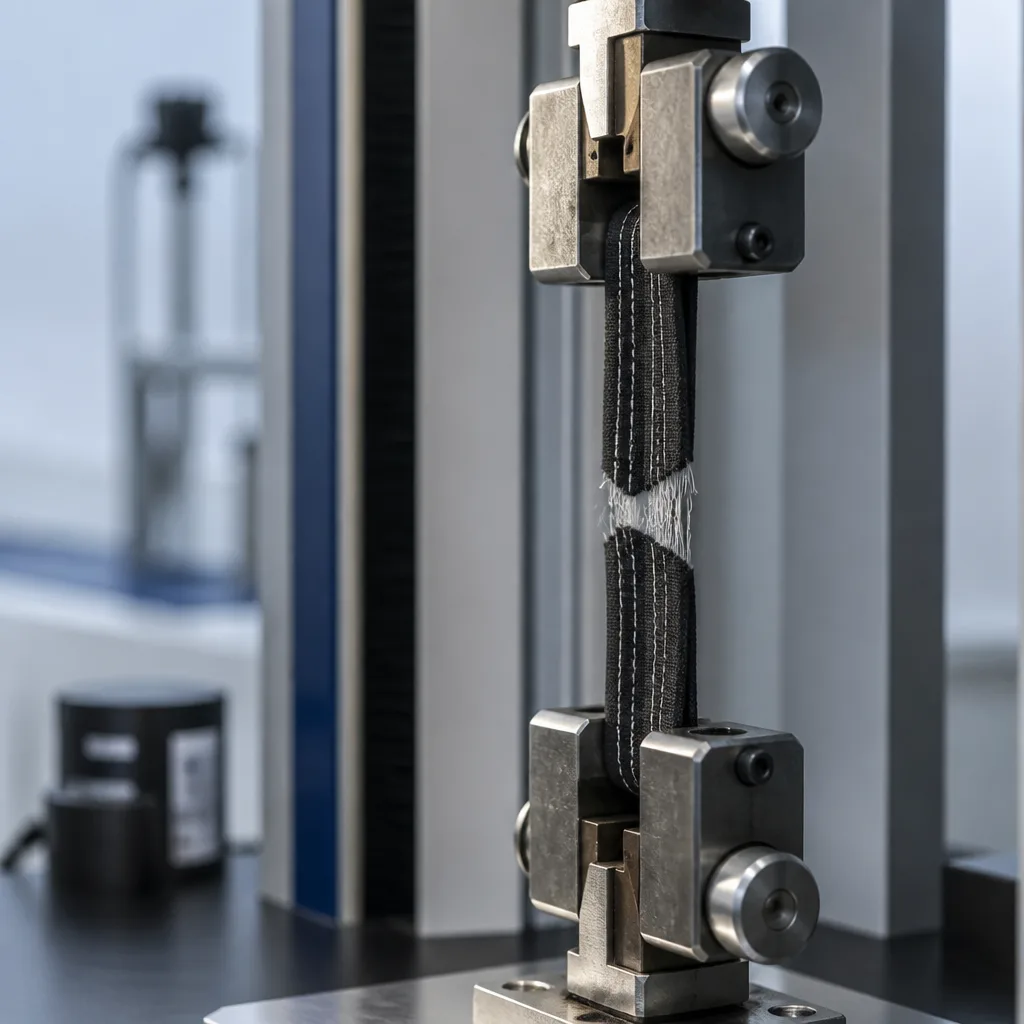
The purpose of the described test method is to measure the force required to pull a stitched thread through a material until it breaks. This property is critical to ensuring that stitched components remain intact throughout the vehicle's lifespan.
Automotive interior materials are subjected to constant mechanical loads during normal vehicle use. Seat covers, armrests, door panels, and trim are subjected to repeated stress for the following reasons:
Weak stitching or insufficient fabric strength can cause seams to break before the material itself reaches its design limit. The GME 60329 standard helps manufacturers verify that stitched components have adequate resistance to seam breakage before production begins.
This standard plays a vital role in automotive quality assurance because it helps to:
Even if the base material has high tensile strength, poor weld retention can lead to premature failure. This standard is generally applied to the following types of materials:
This method is suitable for materials that are joined using the stitching method.
In principle, the test determines the maximum force required to pass the sewing thread through the material. For this purpose, a stitched specimen is mounted on a tensile testing machine. The machine applies a continuously increasing tensile load until one of several failure modes occurs. The maximum load at the moment of failure is recorded as the seam breaking strength.
The equipment used in tests generally includes the following:
The described test method generally follows these steps:
Various types of failures can be observed during testing. The failure modes evaluated are as follows:
The observed failure mode often provides valuable information for product improvement.
The measured performance depends on many variables. Factors affecting yarn breaking strength include:
The GME 60329 standard is commonly used in the automotive industry in the following areas:
The use of the GME 60329 standard enables manufacturers to:
The GME 60329 standard is often used in conjunction with other General Motors Europe material testing standards, including:
Together, these standards provide a comprehensive evaluation of automotive interior trim materials.
Although developed for General Motors Europe, the GME 60329 standard has a wide range of applications in the following sectors:
The main advantages offered by this standard are as follows:
In conclusion, the GME 60329 standard is an important test method for evaluating the seam (thread) breakage strength of automotive upholstery materials. By measuring the force required to break a stitched seam, this standard helps manufacturers ensure that upholstery and interior trim components can withstand the mechanical stresses that may be encountered throughout the life of a vehicle.
When used in conjunction with other complementary GME material standards, it contributes to the development of durable, reliable, and high-quality automotive interiors that meet both engineering requirements and customer expectations.
For many years, our organization, with its competent and experienced staff, has been understanding the needs of its clients, providing the advanced testing services they require, and assisting them in the establishment, implementation, and improvement of management systems. Within this framework, we also provide testing services compliant with the GME 60329 standard.
To get an appointment, to get more detailed information or to request an evaluation, you can ask us to fill in our form and reach you.

