

Developed by General Motors Europe (GME), the “GME 60330 Determination of the color fastness of textiles and coated fabrics to friction” standard is a materials testing standard that includes a method for determining the color fastness of automotive textiles and coated fabrics to friction (abrasion). This standard is widely used to assess whether the color of interior upholstery materials remains stable when exposed to repeated contact with clothing, hands, cleaning cloths, or other surfaces during normal vehicle use.
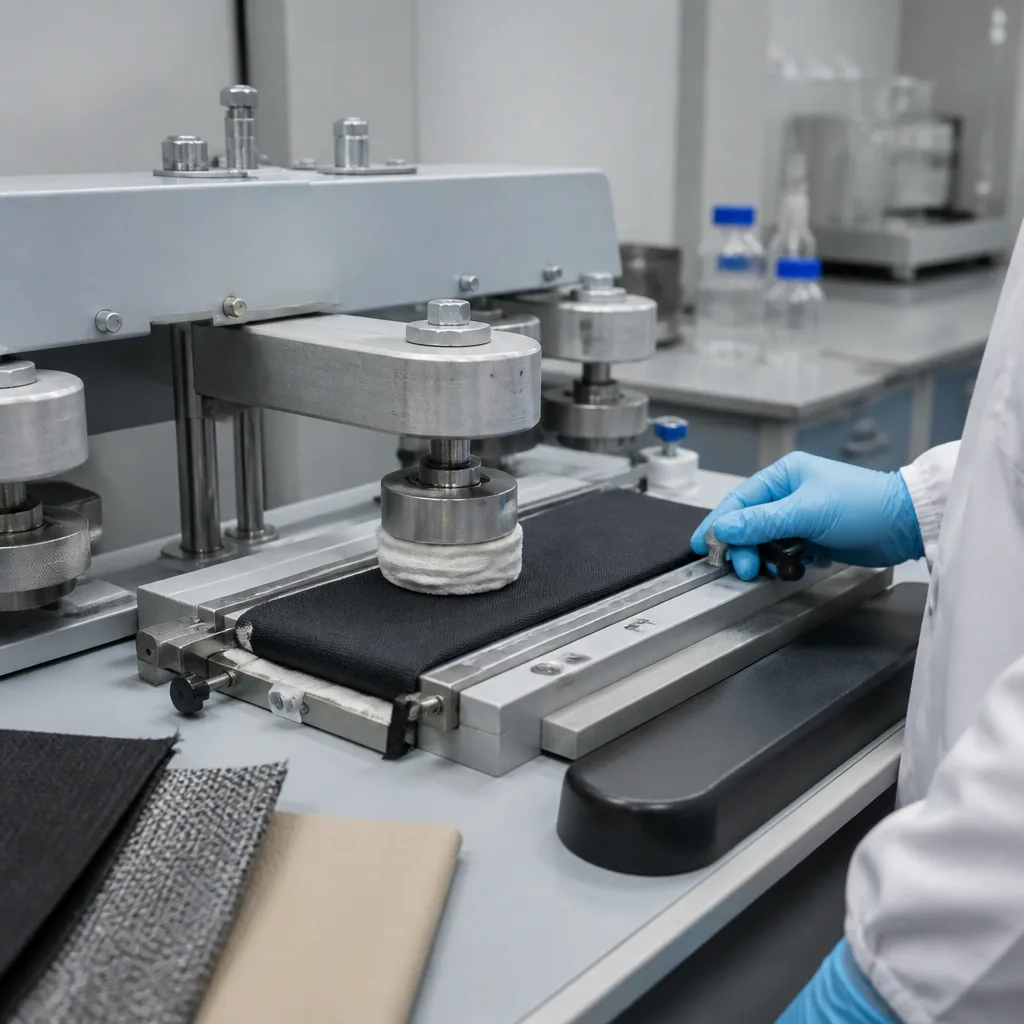
The primary purpose of the GME 60330 standard is to measure the resistance of colored textiles and coated fabrics to color transfer due to friction. Materials with poor friction fastness can stain passengers' clothing, lose their original appearance, or fail to meet vehicle quality expectations. This standard helps manufacturers in the following areas:
The GME 60330 standard applies to numerous automotive interior materials, including:
This process is suitable for both woven and knitted textiles, as well as polymer-coated materials.
This standard specifies the amount of color transferred from a test sample to a standard rubbing cloth under controlled conditions. Normally, two types of rubbing tests are performed:
After the rubbing process, staining of the rubbing cloth and any color change in the sample are visually evaluated using standardized gray scales.
The equipment used in these tests generally includes the following:
The equipment provides a controlled friction force, stroke length, and cycle count to ensure repeatable results.
Detailed numerical requirements are included in the standard, but generally the testing process follows these steps:
At the end of the test, performance is generally evaluated by examining the following:
Results are generally expressed using internationally accepted grayscale grading systems, allowing for consistent comparisons between different materials.
The GME 60330 standard is frequently applied in the automotive industry in the following situations:
This is especially important for components that are frequently exposed to passenger contact.
Dry and wet rubbing tests are important for the following reasons:
Tests conducted under both conditions provide a more comprehensive assessment of long-term color durability.
The use of the GME 60330 standard offers several advantages:
The GME 60330 standard complements other automotive material performance standards that evaluate the following characteristics:
Together, these standards provide a comprehensive assessment of automotive interior material performance.
Automotive interior fabrics are constantly exposed to contact with the vehicle throughout its lifespan. If the dyes are not sufficiently abrasion-resistant, they can bleed onto clothing, fade prematurely, or degrade the perceived quality of the vehicle. The GME 60330 standard provides a standardized, repeatable method for assessing abrasion colorfastness and helps manufacturers ensure that interior textiles and coated fabrics maintain their appearance and durability under both dry and wet usage conditions.
In conclusion, the GME 60330 standard plays a crucial role in material adequacy, supplier approval, and quality assurance in the automotive manufacturing process.
For many years, our organization, with its competent and experienced staff, has been understanding the needs of its clients, providing the advanced testing services they require, and assisting them in the establishment, implementation, and improvement of management systems. Within this framework, we also provide testing services compliant with the GME 60330 standard.
To get an appointment, to get more detailed information or to request an evaluation, you can ask us to fill in our form and reach you.

