

FCA 50455/08 Resistance to Amine Contamination
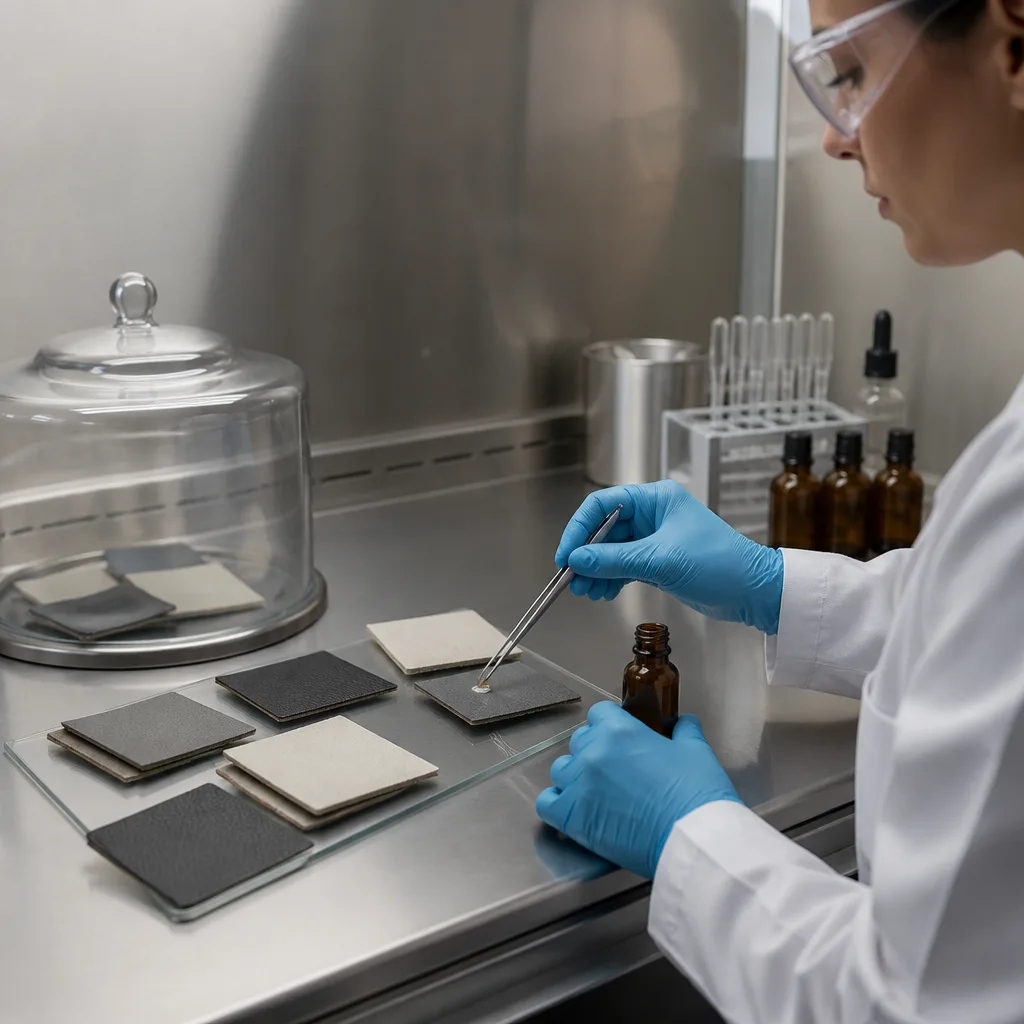
The “FCA 50455/08 Amine Contamination Resistance” standard, developed by Fiat Chrysler Automobiles (FCA) (now Stellantis), an Italian-American automotive company, describes procedures and equipment for determining the resistance of automotive interior trim materials to amine contamination.
The described method involves treating the surface of the material under test with an amine (a catalyst for cellular polyurethanes) and checking whether unpleasant odors (e.g., garlic odors) develop that are different from the odor of the material or contaminant.
FCA 50455/08 is a technical standard that includes a test method for evaluating the resistance of materials to amine contamination (resistance to amine pollution).
This standard is part of the automotive industry's material qualification process, specifically for interior trim materials such as the following:
This assesses how well these materials withstand exposure to amines (organic compounds often found in automotive cleaning products, adhesives, or environmental pollutants). Amine contamination can cause discoloration, staining, odor problems (sometimes described as a garlic smell), or deterioration in surface appearance and performance.
This testing method typically involves the controlled exposure of a material sample to amine-containing substances under specific conditions (temperature, humidity, time) and subsequent evaluation of the following:
Results are typically reported as “no change,” “no garlic odor,” or similar pass/fail criteria, as seen in patent documents referring to standards for artificial leather production.
The FCA 50455/08 standard belongs to a family of material standards (for example, this series covers relevant amine or emission tests). It is typically required for supplier approval of internal components to ensure long-term durability and customer satisfaction in vehicles.
This standard is sometimes mentioned alongside Fiat's other test standards for fogging, odor (VDA 270), plasticizer content, or dimensional stability of vinyls.
In short, the FCA 50455/08 standard defines a method for evaluating the resistance of interior materials to amine contamination, focusing particularly on odor formation. This standard primarily applies to:
The primary purpose of the FCA 50455/08 standard is to determine whether a material reacts with amine compounds commonly used in polyurethane production or produces undesirable odors (e.g., garlic-like odor). Such odors are critically important because,
This method ensures that the materials remain stable when exposed to amine-based substances.
An amine is a type of organic chemical compound derived from ammonia in which one or more hydrogen atoms have been replaced by carbon-containing groups (such as alkyl or aromatic groups).
The types of amines are as follows:
Their common characteristics are:
Here are some uses of amines:
In automotive interiors, amines are particularly important because they are widely used in foam production.
Amine contamination occurs when amine compounds migrate from one material (e.g., foam) to another (e.g., plastic, textile, coating). This can happen because amines are small molecules and can evaporate or diffuse within materials.
Resistance to amine contamination is the ability of a material to withstand exposure to amines without deteriorating, reacting, or producing unpleasant odors.
In automotive interiors, low resistance can lead to the following:
Amines are commonly used in the following areas:
However, they can cause the following:
The FCA 50455/08 standard is used for the following:
This standard is generally referenced in conjunction with other FCA material standards (e.g., mechanical, thermal, volatile organic compound testing).
Modern vehicles use a wide variety of interior materials that must withstand daily chemical exposures (from cleaners, gas emissions, or environmental factors). Lack of amine resistance can lead to visible defects, customer complaints, or warranty issues.
In short, this standard is important for the following reasons:
In conclusion, the FCA 50455/08 standard is a specific but critical automotive standard focusing on odor stability under amine exposure. Particularly in systems containing polyurethane materials, it helps ensure vehicle interiors remain odor-free, chemically stable, and customer-friendly.
For many years, our organization, with its competent and experienced staff, has been understanding the needs of its clients, providing the advanced testing services they require, and assisting them in the establishment, implementation, and improvement of management systems. Within this framework, we also provide testing services compliant with the FCA 50455/08 standard.
To get an appointment, to get more detailed information or to request an evaluation, you can ask us to fill in our form and reach you.

