

The “Ford FLTM BN 119-01 Determination of Seam Strength of Textile Upholstery Materials” standard, developed by Ford Motor Company (Ford), describes a test method used to evaluate the seam strength of textile-based interior upholstery materials. This method is commonly applied in automotive development to ensure that stitched or bonded interior components (e.g., seat covers, door panels, and upholstery fabrics) can withstand mechanical stresses throughout the vehicle's lifespan.
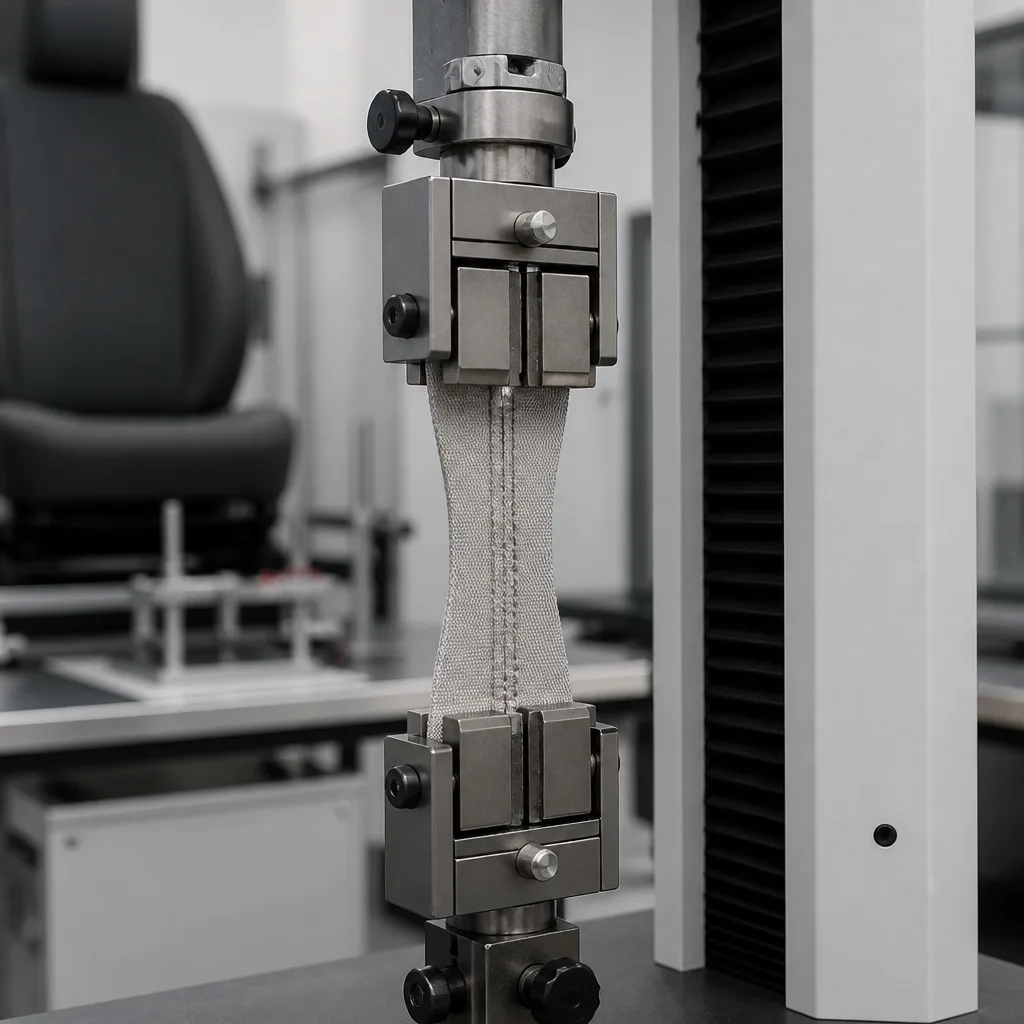
Textile seam strength refers to the ability of a stitched joint (seam) in a fabric to withstand mechanical forces before breaking. It is an important performance characteristic in textiles used in clothing, upholstery, technical fabrics, and especially automotive interior materials.
Seam strength evaluates how much force a sewn seam can withstand before one of the following occurs:
It is usually measured in Newtons (N) or force per unit area.
Seam strength is considered important for the following reasons:
The primary purpose of the Ford FLTM BN 119-01 standard is to define the following:
In automotive interiors, seams, especially in seats and decorative fabric components, are often critical failure points. This test ensures reliability and safety.
The Ford FLTM BN 119-01 standard is part of a group of related textile and interior tests, including the following:
Together, these standards ensure the durability of not just individual materials, but complete interior systems.
The Ford FLTM BN 119-01 standard is used in the following situations:
The testing method generally follows these steps:
This standard is important because it checks one of the most frequent and critical points of failure in automotive interiors: seams in textile upholstery materials (such as seat covers, door panels, and trim). This standard is required for the following reasons:
If the seam strength is insufficient, tearing or opening of the seams will occur, which is immediately noticeable and makes the interior look defective.
By implementing a standardized test, Ford reduces variability and long-term cost risk.
This standard ensures consistent quality in global production by requiring all suppliers to meet the same minimum performance requirements.
In short, the Ford FLTM BN 119-01 standard prevents premature failure and maintains consistent original equipment manufacturer quality standards by ensuring that stitched interior components remain strong, durable, and visually pristine in real-world use.
In conclusion, the Ford FLTM BN 119-01 standard is a key automotive testing method used to measure the strength and durability of stitched seams in textile interior materials. This standard helps ensure that interior components remain durable, safe, and visually intact throughout the life of a vehicle.
For many years, our organization, with its competent and experienced staff, has been understanding the needs of its customers, providing the advanced testing services they require, and assisting them in the establishment, implementation, and improvement of management systems. Within this framework, we also provide testing services to businesses in accordance with the Ford FLTM BN 119-01 standard.
To get an appointment, to get more detailed information or to request an evaluation, you can ask us to fill in our form and reach you.

