

The “ VW 96185-1 Painting - Assessment of surface defects in painted bodies and attachments” standard, developed by the Volkswagen automotive company , applies to Porsche AG. The test is performed according to the PPV 4021 standard.
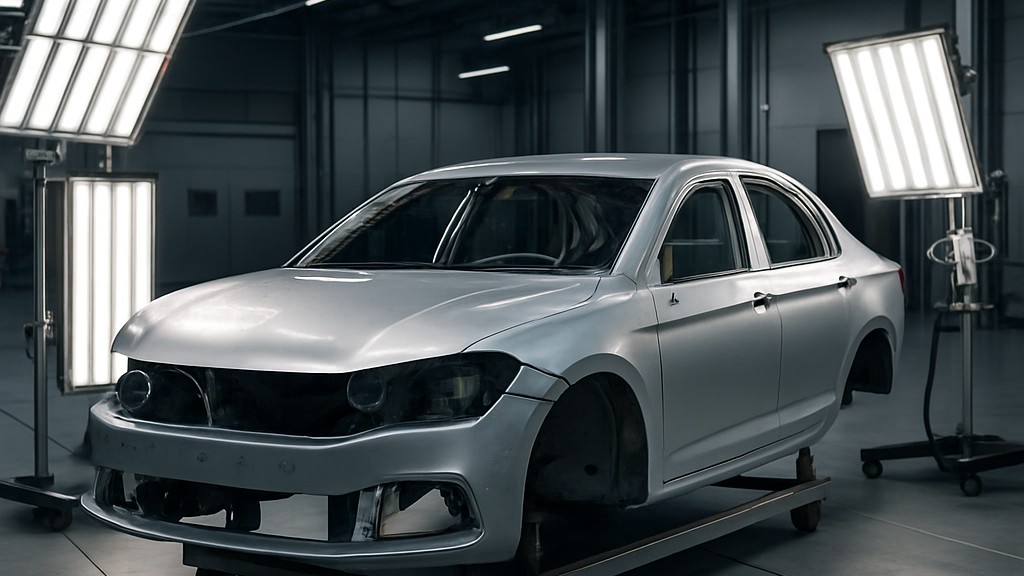
Unacceptable types of surface defects on painted bodies and attachments include:
Countable defects are classified according to the following defect sizes (diameter including dye accumulation due to capillary action):
If any of the criteria listed in the “Test criteria” table given in the standard are not met, the test result is considered non-compliant.
The limiting sample tables for paint defect characteristics provided in the standard are used to assess the severity of defects on a vehicle. In practice, the sample sheet is placed over the entire surface to be evaluated. The evaluation is performed at a 90-degree angle to the surface. The tables indicate the limiting value.
The tables are stored in an overview table showing a vehicle silhouette and zones for the model types tested. The boundary sample table is reviewed annually by the Product Inspection and Transport Quality Department and documented with an inspection tag. The boundary sample tables for paint defect characteristics are displayed at all relevant inspection locations.
The boundary sample tables are organized as follows:
In short, VW 96185-1 is a Volkswagen Group standard that outlines procedures and criteria for assessing surface defects on painted vehicle body parts. This standard is crucial for ensuring the visual quality and durability of painted surfaces, which are crucial for both aesthetic appeal and corrosion protection.
This standard provides detailed guidelines for identifying and evaluating various surface defects, such as scratches, dents, inclusions, and paint marks. It establishes acceptable limits for these defects, ensuring consistency in quality control throughout the manufacturing and repair processes.
By complying with the VW 96185-1 standard, manufacturers and service providers can maintain the high-quality finish expected of Volkswagen vehicles, ensuring customer satisfaction and brand integrity.
The VW 96185-1 standard, published by the Volkswagen Group, provides comprehensive guidelines for evaluating surface defects on painted vehicle body parts. While the full document is proprietary and not publicly available, it outlines specific test methods and acceptance criteria to ensure the visual quality and durability of painted surfaces.
The test methods defined in the VW 96185-1 standard generally refer to established test procedures for evaluating various aspects of painted surfaces. These may include:
Compliance with the VW 96185-1 standard ensures that painted vehicle body parts meet Volkswagen's stringent quality requirements. By following specified testing methods and acceptance criteria, manufacturers can maintain the aesthetic appeal and protective functions of painted surfaces, thus preserving brand integrity and customer satisfaction.
This standard is particularly important for the quality control of painted surfaces on Volkswagen Group vehicles. The importance of this standard is based on the following key factors:
Our organization, which has been supporting businesses across all sectors for years through a wide range of testing, measurement, analysis, and evaluation activities, has a strong team of employees who closely follow global developments in science and technology and are constantly improving themselves. In this context, we also provide testing services in accordance with the "VW 96185-1 Painting - Evaluation of surface defects on painted bodies and attachments" standard.
To get an appointment, to get more detailed information or to request an evaluation, you can ask us to fill in our form and reach you.

