

In the GMW 14738 standard developed by the General Motors company, a test method is described in order to determine the dynamic stiffness and loss angle (viscoelastic properties) when the elastomeric components used in vehicles are exposed to forced sinusoidal oscillations in the temperature range of minus 50 degrees to plus 150 degrees. This test method is considered suitable for the evaluation of all elastomeric components. The dynamic stiffness and loss angle properties of the elastomeric components in the vehicle chassis are important contributors to vehicle noise and vibration isolation as well as driving and handling performance.
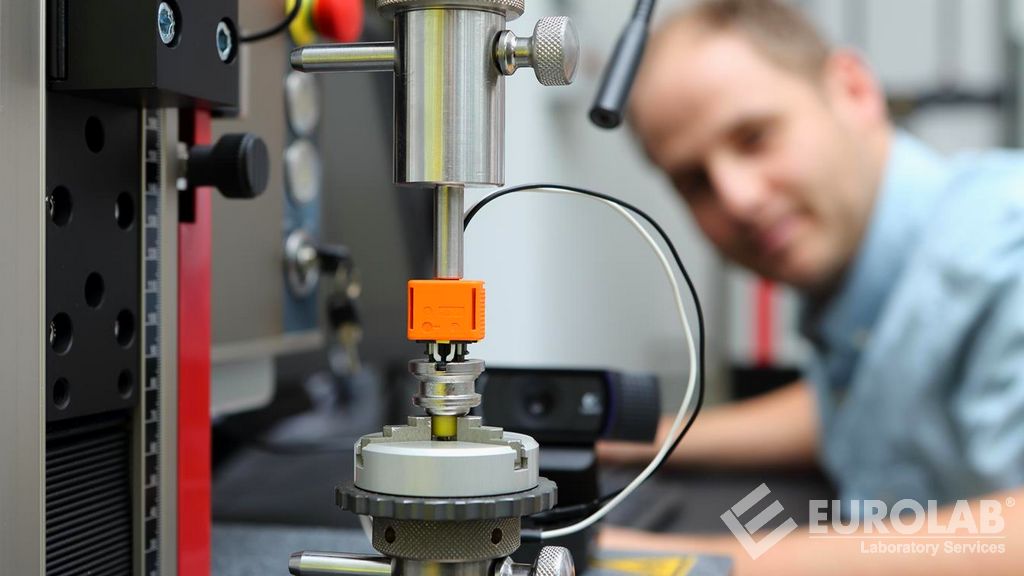
An elastomer is any rubbery material composed of long chain molecules or polymers that can regain its original shape after being substantially stretched. Under normal conditions, the long molecules that make up an elastomeric material are chaotically wound. However, with the application of a force, the molecules flatten in the direction in which they are attracted. Once released, the molecules spontaneously return to their normal compact, random arrangement.
Elastomers have been used in the automotive industry for many years. Natural rubber is still an important industrial polymer, but today a number of synthetic elastomers, such as styrene-butadiene rubber and butadiene rubber, are produced as byproducts of petroleum and natural gas.
The modern car consists of many interrelated systems and these systems are essential for the smooth and safe operation of the car as a whole. Each of these systems uses multiple rubber-based and elastomer products. A car's main systems include the engine, fuel, exhaust, cooling, lubrication, transmission, powertrain, axle, steering, braking, electronics, suspension, air conditioning and heating, and chassis, including the body, wheels, and tires. Each of these systems is designed to interact and support each other, and all of them use many rubber and elastomer products. For example, some rubber-based and elastomer parts commonly used in automobile engine systems are: diaphragms, engine mounts, gasoline and diesel engine seals and gaskets, head gaskets, hoses, and manifold gaskets.
Among the numerous test, measurement, analysis and evaluation studies it provides for businesses in various sectors, our organization also provides testing services for the determination of the dynamic hardness and loss angle of elastomeric components, within the scope of the GMW 14738 standard, with its trained and expert staff and advanced technological equipment.
To get an appointment, to get more detailed information or to request an evaluation, you can ask us to fill in our form and reach you.

