

Ford FLTM BN 155-01 Simulated Fingertip Wear Resistance (Abrex)

Ford FLTM BN 155-01 Simulated Fingertip Wear Resistance (Abrex)

The “Ford FLTM BN 155-01 Simulated Fingertip Abrasion Resistance (Abrex)” standard, developed by Ford Motor Company (Ford), describes a test method used in automotive materials engineering to evaluate the abrasion resistance of coated surfaces, specifically under conditions that simulate repeated contact with human fingertips.
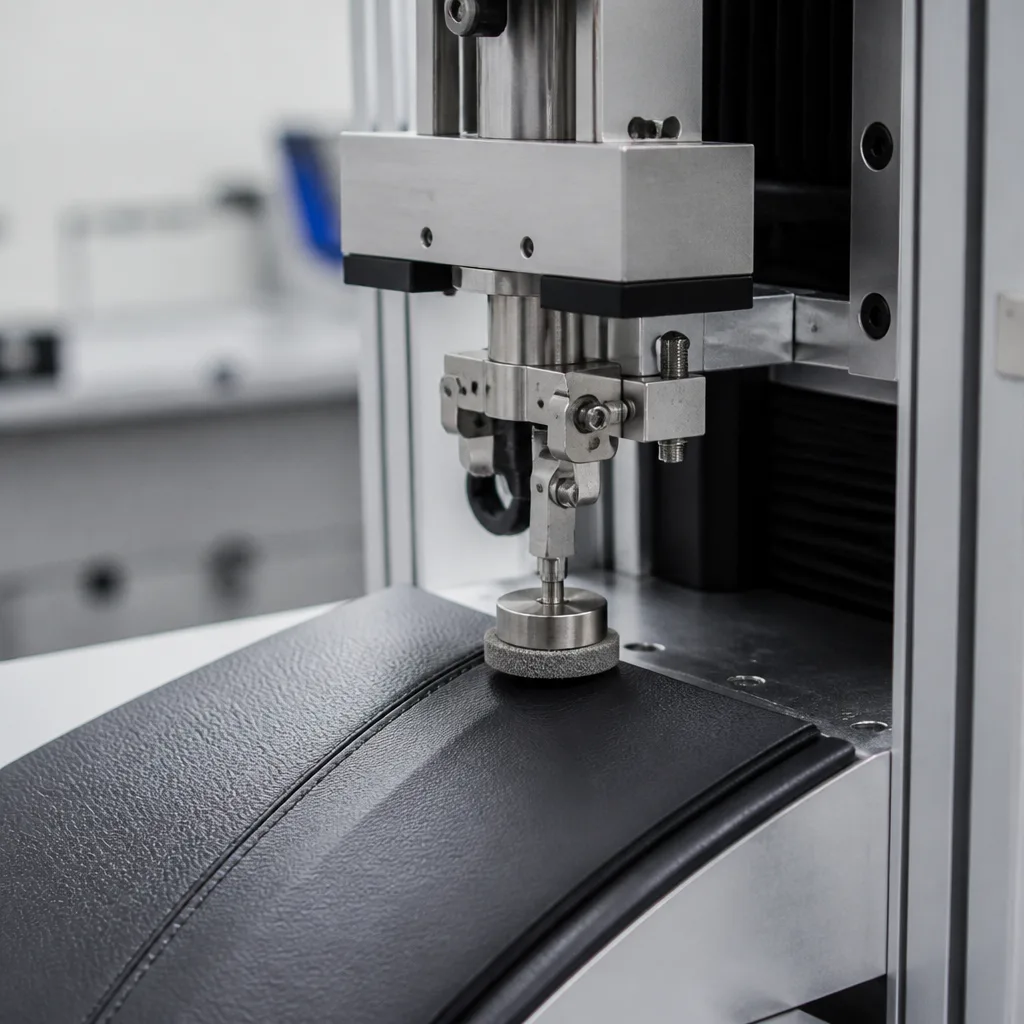
Ford FLTM BN 155-01 Simulated Fingertip Wear Resistance (Abrex)

Fingertip wear is the gradual abrasion of a material's surface caused by repeated friction, pressing, or sliding contact with a person's fingertips. In automotive interiors, this type of wear naturally occurs during normal vehicle use as occupants repeatedly touch the same areas.

Fingertip abrasion can occur in the following areas:

  • Instrument panel controls
  • Center console surfaces
  • Door trim panels
  • Armrests
  • Steering wheel controls
  • Information and entertainment system environments
  • Painted or coated plastic components

Over time, repeated finger contact can cause the following:

  • Loss of surface coating
  • Changes in brightness level
  • Color fading
  • Tissue flattening
  • Exposure of the underlying substrate
  • Visible signs of wear.

Unlike heavy wear caused by shoes, luggage, or tools, toetip wear represents low-intensity but high-frequency wear. A vehicle owner may touch certain controls thousands of times over the life of their vehicle. Even minor wear can affect the vehicle's appearance, perceived quality, and customer satisfaction.

The primary purpose of the Ford FLTM BN 155-01 standard is to measure how well a surface coating can withstand light, repetitive mechanical wear, such as:

  • Avoid rubbing your fingers on interior trim pieces.
  • The use of coated plastics and decorative surfaces.
  • Contact wear in frequently touched areas in the automotive industry.

This standard is commonly used for the following automotive interior components:

  • Painted plastics
  • Decorative coatings
  • Soft-touch flooring surfaces
  • Polymer-based interior surfaces

This testing method is commonly referred to as the Abrex abrasion test.

This method simulates fingertip wear by applying a controlled abrasive motion to the material surface using a standardized test setup.

A typical assessment includes the following:

  • A friction or oscillating abrasive head (simulates fingertip contact)
  • A specific force (load)
  • A fixed number of cycles
  • Controlled test environment

The surface is then evaluated in terms of the following:

  • Visible wear and tear
  • Coating loss
  • color change
  • Underlying material exposure

This standard focuses on the durability of surface appearance, including:

  • Resistance to coating removal
  • Scratch-like wear behavior
  • Change in brightness or texture
  • Fading or discoloration
  • Uncovering the main material

This is important because automotive interior parts must maintain their aesthetic quality over long periods of use.

The Ford FLTM BN 155-01 standard exists to ensure that materials used in vehicle interiors meet consistent durability expectations:

  • Customer perception of quality: Because the interior surfaces are constantly touched, visible wear quickly reduces the perceived quality.
  • Material verification: Suppliers must prove the durability of coatings and materials before approval.
  • Design comparison: Allows engineers to compare the following:
    • Different coating systems
    • Different plastic formulations
    • Different surface treatments
  • Global supplier consistency: Ensures all suppliers worldwide conduct tests using the same methods and criteria.

The Ford FLTM BN 155-01 standard is widely used not only by Ford but also by test laboratories and suppliers working in the following fields:

  • Automotive original equipment manufacturers (OEMs) interior components.
  • Coating manufacturers
  • Textile and upholstery suppliers

This standard is often used in conjunction with other durability tests, such as:

  • Martindale wear test (Ford FLTM BN 158-01 standard)
  • Scratch resistance tests (Ford FLTM BO series standards)
  • Adhesion tests for coatings

In short, the Ford FLTM BN 155-01 standard is a standardized wear test method designed to simulate fingertip wear on automotive interior surfaces. It ensures that decorative and functional coatings maintain their appearance and durability throughout the vehicle's lifespan.

The Ford FLTM BN 155-01 standard is important because it protects one of the most sensitive quality areas in modern vehicles: the visible and tactile interior surfaces that customers interact with every day. The main reasons why this standard is deemed necessary are as follows:

  • It directly affects perceived vehicle quality: Interior trim pieces (such as center consoles, door panels, and decorative trim) are constantly touched. Even if a piece is structurally sound, visible wear, loss of shine, or coating damage will quickly make the vehicle feel low-quality. This standard ensures that materials are resistant to this premature wear.
  • It simulates real customer use in a controlled manner: People don't just wear down materials in a uniform lab model. They rub, press, and slide their fingers in unpredictable ways. This standard makes it a repeatable test, enabling suppliers to reliably predict real-world fingertip wear behavior.
  • It prevents premature surface failure in production vehicles: Without this test, coatings and decorative surfaces can suffer from the following:
    • It can peel or thin out very quickly.
    • It may show color changes after short-term use.
    • It can expose the underlying plastic layers.

This standard helps catch these problems before mass production, preventing costly recalls or customer complaints.

  • It ensures consistency among global suppliers: Automotive companies source materials from many countries. A coating that performs well in one lab may fail in another if the test conditions are different. This standard creates a single reference method, ensuring that results are comparable worldwide.
  • It supports material development and comparison: Engineers use this test for the following:
    • Comparing different coating systems.
    • Evaluating new soft-touch materials
    • Optimizing durability and aesthetics.
    • Selecting suppliers based on measurable performance.
  • Reduces warranty and durability risks: Surface wear issues are costly because they are visible but not structural failures. This standard helps reduce warranty claims, customer dissatisfaction, and damage to brand perception.

In conclusion, the Ford FLTM BN 155-01 standard is a crucial standard that ensures interior surfaces maintain their appearance, perceived quality, supplier consistency, and long-term durability in real-world use.

For many years, our organization, with its competent and experienced staff, has been understanding the needs of its customers, providing the advanced testing services they require, and assisting them in the establishment, implementation, and improvement of management systems. Within this framework, we also provide testing services to businesses in accordance with the Ford FLTM BN 155-01 standard.

WhatsApp

