

The “Ford IP-0105 Instrument Panel Solar Load Resistance Test” standard, developed by Ford Motor Company (Ford), describes a test method used to evaluate the solar load resistance of instrument panels (IP) and related interior trim components. This test simulates the intense solar radiation and high temperatures that vehicle interiors are exposed to during prolonged sunlight exposure, particularly in hot climates. Its purpose is to verify that instrument panel materials, coatings, substrates, adhesives, and assemblies maintain their appearance and structural integrity throughout the vehicle's lifespan.
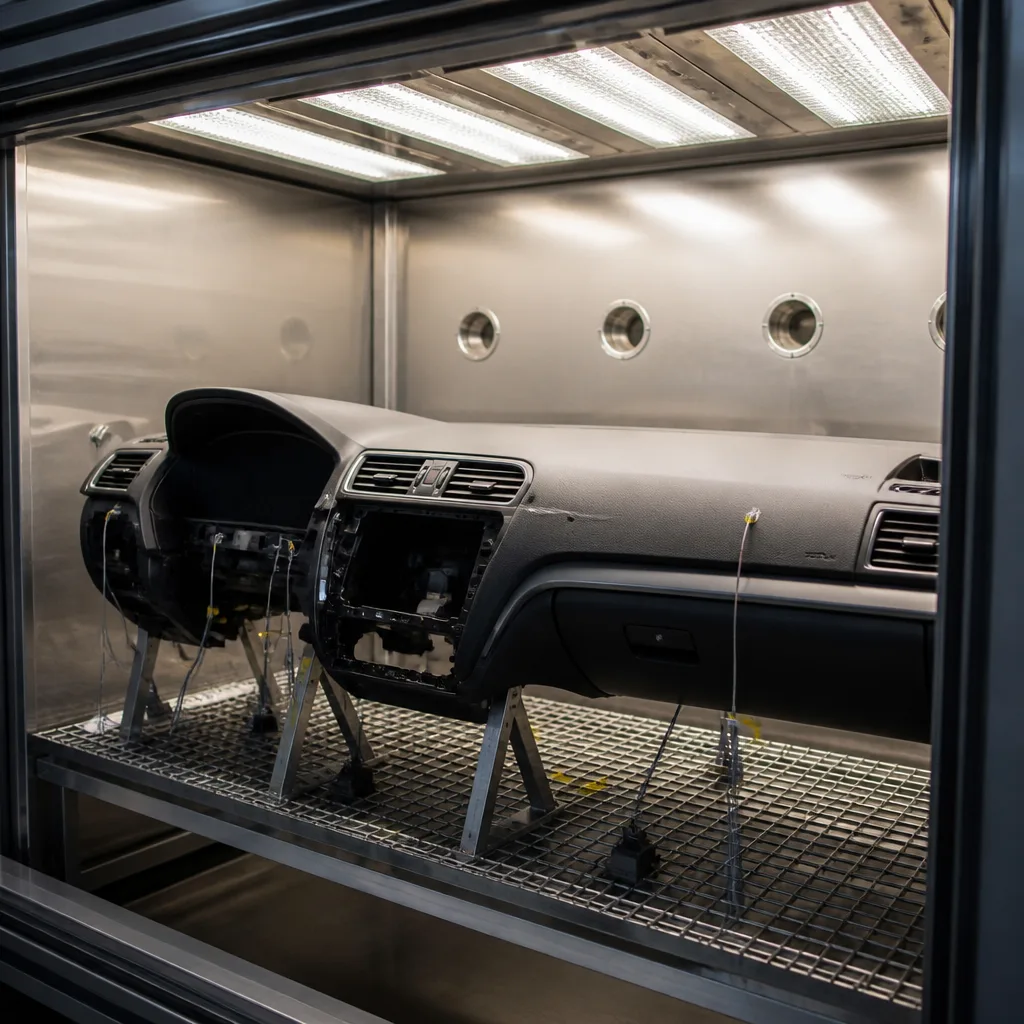
Vehicle instrument panels are constantly exposed to the following:
These environmental conditions can cause the following:
The Ford IP-0105 standard was developed to identify these potential failures before production and ensure the long-term durability of instrument panel systems.
This method, in principle, exposes instrument panel components or material samples to simulated sunlight using infrared radiation and high-temperature conditions. The test reproduces the thermal load that occurs when a parked vehicle is exposed to direct sunlight. During exposure, the component is monitored from the following perspectives:
This procedure is commonly referred to as a dashboard solar load resistance test.
Following exposure, the instrument panel is examined from the following perspectives:
Acceptance criteria are defined by the relevant Ford engineering material and component specifications.
Components frequently tested with the Ford IP-0105 standard include:
This test is typically used in conjunction with other Ford environmental aging and durability standards.
The Ford IP-0105 standard is part of a broader environmental durability verification program and is often associated with the following standards:
Together, these tests evaluate the vehicle's resistance to thermal, humidity, ultraviolet, and solar load conditions encountered during operation.
Modern instrument panels are composed of a complex combination of the following materials:
Because these materials expand at different rates when heated, solar load can cause significant internal stresses. The Ford IP-0105 standard helps engineers verify that the entire assembly remains stable and visually acceptable under severe environmental conditions.
In short, the Ford IP-0105 standard is important because it ensures a vehicle's instrument panel (control panel) system can withstand real-world sun and heat exposure conditions without deterioration in appearance, structure, or function. In practice, this standard simulates one of the most challenging conditions interior components face: a car parked in strong sunlight, where cabin temperatures can become extreme and uneven.
This standard is important for the following reasons:
These are immediately noticeable to customers and greatly affect the perceived quality of the vehicle.
Ford reduces long-term service costs by testing its designs at an early stage.
The thermal deformation here is not purely cosmetic; it can affect fit, opening geometry, and component alignment.
The Ford IP-0105 standard provides durability assurance for instrument panel systems.
In short, the Ford IP-0105 standard is a specialized environmental durability test designed to evaluate the resistance of instrument panel systems to exposure to intense solar heat. By simulating years of solar-load-induced thermal stress in a controlled laboratory environment, this standard helps ensure that instrument panel components maintain their appearance, dimensional stability, and structural integrity throughout the vehicle's lifespan.
For many years, our organization, with its competent and experienced team, has been understanding the needs of its customers, providing the advanced testing services they require, and assisting them in the establishment, implementation, and improvement of management systems. Within this framework, we also provide testing services compliant with the Ford IP-0105 standard.
To get an appointment, to get more detailed information or to request an evaluation, you can ask us to fill in our form and reach you.

