

The “DBL 7384 Coating of plastic parts in vehicle interiors” standard, developed by Daimler, the owner of the Mercedes-Benz brand, describes the technical requirements and test methods for coatings applied to plastic components used in vehicle interiors. This standard ensures that painted, coated, foiled, printed, or otherwise surface-treated plastic parts (e.g., instrument panels, door panels, trim pieces, switches, and decorative elements) maintain their high quality, durability, and appearance throughout the vehicle's service life.
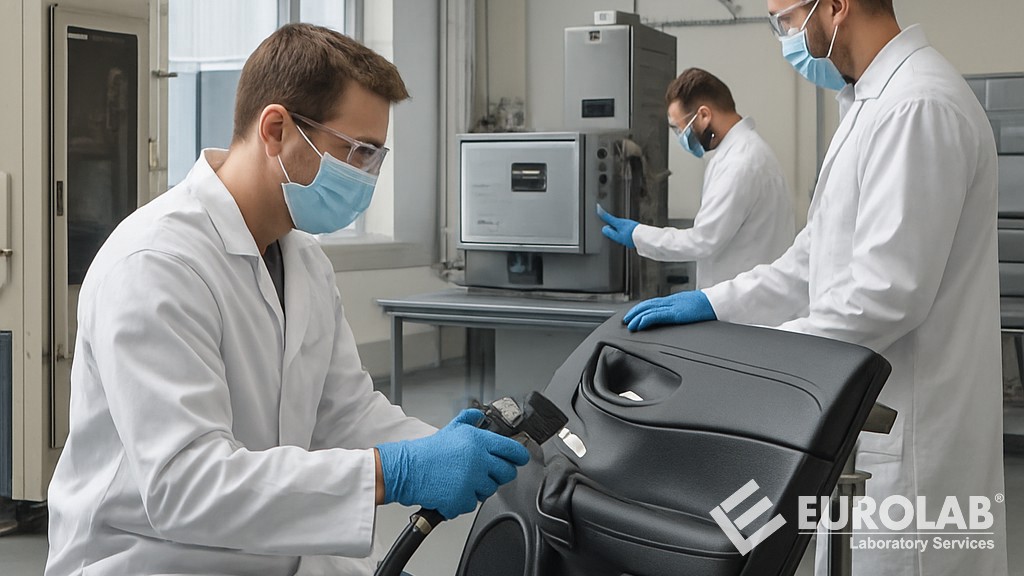
This standard primarily targets companies that supply interior plastic parts for Mercedes-Benz vehicles. It covers various coating technologies, including:
The aim is to guarantee resistance to environmental stresses, mechanical wear, chemicals from daily use (e.g., skin contact, cleaning agents, cosmetics), and long-term aging, while maintaining visual and tactile quality.
Advanced laboratories typically perform the following assessments under the DBL 7384 standard after defined preconditioning (e.g., climate storage or artificial aging):
This standard specifies different levels of requirements depending on the part's location and the conditions to which it is exposed (e.g., areas exposed to direct sunlight versus shaded areas).
Compliance with the DBL 7384 standard is mandatory for many Mercedes-Benz interior suppliers. This is part of the production part approval process and is frequently referenced along with the following standards:
Approved testing laboratories conduct these assessments to verify that the coatings meet Daimler's Class A or equivalent quality criteria before mass production begins.
This standard plays a critical role in delivering superior, long-lasting interior aesthetics and functionality in Mercedes-Benz vehicles, reflecting the brand's commitment to perceived quality and customer satisfaction.
In short, the DBL 7384 standard defines the requirements and test methods for coatings applied to plastic parts used in vehicle interiors. This standard is an internal automotive specification used by Mercedes-Benz and related suppliers to ensure interior quality and durability.
The primary goal of the DBL 7384 standard is to ensure that coated plastic interior components, such as instrument panels, trim panels, and center consoles, meet specific performance, appearance, and durability criteria required for real-world use and satisfy customer expectations.
Key focus areas include:
The DBL 7384 standard describes a comprehensive set of laboratory tests designed to simulate real-life stresses that interior plastic surfaces would encounter. Typical tests include:
This standard typically refers to international reference standards (such as ISO color and brightness methods) to ensure consistent measurement techniques among laboratories.
Plastics are widely used in modern vehicles for weight reduction, cost savings, and design flexibility. Coating these plastics is important for:
Vehicle manufacturers and suppliers use the DBL 7384 standard during the development, production, and quality assurance phases to verify that coatings meet stringent original equipment manufacturer performance standards.
In short, the DBL 7384 standard is a specific automotive coating specification from Mercedes-Benz/Daimler that defines how coatings on interior plastic parts should be tested and what performance levels they should achieve.
For many years, our organization, with its competent and experienced team, has been understanding the needs of its clients, providing the advanced testing services they require, and assisting them in the establishment, implementation, and improvement of management systems. Within this framework, we also provide testing services compliant with the DBL 7384 standard.
To get an appointment, to get more detailed information or to request an evaluation, you can ask us to fill in our form and reach you.

