

The “BMW AA 0134 Dry Scratch Resistance Test Using Crockmeter” standard, developed by BMW, a multinational vehicle manufacturer, describes an internal testing method for evaluating the dry scratch resistance of surfaces used in vehicles, particularly coatings, paints, and interior and exterior materials. This testing method uses a Crockmeter (a standardized friction or abrasion testing device) to simulate mechanical wear from dry friction, ensuring that automotive coatings can withstand everyday scratches without significant damage.
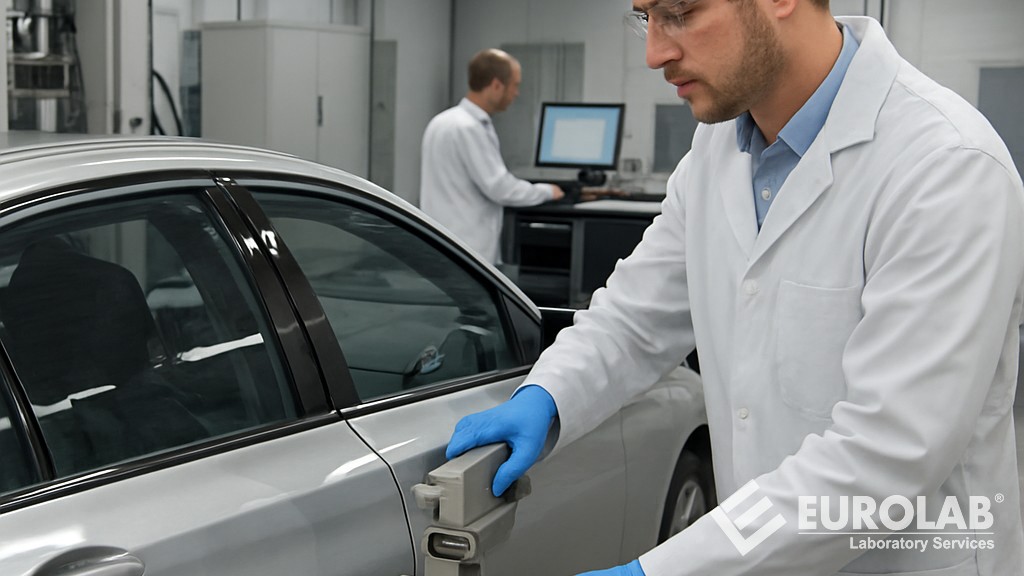
A Crockmeter is a linear abrasion testing device that rubs a standardized abrasive material (typically dry wool felt or special abrasive paper) back and forth over a test surface under controlled pressure and cycles. The BMW AA 0134 standard specifies the following parameters:
This method complies with broader industry standards such as DIN 55654 or ISO 105-X12 for color fastness to friction, but has been adapted to BMW's automotive durability requirements.
These tests utilize a Crockmeter (friction resistance testing device) to simulate dry abrasion from everyday contact (e.g., fingers, clothing, or dust). This testing is unique to BMW and is carried out by accredited testing laboratories or suppliers.
The necessary equipment used in the tests is as follows.
Flat test specimens (e.g., coated panels or material samples) are conditioned for at least 24 hours in a standard climate (at a temperature of 23 degrees plus/minus 2 degrees Celsius and a relative humidity of 50 percent plus/minus 10 percent). The specimen is securely fixed to the Crockmeter base without damage. A fresh, dry wool felt pad or the specified abrasive paper is attached to the test head/finger. It is essential to ensure the contact surface is clean and smooth. The test head is mounted with the required weight (usually approximately 9-10 N downward force). Linear reciprocating cycles are performed (stroke length is usually 100–120 mm). The number of cycles is specified by BMW (usually 10-100 dry cycles depending on the material; the exact number is part of the proprietary specification). The speed is approximately 1 cycle per second.
The eroded area is visually evaluated from the following perspectives:
Gloss retention is measured (e.g., before/after with a reflectometer) or, if necessary, cross-hatching is used. It is then graded according to BMW acceptance criteria (pass/fail depending on the absence of significant damage).
This method, unlike wet etching methods, is a dry test (does not involve any liquid). For precise parameters (total number of cycles, load, abrasive type, acceptance limits), the BMW AA 0134 standard is followed.
This standard is often used in conjunction with BMW GS 97034 (surface test) or VW PV 3987 or VW PV 3991 standards for similar friction tests.
This standard is considered important for the following reasons:
In conclusion, BMW AA 0134 and similar standards contribute to BMW vehicles' reputation for having high-quality, durable, and wear-resistant surfaces, reducing warranty issues and increasing resale value. This test is widely referenced in BMW supplier manuals.
For many years, our organization, with its competent and experienced team, has been understanding the needs of its clients, providing the advanced testing services they require, and assisting them in the establishment, implementation, and improvement of management systems. Within this framework, we also provide testing services in accordance with the BMW AA 0134 standard.
To get an appointment, to get more detailed information or to request an evaluation, you can ask us to fill in our form and reach you.

